
Showing Results for Notification Appliances
-
Save $0.19

STI Horn/Strobe Damage Stopper® and Open Back Box - STI-1210C
Protective open back box enclosure designed to shield horn and strobe signaling devices from physical damage and environmental exposure
- NEMA 4X enclosure protects horn/strobe devices in corrosive or wet environments.
- Runs on 24VDC and integrates directly into existing fire/intrusion notification circuits.
- Fits standard 8.5" × 6.5" horn/strobe profiles; four #10 screws included for secure mount.
In stock · Ships same business day Free shipping over $499$61.18 $60.99 Save $0.19 -
Save $25.09

STI Horn/Strobe Damage Stopper®, L Series Ceiling - White - STI-9761
Ceiling-mount impact guard for L Series horn/strobe units in high-traffic areas
- Gauge-9 steel wire with polyester coating resists corrosion in high-traffic environments.
- Ceiling-mount profile keeps devices out of reach while sound and light propagate freely.
- Listed for Edwards GC and Kidde EGC lines; UL, cUL, and CAN/ULC certified.
Usually Ships in 2-3 Weeks Free shipping over $499$63.08 $37.99 Save $25.09 -
Save $0.82

STI KIT-121 Enviro-Kit for Horn/Strobe Damage Stopper Series
Environmental hardening kit for Horn/Strobe Damage Stopper Series
- Protects against outdoor and high-moisture environment degradation
- 9VDC operation integrates with standard low-voltage security systems
- Wall-mount design for access control and alarm system installations
Usually Ships in 2-3 Weeks Free shipping over $499$16.81 $15.99 Save $0.82 -
Save $0.11
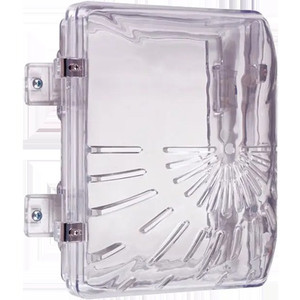
STI KIT-122 Enviro-Kit Horn/Strobe Damage Stopper
Environmental protection kit for horn/strobe assemblies in harsh conditions
- 9VDC operation integrates with standard low-voltage security systems
- Physical damage and environmental exposure protection extends component life
- Works for retrofit and new installations with wall or rack mounting
Usually Ships in 2-3 Weeks Free shipping over $499$14.10 $13.99 Save $0.11 -
Save $0.64

STI KIT-84 Tamper Resistant Screw Kit for Horn/Strobe Guards
Tamper-resistant screw kit for STI horn and strobe guards
- Prevents unauthorized removal of fire alarm guard assemblies
- Compatible with STI horn and strobe guard installations
- Operates at 9VDC for integrated fire alarm systems
Usually Ships in 2-3 Weeks Free shipping over $499$17.63 $16.99 Save $0.64 -
Save $34.85

STI STI-1210A Horn/Strobe
Horn/strobe alarm with impact guard for outdoor access control
- 24VDC powered horn and strobe in single unit for credential readers
- Damage Stopper® guard protects against physical impact and vandalism
- NEMA 4X rated 4" enclosed back box for harsh outdoor environments
Usually Ships in 2-3 Weeks Free shipping over $499$86.84 $51.99 Save $34.85 -
Save $26.22

STI STI-1210D Horn/Strobe Enclosure
NEMA 4X protective cage for horn/strobe devices in high-traffic areas
- Open-back box design allows rear-access wiring and device swaps without cage removal
- NEMA 4X stainless construction resists corrosion, salt spray, and washdown environments
- 24VDC operation integrates directly into standard fire and life safety alarm circuits
In stock · Ships same business day Free shipping over $499$67.21 $40.99 Save $26.22 -
Save $16.68
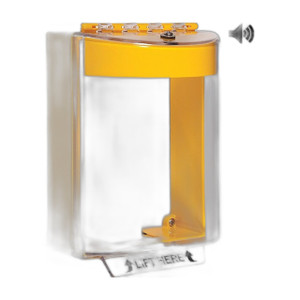
STI STI-9705 Horn/Strobe/Speaker Damage Stopper
Protective stopper designed to prevent accidental damage to horn, strobe, and speaker components during installation, testing, and operational phases
- Mounts directly on horn, strobe, or speaker to prevent damage during commissioning.
- Compatible with Edwards GC and Kidde EGC lines; supports UL1638, UL464, and UL1480.
- Includes anchors and screws; installs and removes without damaging the protected device.
In stock · Ships same business day Free shipping over $499$45.67 $28.99 Save $16.68 -
Save $17.68
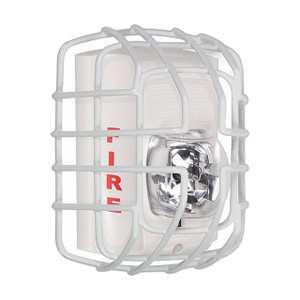
STI STI-9705-R TCP/IP Horn/Strobe/Speaker Controller
TCP/IP horn/strobe/speaker controller with networked multi-zone alerting
- TCP/IP connectivity enables centralized multi-zone horn/strobe/speaker control over your existing network.
- Built-in inductive load protection absorbs transient voltage spikes, reducing field failures on horns and strobes.
- Supports wall, ceiling, or rack mounting for flexible deployment across diverse facility layouts.
In stock · Ships same business day Free shipping over $499$45.67 $27.99 Save $17.68 -
Save $20.68

STI STI-9708 Horn/Strobe/Speaker Damage Stopper
Inline surge suppression for horns, strobes, and speakers
- Mounts inline within horn, strobe, and speaker circuits to block damaging voltage transients.
- Compatible with security panels, fire alarm systems, and access control notification appliances.
- Rated for operation from -40°C to 65°C, supporting deployments in harsh indoor/outdoor environments.
In stock · Ships same business day Free shipping over $499$54.67 $33.99 Save $20.68 -
Save $20.68

STI STI-9708-R Horn/Strobe/Speaker Damage Stopper Controller
Multi-zone damage stopper controller engineered to manage and protect horn, strobe, and speaker output devices in commercial and institutional life
- TCP/IP communication enables integration into existing IP-based security networks.
- UL/cUL listed; meets UL1638, UL464, UL1480, and CAN/ULC safety standards.
- Supports wall, ceiling, or rack mounting for flexible deployment across zones.
In stock · Ships same business day Free shipping over $499$54.67 $33.99 Save $20.68 -
Save $17.44

STI STI-9711 Horn/Strobe/Speaker Damage Stopper
Protective wire cage designed to shield horn, strobe, and speaker assemblies from vandalism and accidental impact in commercial security and
- 9-gauge steel wire cage shields horn/strobe/speaker units from impact and vandalism.
- Corrosion-resistant polyester coating eliminates maintenance in high-traffic indoor deployments.
- Tool-free removal allows fast servicing; anchors and fasteners included for quick install.
In stock · Ships same business day Free shipping over $499$47.43 $29.99 Save $17.44 -
Save $21.57

STI STI-9714 Horn/Strobe/Speaker Damage Stopper
Protective barrier guards horn, strobe, speaker from impact damage
- Mounts to wall, ceiling, or rack to protect notification devices in high-traffic zones.
- Guards horn, strobe, and speaker units from impact, reducing unplanned replacement costs.
- Installs into existing alarm deployments without reconfiguration or firmware changes.
In stock · Ships same business day Free shipping over $499$55.56 $33.99 Save $21.57 -
Save $18.32

STI STI-9717 Horn/Strobe/Speaker Damage Stopper
Protective device designed to prevent damage to horn, strobe, and speaker components in security and life safety systems
- Damage stopper cage protects horn, strobe, and speaker devices
- Drops over standard fire and security notification appliances
- Steel-wire build for institutional and high-traffic environments
Usually Ships in 2-3 Weeks Free shipping over $499$47.31 $28.99 Save $18.32 -
Save $21.73
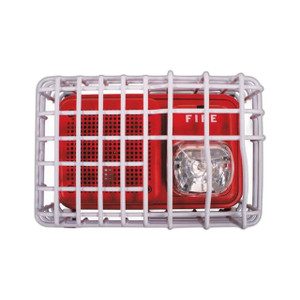
STI STI-9720 Horn/Strobe/Speaker Damage Stopper
Surface-mount protective enclosure for horn, strobe, speaker impact
- Surface-mount form factor eliminates recess cuts, simplifying retrofits in existing facilities.
- Compact 4.62" x 5.37" x 3" enclosure fits standard wall, ceiling, or rack mounting patterns.
- Passive mechanical design adds zero power draw and no integration overhead to existing systems.
In stock · Ships same business day Free shipping over $499$55.72 $33.99 Save $21.73 -
Save $19.58

STI STI-9750 Horn/Strobe/Speaker Damage Stopper Ceiling Mount
Ceiling mount lock/strike protects horns, strobes, and speakers from damage
- Gauge-9 steel wire with polyester coating resists corrosion in interior commercial environments.
- Protects ceiling-mounted horns, strobes, and speakers from vandalism and accidental impact.
- Compatible with Edwards GC and Kidde EGC notification devices; no device modification required.
Usually Ships in 2-3 Weeks Free shipping over $499$49.57 $29.99 Save $19.58 -
Save $0.83

STI STI-9754 Horn/Strobe/Speaker Damage Stopper Wall Mount
Wall-mounted protection for horns, strobes, and speakers
- Corrosion-resistant steel wire cage shields horns, strobes, and speakers from damage.
- UL-listed under UL464, UL1480, and UL1638; meets CAN/ULC-S525, S526, and S541.
- Tool-free removal enables routine maintenance without circuit or wiring modifications.
Usually Ships in 2-3 Weeks Free shipping over $499$55.82 $54.99 Save $0.83 -
Save $0.83
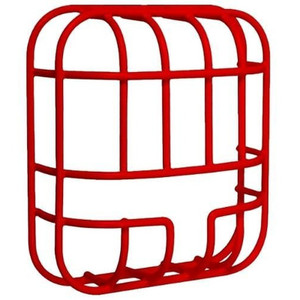
STI STI-9754-R Horn/Strobe/Speaker Damage Stopper Wall Mount
Wall-mounted protective cage designed to shield horn, strobe, and speaker devices from intentional vandalism and accidental impact damage in
- 9-gauge steel wire cage shields horn/strobe/speaker devices from impact and vandalism.
- Open-wire design maintains full audible and visual output with no sound attenuation.
- Tool-free device access enables maintenance or replacement without cage disassembly.
In stock · Ships same business day Free shipping over $499$55.82 $54.99 Save $0.83 -
Save $18.06

STI STI-9760 Horn/Strobe Damage Stopper Ceiling Mount
Protective ceiling mount for STI L Series horns and strobes
- Shields STI L Series horn/strobe units from impact and vandalism without blocking signal output.
- Ceiling-mount design fits standard drop-ceiling and drywall applications for new builds and retrofits.
- Compact 4.62" x 5.37" x 3" profile reduces service calls by protecting housings in high-traffic areas.
Usually Ships in 2-3 Weeks Free shipping over $499$47.05 $28.99 Save $18.06 -
Save $0.60

STI STI-9762 Horn/Strobe Damage Stopper L Series Wall Mount
Protective wall-mount cage designed to shield L Series horn and strobe notification devices from vandalism and accidental impact
- 9-gauge steel wire with polyester coating resists corrosion and repeated impact.
- UL/cUL listed to UL1638, UL464, UL1480, and three CAN/ULC standards.
- Installs with included anchors and screws; removable for maintenance without wall damage.
Usually Ships in 2-3 Weeks Free shipping over $499$45.59 $44.99 Save $0.60 -
Save $17.60
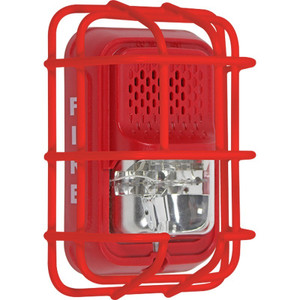
STI STI-9762-R Horn/Strobe Damage Stopper L Series Wall Red
Wall-mounted horn/strobe controller with damage stopper protection for access control systems
- 9-gauge steel wire with polyester coating resists corrosion and absorbs impact.
- Compatible with Edwards GC and Kidde EGC series horn/strobe devices.
- UL-listed to UL1638, UL464, UL1480, CAN/ULC-S525, S526, and S541 standards.
Usually Ships in 2-3 Weeks Free shipping over $499$45.59 $27.99 Save $17.60 -
Save $0.16

STI STI-9763 Horn/Strobe Damage Stopper L Series Wall Mount
Protective wall-mount cage designed to shield L Series horn and strobe devices from vandalism and accidental impact
- Gauge 9 steel wire with polyester coating resists corrosion and impact damage.
- UL/cUL-listed for UL464, UL1638, UL1480, and CAN/ULC-S525/S526/S541 compliance.
- Includes anchors and fasteners; tool-free removal simplifies routine maintenance.
In stock · Ships same business day Free shipping over $499$54.15 $53.99 Save $0.16 -
Save $21.16

STI STI-9763-R Horn/Strobe Damage Stopper L Series Wall Red
Red wall-mounted protective cage designed to shield horn and strobe alarm devices from vandalism and accidental damage in commercial and industrial
- Gauge-9 steel wire with polyester coating resists corrosion in high-abuse indoor zones.
- Fits Edwards GC and Kidde EGC horn/strobe housings; verify model against compatibility matrix.
- Installs flush to solid walls using supplied plastic anchors and stainless-steel fasteners.
Usually Ships in 2-3 Weeks Free shipping over $499$54.15 $32.99 Save $21.16 -
Save $0.62

STI STI-9764 Horn/Strobe Damage Stopper L Series Wall Mount
Wire-cage protective mount designed for wall-mounted installation of STI L Series horn and strobe notification devices
- 9-gauge steel wire cage shields L Series horn/strobe from impact and vandalism.
- Polyester corrosion-resistant coating suits lobbies, stairwells, and warehouses.
- Wall mount installs with included hardware; tamper-proof screw upgrade available.
In stock · Ships same business day Free shipping over $499$49.61 $48.99 Save $0.62 -
Save $19.62
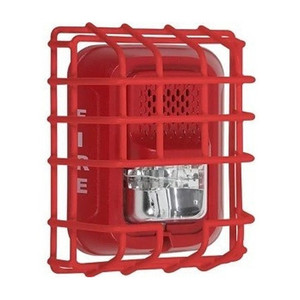
STI STI-9764-R Horn/Strobe Damage Stopper L Series Wall Red
Red polycarbonate wire cage designed to protect wall-mounted horn and strobe devices from vandalism and accidental impact
- 9-gauge steel wire with polyester coating resists corrosion in indoor environments.
- UL-listed per UL464, UL1638, UL1480, CAN/ULC-S525, S526, and S541 standards.
- Mounts directly to wall with included anchors; removable for quick device servicing.
Usually Ships in 2-3 Weeks Free shipping over $499$49.61 $29.99 Save $19.62 -
Save $0.28

STI STI-9765 Horn/Strobe Damage Stopper L Series Wall Mount
Wall-mount protective barrier for STI L Series horn and strobe units
- Wall-mount horn and strobe damage stopper - 9-gauge steel wire
- Corrosion-resistant finish for indoor and protected outdoor placement
- Compact 1.9 x 4.6 x 1.1 in form factor for tight wall placements
Usually Ships in 2-3 Weeks Free shipping over $499$59.27 $58.99 Save $0.28 -
Save $23.28
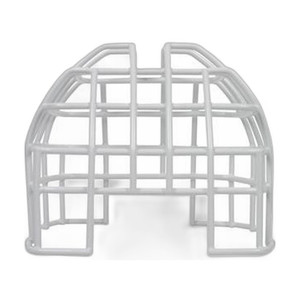
STI STI-9765-R Horn/Strobe Controller - Red
Red-housed wall-mount controller engineered to coordinate horn and strobe signaling in networked emergency notification and security systems
- TCP/IP communication enables centralized control across multi-zone alert deployments.
- Coordinates horn and strobe signaling within fire alarm and access control frameworks.
- Wall-mount form factor supports standard electrical rough-in for straightforward installation.
Usually Ships in 2-3 Weeks Free shipping over $499$59.27 $35.99 Save $23.28 -
Save $0.88

STI STI-9766 Horn/Strobe Damage Stopper L Series Wall Mount
Wall mount protective assembly for STI L Series horn/strobe devices
- Gauge-9 steel wire cage with polyester coating resists corrosion and impact damage.
- Includes anchors, fasteners, and template for fast, repeatable wall installations.
- Tool-free removal allows maintenance access without disrupting device operation.
In stock · Ships same business day Free shipping over $499$49.87 $48.99 Save $0.88 -
Save $0.98
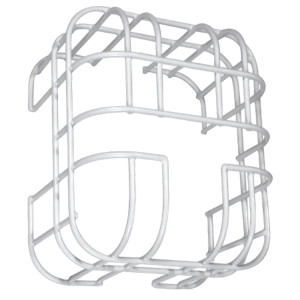
STI STI-9767 Horn/Strobe Damage Stopper L Series Wall Mount
Wall-mounted protective cage designed to shield horn and strobe alarm signaling devices from vandalism and accidental damage
- Wall-mounted horn and strobe damage stopper cage
- 9-gauge steel wire with corrosion-resistant finish
- Shields signaling devices from vandalism and accidental impact
Usually Ships in 2-3 Weeks Free shipping over $499$58.97 $57.99 Save $0.98 -
Save $29.65

System Sensor APA151 Remote Annunciator with Piezo Alert
Remote annunciator with piezo sounder for 24 VDC fire alarm systems
- Operates on 24 VDC supervised power for continuous panel-monitored circuit health.
- Integrated piezo sounder adds local audible output without additional signal runs to panel.
- Compact 14.38 × 5 × 2.5 in body suits wall or enclosure mounting in secondary locations.
Usually Ships in 2-3 Weeks Free shipping over $499$83.64 $53.99 Save $29.65 -
Save $12.29

System Sensor LENS-AC Amber Lens - Ceiling
Amber lens assembly for SpectrAlert Advance ceiling-mount fire alarms
- Attaches to SpectrAlert Advance ceiling-mount strobes without tools or rewiring.
- Amber color enables zone differentiation for gas, weather, or sprinkler alarms.
- Operates from −35°F to 151°F, supporting indoor and outdoor deployments.
In stock · Ships same business day Free shipping over $499$31.28 $18.99 Save $12.29 -
Save $0.94

System Sensor LENS-BC Blue Lens Replacement
Blue lens replacement for SpectrAlert Advance ceiling units, 35VDC
- Direct drop-in replacement for SpectrAlert Advance ceiling units—no rewiring required.
- Operates on the existing 35VDC power rail, eliminating additional power supply runs.
- TCP/IP integration enables centralized monitoring and synchronized activation across units.
Usually Ships in 2-3 Weeks Free shipping over $499$29.93 $28.99 Save $0.94 -
Save $10.94

System Sensor LENS-GC Green Lens - Ceiling
Green lens replacement for SpectrAlert Advance ceiling beacons
- UL 1638-listed green lens signals normal status in color-coded notification systems.
- Rated for −35°F to 151°F operation, supporting indoor and outdoor deployments.
- Tool-free clip installation into SpectrAlert Advance ceiling strobes; no rewiring needed.
Usually Ships in 2-3 Weeks Free shipping over $499$29.93 $18.99 Save $10.94 -
Save $10.94

System Sensor LENS-RC Red Lens for SpectrAlert Advance Ceiling
Red lens replacement for SpectrAlert Advance ceiling strobes
- UL 1638 listed for reliable red visual signaling on SpectrAlert Advance ceiling strobes.
- NEMA 3R rated for indoor and outdoor use across a −35°F to 151°F temperature range.
- Tool-free snap-on installation onto the SpectrAlert Advance universal mounting plate.
Usually Ships in 2-3 Weeks Free shipping over $499$29.93 $18.99 Save $10.94 -
Save $66.01

System Sensor P4RK-R Horn Strobe Red - Red
4-wire wall-mount horn strobe in red for fire alarm systems
- 4-wire architecture supports supervised wiring with pre-install continuity check via shorting spring.
- Operates across –40°F to 151°F, suiting demanding indoor environments year-round.
- Field-selectable strobe candela and single-unit horn/strobe design reduce back-box count and labor.
Usually Ships in 2-3 Weeks Free shipping over $499$161.00 $94.99 Save $66.01 -
Save $0.66

System Sensor P4W Wall-Mount Horn Strobe White 4-Wire
4-wire wall-mount horn strobe in white for fire alarm systems
- Auto-selects 12VDC or 24VDC, simplifying multi-voltage panel integration.
- 4-wire architecture reduces circuit complexity and back-box footprint in retrofits.
- Integrated shorting spring tests wiring continuity before device install, preventing ground faults.
Usually Ships in 2-3 Weeks Free shipping over $499$10.65 $9.99 Save $0.66