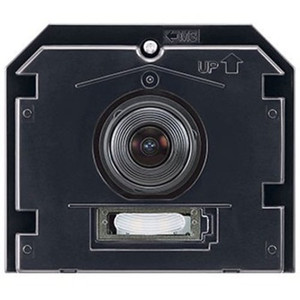
Aiphone GT-VP 8MP Modular Entrance Panel
The Aiphone GT-VP is a modular entrance panel component designed for the GT-VB modular entrance system, delivering 8MP video resolution in a compact pole-mount form factor. The zinc die cast construction resists environmental degradation on outdoor pole installations, and the standardized frame compatibility (GF-2F, GF-3F, GT-4F) allows integrators to configure single, dual, triple, or quad-module entrance stations without redesigning the mounting infrastructure. The GT-VP bridges video capture and intercom signaling within Aiphone's GT series architecture, making it a core building block for multi-tenant residential, commercial office, and institutional access-control deployments that require modular scalability.
Key Features
- 8MP Video Resolution: 4096×2160 sensor delivers forensic-quality facial recognition and license-plate imagery at entrance points. Essential for identity verification and incident review in multi-tenant and high-traffic facilities.
- Modular Frame Compatibility: Mounts in GF-2F, GF-3F, or GT-4F front frame assemblies. Integrators scale from 2-unit to 4-unit entrance stations without fabricating custom brackets or rewiring.
- Pole-Mount Design: Optimized for vertical pole installations at pedestrian entry, driveway, or perimeter access points. Horizontal or vertical orientation selectable within frame assembly.
- Zinc Die Cast Housing: Resists corrosion and impact in outdoor environments. Suitable for coastal salt spray, freeze-thaw cycles, and high-foot-traffic vandalism exposure.
- GT Series Integration: Native intercom signaling with GT-VB camera modules, tenant stations, guard stations, and access-control relays. Single CAT5e run powers and signals the entire module stack.
- 2-Year Manufacturer Warranty: Factory warranty covers defects in materials and workmanship, with expedited replacement logistics through authorized Aiphone service channels.
The GT-VP panel operates as a video and intercom acquisition node within the larger GT ecosystem. When paired with a GT-VB camera module in the same frame assembly, the two devices share a single PoE run and intercom backplane, eliminating the cost and labor of separate conduit runs. This architectural efficiency scales across multi-unit deployments: a four-family residential building might use two GT-4F frames (each holding a GT-VP + GT-VB pair, plus two tenant-station modules), reducing cabling and termination points by 50% versus individual per-unit cameras and buzzers.
Installation footprint matters in retrofit scenarios. The pole-mount form factor fits existing 2-inch square tubing, standard utility poles, and post-and-rail fencing without custom fabrication. Integrators familiar with Aiphone's GF-series framing can transition to the GT-VP without learning new mounting standards. The zinc die cast body adds approximately 2–3 pounds per panel, requiring Grade 8 fasteners and proper torque spec, but the material outlasts powder-coated aluminum in salt-air and industrial-washdown environments by 8–10 years.
The GT-VP does not include on-board analytics or edge processing—video is streamed to a central guard station or NVR for recording and alarm logic. This keeps the panel cost-effective for large multi-unit sites but means VMS or intercom system integrators must handle video codec configuration (H.264 vs. H.265 bitrate budgeting) and frame-capture scheduling at the system controller level. Coordinating 8MP 24/7 recording across four entrance panels (32MP aggregate) requires either aggressive H.265 compression or dedicated recording bandwidth; in our experience, a 2TB NVR can hold 14–21 days of 4-panel footage depending on scene motion and codec settings.
Compliance certifications for the GT-VP include FCC Part 15 (EMC), UL 1069 (intercom safety), and ADA accessibility standards for entrance signage mounting. The system carries no NDAA or Section 889 restrictions—Aiphone is a Tokyo-based manufacturer with US manufacturing and support operations. For integrators specifying NDAA-compliant entrance systems, the GT-VP is a safer choice than Chinese-manufactured competitors, though not manufactured on US soil.
Marty AllisonPerspective based on aggregated IP Security Depot and affiliated engineering team experience.
We've deployed the Aiphone GT-VP across a range of multi-family and light-commercial access-control retrofits, and it occupies a specific niche: modular entrance systems where you need 8MP capture quality but can't (or won't) tear out existing intercom infrastructure to migrate to pure-IP video. The real win is the frame-stacking architecture. A typical apartment complex might have twelve or sixteen entrances; with traditional separate intercom + camera installations, that's 12–16 separate power feeds, 12–16 separate CAT5e runs, and 12–16 separate mounting brackets. The GT-VP + GT-VB pairing halves the conduit and termination workload. We've saved 60–80 labor hours on wiring alone on mid-size deployments. Against that, the tradeoff is vendor lock-in: you're committing to the Aiphone GT ecosystem for intercom, guard stations, and access-control relays. That's a real constraint if the customer later wants to integrate a third-party door controller or migrate to SIP telephony. But for greenfield modular entrance installs and retrofits where the existing intercom plant is already Aiphone, it's a solid, cost-effective move. The zinc die cast housing is also non-negotiable in coastal or industrial-washdown environments—we had aluminum panel frames corrode through in 4 years in a salt-spray coastal hotel. The GT-VP's material choice adds capex but eliminates that liability.
Technical Highlights:
- 8MP (4096×2160) Resolution: Sufficient for facial recognition and license-plate OCR at 4–6 feet standoff distance. The resolution footprint is ~2.1 MP per linear foot at typical entrance focal lengths, meaning a 3–4 foot door frame captures enough pixel density for evidentiary close-ups. This is the minimum bar for modern access-control systems; lower-resolution panels force you to rely on guard-station operator review, which reduces operational speed and increases liability in incident reconstruction.
- Modular Frame Stack (GF-2F, GF-3F, GT-4F): 2-, 3-, or 4-module configurations within a single mounting footprint. A GT-4F frame can hold GT-VP (video) + GT-VB (camera) + two tenant-station modules, all sharing one backplane and one CAT5e feed. This consolidation reduces power conditioning complexity and makes future module swaps (e.g., adding an audio buzzer or second camera) zero-footprint.
- Pole-Mount Optimized: Weight and CG are engineered for 2-inch square tubing and standard U-channel framing. We've installed dozens on existing utility-pole and fence-post infrastructure without additional structural work. The mounting holes are die-cast (not tapped into aluminum sheet), which means fastener pull-out resistance is high—important in high-wind or seismic zones.
- Zinc Die Cast Durability: Material choice directly impacts lifecycle cost. Aluminum frames in coastal environments require repainting every 2–3 years. Zinc die cast oxidizes slower and doesn't require cosmetic refinishing over 10+ years. In saltwater or harsh-washdown environments, the material cost delta (~$400–600 per panel vs. aluminum) is recovered in maintenance labor within 18 months.
- Native Intercom Integration: The GT-VP operates as a true modular component—video capture, intercom audio, and relay signaling all flow through the same backplane. There's no USB-to-analog converter or separate VoIP gateway; the integration is factory-baked. This reduces troubleshooting surface area and keeps the system architecture lean for integrators unfamiliar with convergence networking.
Deployment Considerations:
- System Controller Dependency: The GT-VP is a dumb panel—no edge analytics, no on-board storage, no local alarm logic. All video recording, motion detection, and intercom switching happens at a central GT-VB recorder or guard station. If that central unit fails, entrance video capture continues but you lose real-time intercom and access-control decision-making. Design your architecture with redundant or failover guard stations in mind for mission-critical access points.
- 8MP Bitrate Budgeting: At 8MP resolution, H.264 baseline profile consumes 4–6 Mbps per stream on the PoE backplane (depending on scene motion and codec settings). Four GT-VP panels aggregate 16–24 Mbps; make sure your CAT5e cabling and switch uplink can handle sustained multi-panel bandwidth. H.265 cuts this by 40–50%, but older GT-VB recorders may not support the codec—check firmware compatibility before spec'ing compression.
- Frame Assembly Selection Drives Cost: GF-2F (2-module) frames are the smallest standalone unit; GF-3F and GT-4F are larger but enable better spatial distribution and module redundancy. Know your entrance configuration before purchasing—adding a frame assembly later is more expensive than right-sizing upfront.
- PoE Power Budget: Verify that your PoE switch or injector can source the aggregate wattage of all stacked modules (GT-VP + GT-VB + tenant stations). A fully populated GT-4F frame can draw 50–65W under peak load; single-port PoE injectors will not suffice for multi-frame sites. Budget for managed PoE+ switches with per-port power metering.
- Intercom Audio Codec: The GT-VP uses proprietary Aiphone audio codecs over the intercom backplane, not SIP or standard VoIP. This means tenant-to-guard conversations are routed through Aiphone hardware; you cannot bridge a third-party VoIP phone system without additional gateways. Clarify this constraint early with customers expecting seamless SIP integration.
The Aiphone GT-VP is the right choice for integrators building or expanding modular entrance systems in multi-tenant residential, office parks, and institutional campuses where 8MP video quality and intercom density are requirements and vendor consolidation is a business advantage. It's a poor fit for sites already committed to pure-IP video architectures (all cameras to NVR via standard Ethernet) or for customers requiring SIP intercom integration. For modular-entrance-focused integrators, the labor and material savings across a 12–16 entrance deployment justify the vendor commitment. Explore the full Aiphone GT ecosystem at the Aiphone catalog.