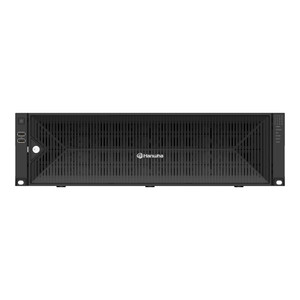
Hanwha XRN-6420DB4 Overview
The Hanwha XRN-6420DB4 is a 64-channel 8K NVR built on Intel's 12th generation processor architecture, designed for large-scale enterprise surveillance deployments requiring extended storage and high-bandwidth recording. This model supports up to 160TB raw capacity across 16 SATA HDD bays (up to 10TB per drive) and delivers industry-standard compression formats for maximum flexibility in mixed-camera environments.
Hanwha XRN-6420DB4 Performance & Recording Capabilities
- Recording bandwidth up to 520 Mbps (distributed mode); 300 Mbps (normal mode); maintains 520 Mbps in RAID normal, degrade, and rebuild modes
- Playback bandwidth up to 200 Mbps
- 32MP maximum camera resolution for recording and display
- H.265, H.264, and MJPEG compression support for codec flexibility
- Dual stream recording with schedule, event pre/post, and continuous modes
- Fisheye dewarping available locally and via CMS
- AI Search capability with Wisenet AI cameras
Hanwha XRN-6420DB4 Storage & Redundancy
- 16 SATA HDD bays supporting up to 160TB raw capacity
- RAID 5/6 support (minimum HDD count per RAID type required)
- HDD hot swap capability in RAID mode
- Redundant power supply for continuous operation
- Automatic Recovery Backup (ARB) and N+1 failover
- iSCSI support for external storage integration
Hanwha XRN-6420DB4 Display & Network Features
- Dual HDMI output: HDMI 1 supports 3840x2160 @ 30Hz; HDMI 2 supports 1920x1080 @ 60Hz
- Dynamic layout, virtual channel view, and clone/expand modes for flexible monitoring
- Local web management supporting up to 100 users
- ONVIF and SUNAPI protocol compatibility
- P2P QR code support for remote access
- Two-way audio with alarm I/O
- WiseStream support for bandwidth optimization
Hanwha XRN-6420DB4 Security & Compliance
- Embedded Linux operating system
- NDA compliant and TPM integrated
- Compatible with Wisenet Viewer and Wisenet mobile applications
- Event triggers include alarm input, video loss, camera events (sensor, motion detection, video analytics, defocus, audio), dynamic events, and user events