


Overview
SKU:
922NTNNEK0014G
Condition:
New
Availability:
Usually ships in 24 hours
Warranty
2-Year HID Global Limited Warranty

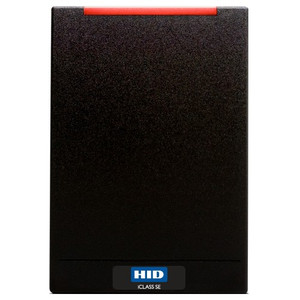
HID 922NTNNEK0014G RM40 Iclass SE HF Reader
HID 922NTNNEK0014G Smart Card ReaderThe HID 922NTNNEK0014G is a multi-technology reader designed for access control integrations requiring simultaneou…

HID 922NTNNEK0014G RM40 Iclass SE HF Reader
$368.99
Your recommended setup
Review items below — quantities update pricing automatically.
Item
Qty
Status
Price
Optional Add-Ons recommended
Services optional
Bundle Summary
Bundle Subtotal:
$0.00
Optional Add-Ons:
$0.00
Services:
$0.00
Total:
$0.00
Overview
SKU:
922NTNNEK0014G
Condition:
New
Availability:
Usually ships in 24 hours
Warranty
2-Year HID Global Limited Warranty
Description

HID 922NTNNEK0014G Smart Card Reader
The HID 922NTNNEK0014G is a multi-technology reader designed for access control integrations requiring simultaneous support for iCLASS SE credentials, magnetic stripe cards, and proximity badges. This RM40 form-factor reader consolidates multiple credential types into a single installation point, reducing hardware footprint while maintaining enterprise-grade security capabilities.
Overview
The 922NTNNEK0014G combines HID's iCLASS SE high-frequency standard operating mode with low-frequency proximity card detection and magnetic stripe processing. The reader outputs data via Wiegand protocol in 26-bit format with ABA magnetic stripe-to-Wiegand conversion, making it compatible with legacy access control systems while supporting newer credential ecosystems. LED and buzzer feedback provide real-time user indication—red LED status with green flash confirmation and audible buzzer confirmation.
Key Features
- Multi-Technology Support: iCLASS SE (high-frequency), low-frequency proximity (LF OFF configuration), and magnetic stripe card reading in a single form factor
- Data Output: Wiegand protocol with 26-bit ABA magnetic stripe format and CSN 32-bit MSB credential encoding
- RM40 Housing: Compact rectangular form factor suitable for standard door frame installations and retrofit applications
- Visual Feedback: Red LED indicator with green flash confirmation; audible buzzer enabled for card read acknowledgment
- High-Frequency Standard Mode: iCLASS SE operates in HF STD (standard) configuration with optional SIO and SEOS support for enhanced encryption protocols
- Open Collector Output: Wiegand signal transmission via open collector circuit topology for direct integration with standard access control panels
- Tamper Detection: Optional tamper switch included for physical security monitoring
- Black Finish: Standard black powder-coat housing for institutional and commercial environments
- IPM Configuration: IPM OFF mode for standard Wiegand operation without in-reader PIN entry
Integration & Compatibility
The 922NTNNEK0014G is engineered for direct integration into existing access control ecosystems using Wiegand-based controllers and readers. The 26-bit ABA format with magnetic stripe-to-Wiegand conversion enables backward compatibility with legacy card formats while supporting modern iCLASS SE deployments. The reader's open collector output connects to standard access control panel Wiegand inputs without additional converters, simplifying installation across single-door and multi-door access control systems. Integrators can operate the reader in credential-only mode or combine iCLASS SE with magnetic stripe fallback for redundant credential acceptance.
The RM40 form factor accommodates installation in standard door frame dimensions typical to commercial and institutional access control specifications. The reader's optional tamper detection circuit integrates with access control systems supporting alarm monitoring.
Typical Applications
This reader model suits medium-scale deployments requiring multi-credential support without system-wide infrastructure upgrades. Common applications include office building entry systems, multi-tenant facility access, educational institution card readers, healthcare facility doors, and government building access control points where iCLASS SE and legacy magnetic stripe credentials must coexist operationally.
Ted Perry
I have evaluated the HID 922NTNNEK0014G during integration planning for multi-credential door systems. This reader consolidates three credential technologies into a single RM40 installation point, which simplifies hardware provisioning and reduces panel-side wiring complexity compared to deploying separate readers for each credential type.
Technical Highlights:
- Wiegand Output: 26-bit ABA format with CSN 32-bit MSB encoding ensures compatibility with both legacy access control panels designed for magnetic stripe readers and newer systems supporting credential diversification.
- Multi-Technology Recognition: iCLASS SE in HF standard mode, low-frequency proximity option, and magnetic stripe handling eliminate the need for end-user credential selection—the reader auto-detects and processes each credential type without operator intervention.
- Feedback Design: Red LED with green flash confirmation and audible buzzer create immediate tactile feedback, reducing user uncertainty and support calls related to read success on first swipe.
Deployment Considerations:
- Verify your access control panel supports open collector Wiegand input before ordering. Older or specialized panels may require external converters—confirm during system audit.
- The optional tamper detection circuit should be wired into your panel's alarm monitoring loop if physical security is a compliance requirement. Confirm your installer includes this during commissioning.
- If you are phasing out magnetic stripe credentials, confirm iCLASS SE enrollment is complete before disabling the magnetic stripe reading function. The reader supports selective credential type activation at commissioning.
The 922NTNNEK0014G is a practical choice for integrators managing mixed-credential environments or conducting gradual credential technology migrations. Its Wiegand output and compact RM40 form factor make it a straightforward drop-in replacement for single-technology readers in existing systems.
Specifications
Product Type:
Access Control Reader, RM40 Form Factor
Communication:
Wiegand 26-bit
Credential_Type:
iCLASS SE, Magnetic Stripe (ABA), Proximity Card
Encryption:
iCLASS SE with optional SIO/SEOS
Reader_Type:
iCLASS SE, Magnetic Stripe, Low-Frequency Proximity
Have Questions?
Ask an Expert.
RELATED PRODUCTS


System Design, Deployment & Technical Support
Support services and planning resources for commercial surveillance, access control, and infrastructure deployments.
Fixed scope • Fixed price
System Design Assistance
- Get help validating product compatibility
- Coverage requirements
- Storage planning and deployment architecture before you buy.
Deployment & Configuration Support
- Access fixed-scope support for rollout planning
- User setup guidance
- Migration and system standardization across single-site or multi-site deployments
Guides, Tools & Calculators
- PoE requirements
- Storage retention
- Camera selection and deployment methodology