
SKU:
PBL-1-1NOSCREEN
Condition:
New
Availability:
Usually ships in 24 hours
Industry Leading Prices
Quantity Discounts
Available
Certified Experts
Pre and Post-sales
Support Available
Free Shipping on Orders Over $499
Same Day Shipping on
Most Orders

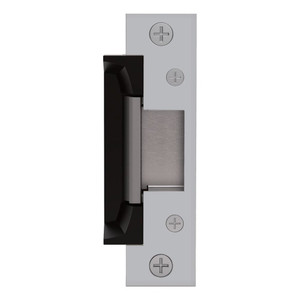
HES PBL-1-1NOSCREEN Panic Station Latching
Add to Cart for Sale Price!
$149.99
Description
HES PBL-1-1NOSCREEN Panic Station Latching
The HES PBL-1-1NOSCREEN is a latching panic station engineered for integration into SG/302 security system architectures. This single-unit configuration operates without normally-closed (NO-N/C) functionality and excludes an integrated display screen, making it ideal for facilities requiring dedicated panic activation with centralized or remote system feedback. The latching mechanism ensures sustained signal activation for verified panic events, providing reliable emergency response capability in access control and perimeter security applications.
Key Features
- Single latching panic station unit for SG/302 security systems
- No integrated display screen for minimalist installation
- Latching mechanism provides sustained panic signal activation
- Compatible with standard security control panels supporting panic button relay inputs
- Suitable for covert deployment or low-profile control point installations
- Indoor wall-mounted or surface-mounted configuration options
- Designed for access control and perimeter security environments
Technical Highlights
- Form Factor: Panic Station
- Integration: Compatible with HES SG/302-based security architectures
- Signal Activation: Latching mechanism for verified panic events
- Wiring: Standard relay input integration with host security control panels
- Installation: Wall-mounted or surface-mounted indoor deployment
Applications
The PBL-1-1NOSCREEN is ideal for facilities where panic activation occurs at dedicated points while system feedback and monitoring happen at centralized control locations. Common deployment scenarios include secure access facilities, perimeter control stations, and environments where operator feedback is managed remotely rather than locally. The absence of a screen reduces visual profile, making it suitable for discreet installations where panic capability must be present but not prominently visible.
Specifications
Form Factor:
Panic Station
Have Questions?
Ask an Expert.
RELATED PRODUCTS