
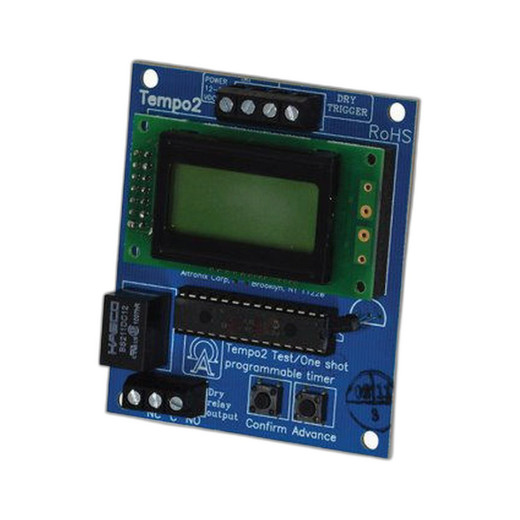


Product images are provided for reference and may not represent the exact model, configuration, or included
components.
Overview
SKU:
TEMPO2
Condition:
New
Availability:
Usually ships in 24 hours
Warranty
Lifetime Limited Warranty
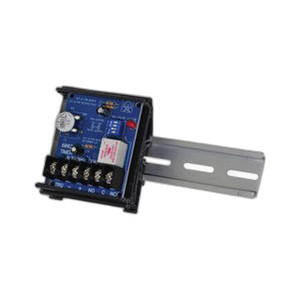
Altronix TEMPO2 Universal 2-Stage Timer
Altronix TEMPO2 Universal 2-Stage Timer The Altronix TEMPO2 is a universal two-stage timer module designed for security and access control applicatio…
Altronix TEMPO2 Universal 2-Stage Timer
$58.99
Your recommended setup
Review items below — quantities update pricing automatically.
Item
Qty
Status
Price
Optional Add-Ons recommended
Services optional
Bundle Summary
Bundle Subtotal:
$0.00
Optional Add-Ons:
$0.00
Services:
$0.00
Total:
$0.00
Overview
SKU:
TEMPO2
Condition:
New
Availability:
Usually ships in 24 hours
Warranty
Lifetime Limited Warranty
Description
Altronix TEMPO2 Universal 2-Stage Timer
The Altronix TEMPO2 is a universal two-stage timer module designed for security and access control applications requiring sequential or delayed activation. Operating across 12-24VAC/VDC input voltage, the TEMPO2 delivers two independent outputs with adjustable timing intervals from 1 to 60 seconds, enabling flexible relay logic and gate control sequencing in security systems.
Key Features
- Universal 12-24VAC/VDC input voltage compatibility
- Two independent timer outputs for sequential control
- Adjustable timing range: 1-60 seconds per stage
- Compact form factor suitable for integration into control panels
- Lifetime Limited Warranty coverage
Applications
- Access control gate and door hold-open delay sequences
- Security system relay logic and event timing
- Two-stage activation of warning lights or audible alerts
- Controlled egress timing in emergency exit systems
Specifications
- Input Voltage: 12-24VAC/VDC
- Number of Outputs: 2
- Timing Range: 1-60 seconds
- Warranty: Lifetime Limited Warranty
- MPN: TEMPO2
Specifications
Input Voltage:
12-24VAC/VDC
Number of Outputs:
2
Warranty:
Lifetime Limited Warranty
Have Questions?
Ask an Expert.
RELATED PRODUCTS

System Design, Deployment & Technical Support
Support services and planning resources for commercial surveillance, access control, and infrastructure deployments.
Fixed scope • Fixed price
System Design Assistance
- Get help validating product compatibility
- Coverage requirements
- Storage planning and deployment architecture before you buy.
Deployment & Configuration Support
- Access fixed-scope support for rollout planning
- User setup guidance
- Migration and system standardization across single-site or multi-site deployments
Guides, Tools & Calculators
- PoE requirements
- Storage retention
- Camera selection and deployment methodology