


Overview
SKU:
UISP-P-PRO
Condition:
New
Availability:
Usually ships in 24 hours
Warranty
Manufacturer Warranty
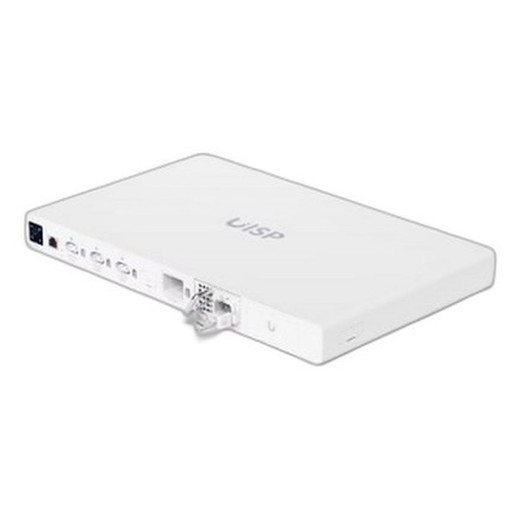
Ubiquiti UISP-P-PRO UISP Management Device
Ubiquiti UISP-P-PRO Management Device Overview The Ubiquiti UISP-P-PRO (MPN: UISP-P-PRO) is a centralized management device designed for the UISP Wir…

Ubiquiti UISP-P-PRO UISP Management Device
$435.99
Your recommended setup
Review items below — quantities update pricing automatically.
Item
Qty
Status
Price
Optional Add-Ons recommended
Services optional
Bundle Summary
Bundle Subtotal:
$0.00
Optional Add-Ons:
$0.00
Services:
$0.00
Total:
$0.00
Overview
SKU:
UISP-P-PRO
Condition:
New
Availability:
Usually ships in 24 hours
Warranty
Manufacturer Warranty
Description

Ubiquiti UISP-P-PRO Management Device
Overview
The Ubiquiti UISP-P-PRO (MPN: UISP-P-PRO) is a centralized management device designed for the UISP Wired product family. It functions as the operational hub for UISP-based network deployments, enabling unified monitoring, provisioning, and control of distributed infrastructure components across service provider and enterprise environments. Manufactured in China and weighing 12.8 lb, this device integrates into existing UISP ecosystems to streamline operations management and reduce deployment complexity.
Key Features
The UISP-P-PRO serves as the command center for UISP Wired networks, consolidating device management, performance telemetry, and configuration across multiple sites. It provides real-time visibility into network health and device status, enabling rapid troubleshooting and capacity planning. The device supports automated provisioning workflows, reducing manual configuration overhead during large-scale rollouts. Integration with the broader UISP ecosystem allows for seamless data flow between access points, routers, and other infrastructure devices.
Deployment Scenarios
The UISP-P-PRO is well-suited for service providers managing multi-site wireless and wired networks, enterprises with distributed locations requiring centralized oversight, and managed service providers handling customer infrastructure at scale. In carrier environments, the device enables efficient management of thousands of endpoints. For enterprises, it consolidates operational visibility across branch offices, data centers, and campus networks into a single pane of glass.
Network Integration
The UISP-P-PRO integrates with UISP Wired devices through native APIs and management protocols, enabling two-way communication for configuration, firmware updates, and performance data collection. It can operate as a standalone management appliance or integrate into broader network operations centers. Integration with standard monitoring and alerting systems allows operational teams to incorporate UISP infrastructure metrics into existing dashboards.
Installation Notes
The Ubiquiti UISP-P-PRO should be deployed in a centralized location with reliable network connectivity to all managed devices. Standard rack mounting or shelf placement is supported. Network administrators should ensure adequate bandwidth for management traffic, particularly during initial discovery and provisioning phases. Backup and redundancy strategies should be evaluated based on the criticality of the managed infrastructure.
Marty Allison, Infrastructure Architect
"The UISP-P-PRO occupies a specific operational role in provider deployments. If you're building out a carrier-grade or multi-tenant UISP Wired network, the management capabilities here are essential to operational scaling. The MPN UISP-P-PRO is straightforward to integrate with existing device inventories, and the operational overhead reduction justifies deployment cost in environments managing 50+ access points or more. For smaller single-site deployments, evaluate whether centralized management adds value versus simpler device-local management interfaces."
Specifications
Product Family:
UISP Wired
Country of Origin:
CN
Weight:
12.800 lb
Have Questions?
Ask an Expert.
RELATED PRODUCTS


System Design, Deployment & Technical Support
Support services and planning resources for commercial surveillance, access control, and infrastructure deployments.
Fixed scope • Fixed price
System Design Assistance
- Get help validating product compatibility
- Coverage requirements
- Storage planning and deployment architecture before you buy.
Deployment & Configuration Support
- Access fixed-scope support for rollout planning
- User setup guidance
- Migration and system standardization across single-site or multi-site deployments
Guides, Tools & Calculators
- PoE requirements
- Storage retention
- Camera selection and deployment methodology