
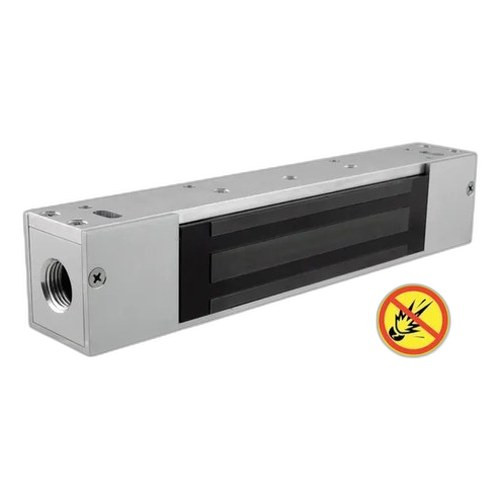

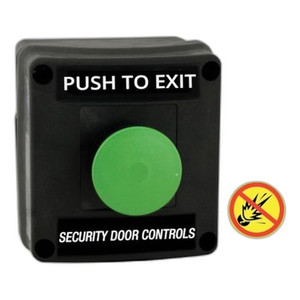


Product images are provided for reference and may not represent the exact model, configuration, or included
components.
Overview
SKU:
EP17624TJ
Condition:
New
Availability:
Usually ships in 24 hours
Warranty
Limited Lifetime Warranty
SDC/Security Door Controls EP17624TJ Explosion Proof EM Lock
SDC/Security Door Controls EP17624TJ Explosion Proof EM LockOverviewThe EP17624TJ is an explosion-proof electromagnetic lock engineered for hazardous …

SDC/Security Door Controls EP17624TJ Explosion Proof EM Lock
$1,975.99
Your recommended setup
Review items below — quantities update pricing automatically.
Item
Qty
Status
Price
Optional Add-Ons recommended
Services optional
Bundle Summary
Bundle Subtotal:
$0.00
Optional Add-Ons:
$0.00
Services:
$0.00
Total:
$0.00
Overview
SKU:
EP17624TJ
Condition:
New
Availability:
Usually ships in 24 hours
Warranty
Limited Lifetime Warranty
Description
SDC/Security Door Controls EP17624TJ Explosion Proof EM Lock
Overview
The EP17624TJ is an explosion-proof electromagnetic lock engineered for hazardous environments requiring certified access control. Operates at 24VDC and integrates with OSDP and TCP/IP enabled security management systems. Supports DESFire, MIFARE, NFC (13.56 MHz), and 125 kHz proximity credentials, accommodating diverse reader ecosystems deployed across security integrations.
Compatibility
Designed for multi-door enterprise deployments up to 63 doors with credential management for 250,000 users. Compatible with OSDP and TCP/IP communication protocols. Suitable for facilities where explosion-proof certification is mandatory—petrochemical plants, mining operations, hazardous material storage, and other regulated industrial environments.
Technical Specifications
- Strike Type: Electromagnetic Lock
- Door Capacity: 63 doors
- Max Users: 250,000
- Voltage: 24VDC
- Credential Types: DESFire, MIFARE, NFC/13.56MHz, 125kHz Proximity
- Communication: OSDP, TCP/IP
Specifications
Product Type:
Lock/Strike
Communication:
OSDP; TCP/IP
credential_type:
DESFire; MIFARE; NFC/13.56MHz; 125kHz Prox
door_capacity:
63 Door
max_users:
250000
Reader_Type:
Multi-credential
strike_type:
Electromagnetic Lock
Voltage:
24VDC
Have Questions?
Ask an Expert.
RELATED PRODUCTS



System Design, Deployment & Technical Support
Support services and planning resources for commercial surveillance, access control, and infrastructure deployments.
Fixed scope • Fixed price
System Design Assistance
- Get help validating product compatibility
- Coverage requirements
- Storage planning and deployment architecture before you buy.
Deployment & Configuration Support
- Access fixed-scope support for rollout planning
- User setup guidance
- Migration and system standardization across single-site or multi-site deployments
Guides, Tools & Calculators
- PoE requirements
- Storage retention
- Camera selection and deployment methodology