


Product images are provided for reference and may not represent the exact model, configuration, or included
components.
Overview
SKU:
02196-001
UPC:
7331021074545
Condition:
New
Availability:
Usually ships in 24 hours
Warranty
5-year warranty

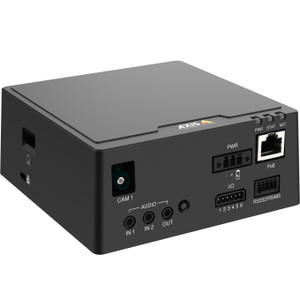
Axis FA51 Main Unit with HDMI Output
Axis FA51 Main Unit with HDMI Output The Axis FA51 Main Unit is a purpose-built intercom and surveillance solution designed for retail, banking, and o…
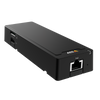
Axis FA51 Main Unit with HDMI Output
$339.00
$329.99
Your recommended setup
Review items below — quantities update pricing automatically.
Item
Qty
Status
Price
Optional Add-Ons recommended
Services optional
Bundle Summary
Bundle Subtotal:
$0.00
Optional Add-Ons:
$0.00
Services:
$0.00
Total:
$0.00
Overview
SKU:
02196-001
UPC:
7331021074545
Condition:
New
Availability:
Usually ships in 24 hours
Warranty
5-year warranty
Description

Axis FA51 Main Unit with HDMI Output
The Axis FA51 Main Unit is a purpose-built intercom and surveillance solution designed for retail, banking, and office environments requiring discreet, high-performance monitoring. This single-channel main unit connects to one AXIS FA sensor unit and outputs live video via HDMI to external displays, enabling real-time monitoring and face detection at critical entry points. The direct HDMI connection eliminates network latency and maintains image display even during network outages, ensuring uninterrupted security coverage.
Key Features
- HDMI output for direct connection to Public Viewing Monitors (PVMs)
- Single-channel design compatible with all AXIS FA sensor units
- Full HDTV 1080p video at 25/30 fps
- Forensic WDR for clarity in mixed lighting conditions
- PoE powered (IEEE 802.3af, Class 3) for simplified installation
- H.264 video compression for efficient bandwidth and storage
- Integrated face detection with bounding box display on connected monitors
- Wired connectivity with IEEE 802.1X security
- 2 alarm input/output connections for extended integration
- AXIS Camera Application Platform support for customization
- HTTPS encryption and active tampering protection
- IP4X rating for protected indoor use
- Operating temperature range: -20 to 50°C
Technical Specifications
Video Performance: The FA51 delivers 1920×1080 resolution at 25/30 fps, providing excellent detail for facial recognition and incident investigation. Forensic WDR technology ensures visibility across scenes with significant contrast between bright and dark areas—critical for store entrances and bank lobbies with mixed natural and artificial lighting.
Connectivity & Power: PoE (Power over Ethernet, Class 3) eliminates the need for separate power supplies, reducing installation complexity. Wired connectivity ensures stable, low-latency communication. IEEE 802.1X authentication secures device access on enterprise networks.
Compression & Storage: H.264 encoding minimizes bandwidth consumption and storage requirements without sacrificing image quality. Integration with Axis Zipstream technology further optimizes storage efficiency while preserving forensic detail.
Applications
- Retail theft deterrence and prevention
- Bank and financial institution entry monitoring
- Corporate office access control and security
- Public-facing facilities requiring real-time visual feedback
- Environments with limited network infrastructure
Marty Allison
The FA51 addresses a specific but important security gap: providing immediate visual feedback at high-risk entry points without relying on networked infrastructure. The HDMI-direct architecture is particularly valuable in retail environments where network outages cannot compromise monitoring, and where visible face detection on public displays serves as an active deterrent. The combination of Forensic WDR and 1080p resolution ensures that facial recognition systems (integrated via AXIS Camera Application Platform) can operate reliably regardless of lighting conditions.
PoE Class 3 simplifies deployment and reduces infrastructure costs compared to traditional analog systems. This device is ideal for organizations prioritizing uptime, deterrence visibility, and forensic capability in a compact, cost-effective form factor.
Specifications
Frame Rate:
25/30fps
Wide Dynamic Range:
Forensic WDR
Max Resolution:
1920x1080
Max frames per second:
25 / 30
Lens Type:
No
Features:
PoE
Video Compression:
H.264
Active Tampering:
PoE
Alarm Inputs/Outputs:
2
AXIS Camera Application Platform:
Yes
Digital I/O:
Yes
Power Type:
PoE
PoE Class:
3
HTTPS Encryption:
PoE
IEEE 802.1X:
Yes
Local Storage:
PoE
Operating Temperature:
-20 to 50 °C
IP Rating:
IP4X
Product Type:
Intercom
Connectivity:
Wired
Have Questions?
Ask an Expert.
RELATED PRODUCTS


Axis F41 Main Unit
$499.00
$483.99
Save $15.01

Axis F34 Main Unit
$429.00
$415.99
Save $13.01
System Design, Deployment & Technical Support
Support services and planning resources for commercial surveillance, access control, and infrastructure deployments.
Fixed scope • Fixed price
System Design Assistance
- Get help validating product compatibility
- Coverage requirements
- Storage planning and deployment architecture before you buy.
Deployment & Configuration Support
- Access fixed-scope support for rollout planning
- User setup guidance
- Migration and system standardization across single-site or multi-site deployments
Guides, Tools & Calculators
- PoE requirements
- Storage retention
- Camera selection and deployment methodology