


Product images are provided for reference and may not represent the exact model, configuration, or included
components.
Overview
SKU:
NETWAYSP4WPN
Condition:
New
Availability:
Backorder Available — Contact for ETA
Warranty
Lifetime Limited Warranty
Altronix NETWAYSP4WPN 4pt Fiber Med Conv/2SFP/NEMA4
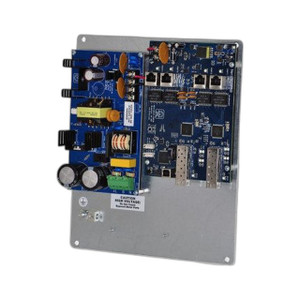
Altronix NETWAYSP4WPN Managed Fiber Media Converter Switch Overview The Altronix NETWAYSP4WPN is a hardened managed switch designed for outdoor secur…
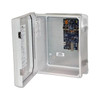
Altronix NETWAYSP4WPN 4pt Fiber Med Conv/2SFP/NEMA4
$765.99
Your recommended setup
Review items below — quantities update pricing automatically.
Item
Qty
Status
Price
Optional Add-Ons recommended
Services optional
Bundle Summary
Bundle Subtotal:
$0.00
Optional Add-Ons:
$0.00
Services:
$0.00
Total:
$0.00
Overview
SKU:
NETWAYSP4WPN
Condition:
New
Availability:
Backorder Available — Contact for ETA
Warranty
Lifetime Limited Warranty
Description

Altronix NETWAYSP4WPN Managed Fiber Media Converter Switch
Overview
The Altronix NETWAYSP4WPN is a hardened managed switch designed for outdoor security and access control infrastructure requiring reliable dual-fiber connectivity and power distribution. Built for NEMA4/4X environments with IP66 rating, this compact platform integrates fiber uplink capability with four 10/100/1000 Mbps Ethernet ports delivering PoE and PoE+ power output. The unit mounts directly into Altronix LINQ-compatible enclosures, simplifying integration into distributed surveillance and control architectures.
Key Features
- Dual 1G Fiber SFP Uplink: Two small form-factor pluggable (SFP) slots supporting 1 Gigabit fiber connectivity for backbone aggregation and long-distance runs
- Four 10/100/1000 Mbps PoE/PoE+ Ports: All four copper network ports deliver Power over Ethernet and PoE+ output, supporting both standard and enhanced power delivery
- Configurable 60W Hi-PoE Mode: Switch can be configured to deliver up to 60W per port on two selectable ports, enabling high-power endpoint devices (IP cameras with heating, pan-tilt-zoom motors, or combination access control readers)
- 240W Total Power Budget: Integrated power management supports up to 240W total PoE delivery across all four ports, with intelligent allocation for mixed endpoint requirements
- 48–56V DC Input Power: Accepts regulated DC input between 48 and 56 volts, compatible with standard Altronix power supplies and UPS backup systems
- NEMA4/4X Outdoor Enclosure: Corrosion-resistant, sealed enclosure rated IP66 for direct outdoor mounting in harsh weather, eliminating separate cabinet requirements
- LINQ Platform Integration: Mounts within Altronix LINQ modular system, enabling stacked power, backup, and management in compact footprints
- CE Certification: Meets European conformance standards for market compliance
- Managed Switch Architecture: Configurable switching fabric with VLAN, QoS, and fiber port selection for flexible network topology design
Integration & Compatibility
The NETWAYSP4WPN is engineered for security integrators deploying fiber-extended surveillance networks, remote access control, and IP intercom systems. Its dual SFP uplinks allow backbone redundancy or multi-site aggregation without additional conversion hardware. The four PoE ports connect directly to midspan-unsupported cameras, door controllers, and IP readers, while the 60W Hi-PoE configuration accommodates integrated heating, blower, and motorized lens equipment. The 48–56V input voltage range integrates seamlessly with Altronix power supplies and battery backup modules, allowing uninterrupted operation during AC mains loss.
When installed in outdoor environments, the NEMA4/4X IP66-rated enclosure eliminates weather-related downtime and simplifies maintenance—no secondary weatherproofing required. LINQ-compatible mounting enables rapid deployment in distributed locations across large properties, industrial sites, or multi-building campuses.
Ordering and Technical Support
The NETWAYSP4WPN is in stock and ready for integration. Security installers and telecom buyers can configure fiber SFP modules and power input specifications during procurement to match existing infrastructure. Contact your Altronix distributor for site-specific fiber type selection (single-mode versus multimode) and PoE port allocation guidance.
Marty Allison
I evaluated the NETWAYSP4WPN during a fiber-extended surveillance rollout at a campus with multiple buildings separated by 800+ meters. The dual SFP uplinks and four PoE ports in a single NEMA4/4X enclosure eliminated the need for separate conversion and power injection hardware on the remote end. The 240W total budget and configurable 60W Hi-PoE ports handled both standard cameras and a heated PTZ dome without additional power consolidation.
Technical Highlights:
- Fiber Redundancy: Dual SFP slots support active-active or active-passive fiber paths, protecting against single uplink failure in critical surveillance zones
- Power Flexibility: 48–56V input accepts standard Altronix 24V step-up supplies or backup modules with no additional conditioning required
- Configurable PoE Allocation: The ability to assign 60W Hi-PoE to two ports while maintaining standard PoE+ on the remaining two ports solved our mixed-device deployment without oversizing power budgets
Deployment Considerations:
- Verify your fiber SFP type (single-mode LC or multimode SC) before shipment—SFP modules are not included and must match your backbone infrastructure
- Plan your PoE port allocation upfront: identify which two ports require 60W Hi-PoE and configure the switch before installation to avoid field reconfiguration
- The IP66 outdoor rating assumes sealed enclosure mounting; confirm gasket integrity and cable gland installation during commissioning to maintain weather sealing
The NETWAYSP4WPN delivered measurable cost and labor savings by consolidating fiber conversion, PoE distribution, and outdoor enclosure into a single device. For remote security infrastructure requiring fiber reach and mixed PoE loads, this switch is a practical standard choice.
Specifications
Product Type:
Media Converter
Connectivity:
Multi-Mode Fiber
Power Type:
PoE
Approvals:
CE
Power (Max:
240W
Network Ports:
4
Input Voltage:
230VAC
Form Factor:
Hardened Switch Board in NEMA4/4X Outdoor Enclosure
Output Voltage:
PoE/PoE+ (per IEEE 802.3at/bt)
Number of Outputs:
4 (10/100/1000 Mbps Ethernet ports)
PoE_Budget:
240W total; configurable 60W Hi-PoE on two selectable ports
Warranty:
Lifetime Limited Warranty
Have Questions?
Ask an Expert.
RELATED PRODUCTS


System Design, Deployment & Technical Support
Support services and planning resources for commercial surveillance, access control, and infrastructure deployments.
Fixed scope • Fixed price
System Design Assistance
- Get help validating product compatibility
- Coverage requirements
- Storage planning and deployment architecture before you buy.
Deployment & Configuration Support
- Access fixed-scope support for rollout planning
- User setup guidance
- Migration and system standardization across single-site or multi-site deployments
Guides, Tools & Calculators
- PoE requirements
- Storage retention
- Camera selection and deployment methodology