
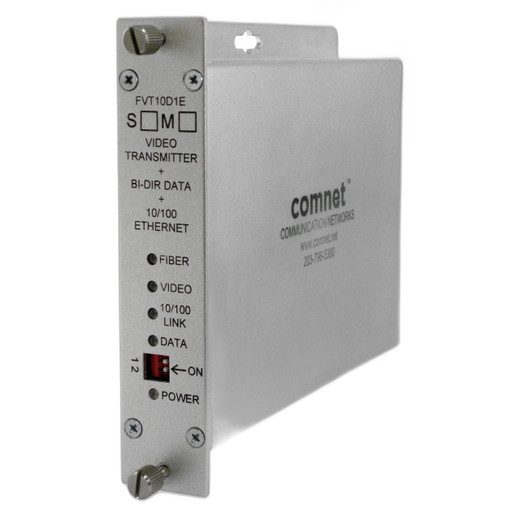

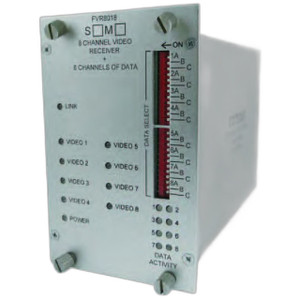


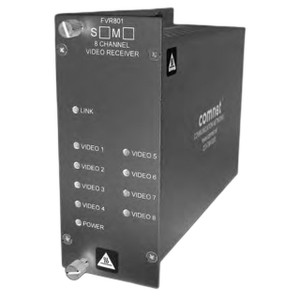
Product images are provided for reference and may not represent the exact model, configuration, or included
components.
Overview
SKU:
FVT10D1EMM
Condition:
New
Availability:
Usually ships in 24 hours
Warranty
Limited Lifetime Warranty
ComNet FVT10D1EMM Fiber Video Transmitter SFP Module
ComNet FVT10D1EMM Fiber Video TransmitterThe ComNet FVT10D1EMM is a single-mode fiber video transmitter module designed for integration into distribut…
ComNet FVT10D1EMM Fiber Video Transmitter SFP Module
$1,773.99
Your recommended setup
Review items below — quantities update pricing automatically.
Item
Qty
Status
Price
Optional Add-Ons recommended
Services optional
Bundle Summary
Bundle Subtotal:
$0.00
Optional Add-Ons:
$0.00
Services:
$0.00
Total:
$0.00
Overview
SKU:
FVT10D1EMM
Condition:
New
Availability:
Usually ships in 24 hours
Warranty
Limited Lifetime Warranty
Description

ComNet FVT10D1EMM Fiber Video Transmitter
The ComNet FVT10D1EMM is a single-mode fiber video transmitter module designed for integration into distributed security and broadcast infrastructure. This SFP (Small Form-Factor Pluggable) module operates at 10/100 Mbps speeds and supports extended transmission distances up to 30 meters over fiber cabling, making it suitable for installations where electrical isolation and long-distance video signal transmission are required.
Key Features
- Single-Mode Fiber Support: Engineered for single-mode fiber transmission, providing superior signal integrity and reduced modal dispersion over longer distances compared to multimode alternatives
- 10/100 Mbps Data Rate: Operates at standard Fast Ethernet speeds, compatible with legacy and contemporary network infrastructure
- 11 Integrated Ports: Provides 11 connection points for flexible system architecture and multi-channel video distribution scenarios
- 30-Meter Maximum Range: Capable of transmitting video signals reliably across distances up to 30 meters, suitable for building-scale security deployments
- DIN Rail Mountable: Compact form factor with DIN rail compatibility enables simplified installation in telecommunications cabinets, security racks, and network equipment enclosures
- Unmanaged Operation: Simplified deployment without requirement for network management software or configuration protocols; plug-and-play integration for standardized installations
- SFP Module Form Factor: Compact pluggable design allows integration into compatible chassis and switching equipment with minimal footprint requirements
Overview
The FVT10D1EMM addresses the core requirements of security integrators and telecom installers who need fiber-based video transmission for campus installations, critical infrastructure facilities, and applications requiring electrical isolation between distributed camera locations and central monitoring stations. The single-mode fiber specification ensures compatibility with long-haul telecommunications standards and reduces susceptibility to electromagnetic interference common in industrial and RF-heavy environments.
As an unmanaged SFP module, the FVT10D1EMM eliminates configuration complexity while maintaining the electrical and optical performance standards required for professional video surveillance and broadcast applications. The 11-port architecture supports multi-channel deployments where distributed video sources require simultaneous transmission to centralized collection points or network video recorders.
Integration & Compatibility
The FVT10D1EMM integrates into existing ComNet chassis and third-party SFP-compatible switching platforms. Unmanaged operation ensures compatibility across diverse network architectures without requiring VLAN configuration, spanning tree protocols, or management IP assignment. The module operates transparently within bridged network segments, making it suitable for retrofit installations where existing network documentation or configuration access may be limited.
Fiber cabling specifications should be verified to match the single-mode fiber designation to ensure optimal optical performance. Termination standards (LC, SC, or ST) must align with installation infrastructure. The 30-meter maximum range specification applies under standard laboratory conditions; actual performance may vary based on fiber quality, connector type, and environmental factors specific to the deployment site.
James Everett
I've evaluated the ComNet FVT10D1EMM during deployments where fiber isolation and compact form factors are critical. This SFP module handles the specific use case of bridging distributed video sources across installations where electrical safety or EMI rejection requires fiber separation from primary network switching infrastructure.
Technical Highlights:
- Single-Mode Fiber Transmission: The FVT10D1EMM's single-mode specification minimizes modal dispersion, enabling the advertised 30-meter range with predictable signal quality across installations without intermediate amplification or regeneration
- Unmanaged SFP Architecture: Eliminates the need for dedicated management interfaces or configuration workflows; the module operates in transparent bridging mode, suitable for installations where network documentation or vendor support may be limited
- 11-Port Density: The multi-port design supports parallel video channel distribution, reducing the number of separate modules required for multi-source installations
Deployment Considerations:
- Verify fiber cabling infrastructure uses single-mode fiber matching the module's optical specifications to avoid performance degradation or signal loss
- The 30-meter range specification should be validated during site survey and commissioning; longer distances or higher quality requirements may necessitate modal conditioning or inline amplification
- Confirm SFP slot availability and compatibility in target chassis or switching platform before procurement; not all Ethernet switches accommodate video-optimized SFP profiles
For security integrators standardizing on fiber-based video distribution, the FVT10D1EMM provides a straightforward, compact solution. Ensure single-mode fiber terminations, cabling runs, and connector types are documented during design review to avoid field commissioning delays.
Specifications
Product Type:
SFP Module
din_rail:
Yes
fiber_type:
Single Mode
Managed:
Unmanaged
max_range:
30m
Ports:
11
Speed:
10/100
Have Questions?
Ask an Expert.
RELATED PRODUCTS

System Design, Deployment & Technical Support
Support services and planning resources for commercial surveillance, access control, and infrastructure deployments.
Fixed scope • Fixed price
System Design Assistance
- Get help validating product compatibility
- Coverage requirements
- Storage planning and deployment architecture before you buy.
Deployment & Configuration Support
- Access fixed-scope support for rollout planning
- User setup guidance
- Migration and system standardization across single-site or multi-site deployments
Guides, Tools & Calculators
- PoE requirements
- Storage retention
- Camera selection and deployment methodology