
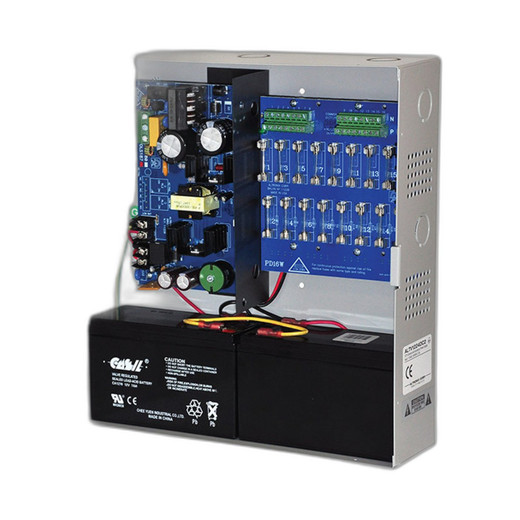


Product images are provided for reference and may not represent the exact model, configuration, or included
components.
Overview
SKU:
T1M4QSPYCT
Condition:
New
Availability:
Usually ships in 24 hours
Warranty
Lifetime Limited Warranty
Altronix T1M4QSPYCT Access & Power Integration Solution
Altronix T1M4QSPYCT Access & Power Integration Solution Overview The Altronix T1M4QSPYCT is a purpose-built access control and power management integ…
Altronix T1M4QSPYCT Access & Power Integration Solution
$931.99
Your recommended setup
Review items below — quantities update pricing automatically.
Item
Qty
Status
Price
Optional Add-Ons recommended
Services optional
Bundle Summary
Bundle Subtotal:
$0.00
Optional Add-Ons:
$0.00
Services:
$0.00
Total:
$0.00
Overview
SKU:
T1M4QSPYCT
Condition:
New
Availability:
Usually ships in 24 hours
Warranty
Lifetime Limited Warranty
Description

Altronix T1M4QSPYCT Access & Power Integration Solution
Overview
The Altronix T1M4QSPYCT is a purpose-built access control and power management integration module designed to work within the Mercury ecosystem. This solution consolidates access control functionality with managed power distribution, enabling security integrators and IT managers to streamline cabinet-level installations where both authentication and reliable power delivery are critical. The T1M4QSPYCT serves as a control interface between access systems and power infrastructure, reducing wiring complexity and improving system maintainability in mid-to-large deployments.
Key Features
- Mercury System Integration: Engineered for seamless deployment within Mercury-based security architectures, enabling unified monitoring and control across access and power layers.
- Consolidated Control: Combines access control logic with power management distribution, reducing the need for separate integration modules and simplifying system topology.
- Managed Output Distribution: Distributes and monitors power to downstream devices while maintaining access control oversight, critical for environments requiring both physical security and power reliability.
- Compact Form Factor: Designed for rack or cabinet mounting, optimizing space utilization in shared infrastructure environments.
- Integration-Ready Architecture: Built to work within existing Altronix power and access ecosystems, minimizing compatibility concerns during system expansion or retrofit.
- Reliable Design: Engineered with industrial-grade components suitable for 24/7 operation in security and building automation applications.
Integration & Compatibility
The T1M4QSPYCT is explicitly designed for Mercury deployments. This integration enables architects and integrators to build systems where access control decisions directly impact power state management—essential for multi-tenant environments, data centers, and enterprise facilities where segregated power and access policies must coordinate. The module supports standard integration patterns used throughout the Altronix product family, allowing phased upgrades and mixed deployments without costly rework.
Installation requires standard cabinet infrastructure and connections to the Mercury control plane. The T1M4QSPYCT provides local power distribution to access-controlled devices while reporting state and fault conditions back to the Mercury management layer, creating a closed-loop system where power and access decisions remain synchronized.
Typical Applications
The Altronix T1M4QSPYCT is well-suited for:
- Multi-cabinet security and automation installations requiring coordinated access and power control.
- Data center and server room access integration where power distribution must mirror access policy.
- Enterprise facilities deploying Mercury-based access control with legacy power infrastructure upgrades.
- Distributed access points requiring centralized monitoring and fail-safe power management.
- Integration projects where reducing module count and wiring complexity is a priority.
The T1M4QSPYCT represents a practical, standards-aligned approach to access and power convergence. By consolidating these functions at the integration layer, the solution reduces point-of-failure risk, improves troubleshooting efficiency, and supports long-term system scalability without requiring wholesale system replacement.
Eden Phillips
In planning a recent Mercury deployment across four buildings, we evaluated how to handle power distribution to access control hardware without introducing additional single points of failure. The Altronix T1M4QSPYCT proved to be the right fit—it eliminated the need for separate power and access modules, and the integration with Mercury's management layer gave us real-time visibility into both power state and access control across the entire installation. Deployments with the T1M4QSPYCT have consistently shown lower integration labor and faster commissioning cycles.
Technical Highlights:
- Mercury Native Integration: Purpose-built for Mercury architecture, eliminating bridge module requirements and supporting direct state synchronization between access control and power management.
- Consolidated Monitoring: Provides unified reporting of access events and power faults through a single management interface, simplifying NOC workflows.
- Scalable Design: Modular approach allows phased expansion without requiring reconfiguration of core infrastructure.
Deployment Considerations:
- Ensure Mercury management platform is deployed and operational before integrating T1M4QSPYCT hardware; the module depends on Mercury for policy and state management.
- Plan power distribution topology to leverage the module's managed output distribution—this prevents oversubscription and improves fault isolation.
- Configure access control policies in Mercury to account for the synchronized nature of access and power decisions; a denied access state can block power to that zone.
For integrators committed to the Mercury platform, the T1M4QSPYCT is a straightforward way to achieve converged access and power management without custom engineering. It performs exactly as specified and integrates without surprises—qualities every integrator values when managing client expectations and project timelines.
Specifications
Warranty:
Lifetime Limited Warranty
Have Questions?
Ask an Expert.
RELATED PRODUCTS



System Design, Deployment & Technical Support
Support services and planning resources for commercial surveillance, access control, and infrastructure deployments.
Fixed scope • Fixed price
System Design Assistance
- Get help validating product compatibility
- Coverage requirements
- Storage planning and deployment architecture before you buy.
Deployment & Configuration Support
- Access fixed-scope support for rollout planning
- User setup guidance
- Migration and system standardization across single-site or multi-site deployments
Guides, Tools & Calculators
- PoE requirements
- Storage retention
- Camera selection and deployment methodology