


Product images are provided for reference and may not represent the exact model, configuration, or included
components.
Overview
SKU:
IE-2AD
Condition:
New
Availability:
Usually ships in 24 hours
Warranty
2-Year Warranty
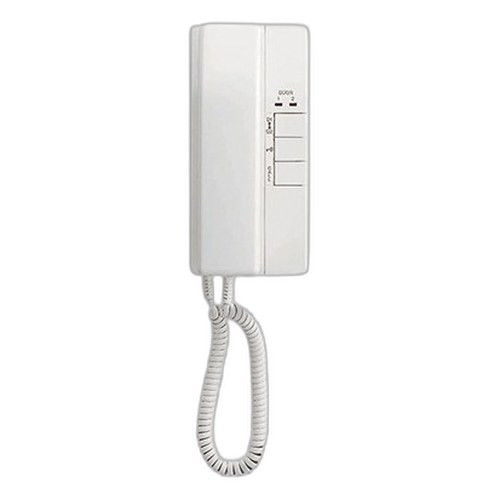
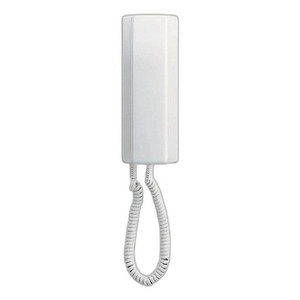
Aiphone IE-2AD Handset Master Station for 2 Doors
Aiphone IE-2AD Handset Master Station Intercom Overview The Aiphone IE-2AD is a handset-based master station designed for 2-door intercom systems wit…
Aiphone IE-2AD Handset Master Station for 2 Doors
$271.99
Your recommended setup
Review items below — quantities update pricing automatically.
Item
Qty
Status
Price
Optional Add-Ons recommended
Services optional
Bundle Summary
Bundle Subtotal:
$0.00
Optional Add-Ons:
$0.00
Services:
$0.00
Total:
$0.00
Overview
SKU:
IE-2AD
Condition:
New
Availability:
Usually ships in 24 hours
Warranty
2-Year Warranty
Description

Aiphone IE-2AD Handset Master Station Intercom
Overview
The Aiphone IE-2AD is a handset-based master station designed for 2-door intercom systems with capacity for up to 3 answering stations. Purpose-built for facilities requiring private handset communication, the IE-2AD delivers straightforward door call management with pleasant chime notification and integrated door release functionality. This system leverages Aiphone's 75 years of intercom technology expertise to provide reliable visitor access control in residential, commercial, and institutional settings.
Key Features
- 2-Door Configuration: Manages calls from two separate door stations, ideal for multi-entrance access points
- 3-Room Answering Capacity: Supports up to 3 answering stations, enabling distributed response across zones or departments
- Handset Communication: Private handset design ensures confidential conversations without ambient audio exposure
- Pleasant Chime Notification: Friendly chime tone alerts users to incoming visitor calls, reducing intrusive sound while maintaining awareness
- Door Release Capability: Integrated door strike control allows authorized handset users to remotely unlock doors without additional relay modules
- All-Call Functionality: Broadcast capability to reach multiple answering stations simultaneously for facility-wide announcements
- PoE+ Power (802.3at): Powered entirely over Ethernet, eliminating dedicated power wiring and simplifying installation
- Rack Mount Design: Compact form factor optimized for equipment room or wall-mount deployment
Integration & Compatibility
The IE-2AD integrates with Aiphone door stations and sub-master handsets using manufacturer-specified cabling. Door-to-master connections use Aiphone #822202 wire, while master-to-subscriber links utilize Aiphone #822206 cable. Compatible sub-master units such as the IEH-1CD expand answering reach without additional master stations. Deployment flexibility supports both flush-mount and surface-mounted door stations including the IE-JA (stainless steel flush mount) and AX-DM (mullion mount audio door station), accommodating various architectural requirements.
The system supports standard intercom call flow: visitors activate a door station, triggering the chime at the IE-2AD master; authorized personnel answer via handset, conduct screening conversation, and activate door release if access is granted. This model number (IE-2AD, often searched as IE 2AD) serves as the core control point for the entire system.
System Architecture
As a handset master station, the IE-2AD centralizes call routing and door control logic. The pleasant chime distinguishes visitor calls from general intercom traffic, improving user experience in busy environments. Door release functionality is built-in rather than requiring external relays, reducing bill-of-materials complexity and installation time. All-call capability ensures critical announcements reach all connected answering stations simultaneously, supporting emergency communication or facility-wide notifications.
Marty Allison
During a recent deployment planning phase, I evaluated the Aiphone IE-2AD for a multi-building campus environment with distinct entry points. The handset-based architecture proved ideal where privacy during visitor screening was a priority—unlike speaker-based systems, conversations remain confidential. The IE-2AD's PoE+ power requirement simplifies cabling substantially; we avoided running parallel low-voltage pairs by leveraging existing network infrastructure.
Technical Highlights:
- 2-Door, 3-Room Scalability: The IE-2AD accommodates two external door stations with three separate answering points, providing flexibility for multi-zone facilities without overcomplicating the master station
- Integrated Door Release: Built-in door control removes the need for external relay modules or additional control boards, reducing single points of failure
- PoE+ Powered (802.3at): All power delivered over Ethernet simplifies infrastructure, especially valuable in retrofit scenarios where power availability at the master location is limited
- All-Call Broadcasting: Facility-wide announcement capability supports emergency protocols and operational announcements without routing through individual door stations
Deployment Considerations:
- Plan cabling runs using Aiphone #822202 for door-to-master and #822206 for master-to-subscriber connections; mixing wrong cable types will cause signal integrity issues
- Position the IE-2AD master station in a central, staffed location where personnel can respond reliably to all incoming calls; answering station distribution should mirror traffic patterns
- If future expansion beyond 2 doors or 3 rooms is anticipated, validate whether upgrading to a larger Aiphone series (such as IE-8MD) is more cost-effective than adding a secondary master station
For straightforward 2-door access control requiring private handset communication and integrated door release, the IE-2AD delivers reliable Aiphone engineering in a compact master station. The PoE+ architecture is particularly attractive for modern installations where network-based power simplifies deployment logistics.
Specifications
Power Type:
PoE+ (802.3at)
Form Factor:
Handset Master Station
Mount Type:
Rack
Audio Support:
Two-way; Chime tone
Communication:
CommunicationHandset for privacy
Wire_Type:
Wire TypeDoor to master - Aiphone #822202, Master to subs - Aiphone #822206
Have Questions?
Ask an Expert.
RELATED PRODUCTS
System Design, Deployment & Technical Support
Support services and planning resources for commercial surveillance, access control, and infrastructure deployments.
Fixed scope • Fixed price
System Design Assistance
- Get help validating product compatibility
- Coverage requirements
- Storage planning and deployment architecture before you buy.
Deployment & Configuration Support
- Access fixed-scope support for rollout planning
- User setup guidance
- Migration and system standardization across single-site or multi-site deployments
Guides, Tools & Calculators
- PoE requirements
- Storage retention
- Camera selection and deployment methodology