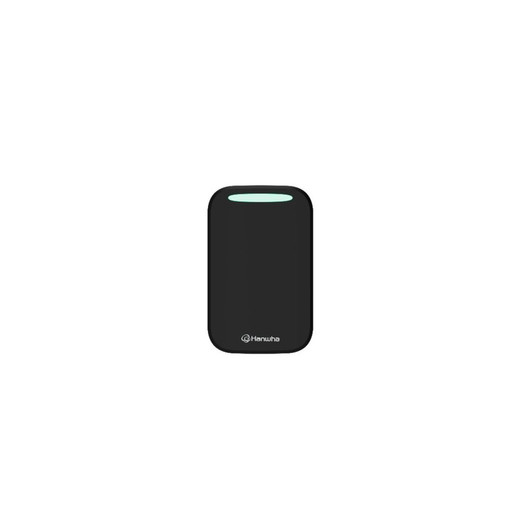
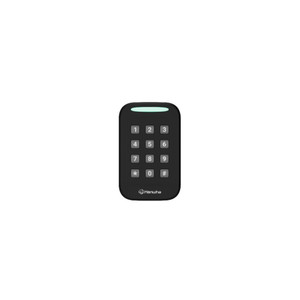
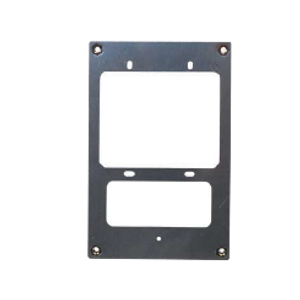
Hanwha NOD-AX20S Overview
The Hanwha NOD-AX20S is a multi-technology single gang access control reader designed for secure, modern credential authentication in commercial and institutional environments. This reader consolidates NFC, proximity, and Bluetooth credential technologies into a compact form factor, enabling flexible deployment across new and legacy access control infrastructures. The NOD-AX20S is purpose-built for integrators requiring seamless credential compatibility, automatic protocol detection, and remote management capabilities in both Wiegand and OSDP-based systems.
Hanwha NOD-AX20S Key Features
- Multi-Technology Credential Support: Reads 13.56 MHz NFC, 125 kHz proximity (PROX), and Bluetooth BLE 5.3 credentials, with support for all Ethos and LEAF-supported credential formats, eliminating the need for multiple readers at single access points.
- Automatic Protocol Auto-Detect: Intelligently detects installation environment (Wiegand or OSDP infrastructure) and configures output format automatically, reducing on-site setup time and minimizing commissioning errors.
- EAL6+ Secure Element: Integrates a Common Criteria certified secure element (EAL6+) for cryptographic credential validation and protection against tampering attacks, meeting enterprise-grade security requirements.
- Remote Firmware Upgrade Capability: Supports over-the-air firmware updates for radio enable/disable, control sequencing adjustments, and feature enhancements without physical reader access, reducing operational overhead in large deployments.
- Accelerometer-Based Tamper Detection: Built-in accelerometer detects physical tampering attempts with immediate alert triggering, protecting against credential reader bypass attacks and unauthorized access attempts.
- Visual Feedback LED Array: Red/Green/Blue LED light bar at top provides real-time status indication for credential read success, reader availability, and system status, improving user experience and troubleshooting visibility.
- IP65 Weatherproofing: IP65 or better rating with UL94-V0 and UL746C-F1 rated plastics provides UV and water resistance, enabling deployment in indoor/outdoor transition zones and light exterior environments without protective housing.
- Wide Power Compatibility: Operates across 5–24 VDC input range with 500 mA typical draw at 12 VDC, supporting integration into both legacy 12 VDC systems and modern 24 VDC power architectures without additional conditioning.
- Compact Single Gang Form Factor: Measures 5.25"L × 3.29"W × 0.73"T (133.4 mm × 83.6 mm × 18.5 mm), fitting standard single gang electrical boxes for streamlined wall-mount installation without retrofit housing requirements.
- 2-Inch Read Range: Typical 2-inch read distance accommodates standard handheld credential positioning without requiring close proximity alignment, matching user expectations from legacy proximity systems.
- Extended Operating Temperature Range: Rated for -35°C to +66°C (-31°F to +151°F) operation with 95% humidity tolerance per EN 40-70°C specifications, enabling deployment in unconditioned entry vestibules and climate-variable spaces.
- Regulatory Compliance: FCC, IC, and CE certified with UL294 listing and OSDP Verified V2.2 status, ensuring compatibility with North American and European access control deployments and compliance with open protocol standards.
Hanwha NOD-AX20S Integration & Compatibility
The NOD-AX20S is OSDP Verified to V2.2, ensuring certified interoperability with OSDP-compliant control panels and management software. The reader's auto-detect functionality seamlessly integrates into existing Wiegand infrastructures while supporting modern OSDP deployments, eliminating the need for separate reader models based on control panel protocol. Supports all Ethos and LEAF credential formats, providing compatibility with modern NFC/Bluetooth mobile credentialing ecosystems and legacy proximity card systems deployed across multi-site organizations. Remote firmware upgrade capability enables dynamic radio frequency management and control sequencing adjustments across distributed reader populations without site visits, supporting geographically dispersed facility portfolios.