


Overview
SKU:
T2MK7F8Q
Condition:
New
Availability:
Usually ships in 24 hours
Warranty
Lifetime Limited Warranty
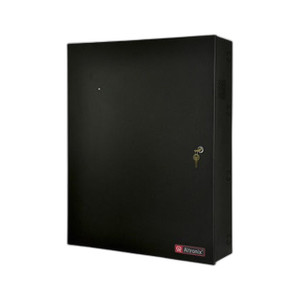
Altronix T2MK7F8Q 8-Door Access Control Integration Kit
Altronix T2MK7F8Q 8-Door Access and Power Integration KitThe Altronix T2MK7F8Q represents a modular, pre-integrated access control and power managemen…

Altronix T2MK7F8Q 8-Door Access Control Integration Kit
$1,235.99
Your recommended setup
Review items below — quantities update pricing automatically.
Item
Qty
Status
Price
Optional Add-Ons recommended
Services optional
Bundle Summary
Bundle Subtotal:
$0.00
Optional Add-Ons:
$0.00
Services:
$0.00
Total:
$0.00
Overview
SKU:
T2MK7F8Q
Condition:
New
Availability:
Usually ships in 24 hours
Warranty
Lifetime Limited Warranty
Description

Altronix T2MK7F8Q 8-Door Access and Power Integration Kit
The Altronix T2MK7F8Q represents a modular, pre-integrated access control and power management solution designed for mid-scale installations requiring synchronized door control, power distribution, and centralized supervision. This kit consolidates multiple Altronix and Mercury components into a unified system architecture, reducing design time and field integration complexity for security integrators deploying access systems across 8 doors.
Overview
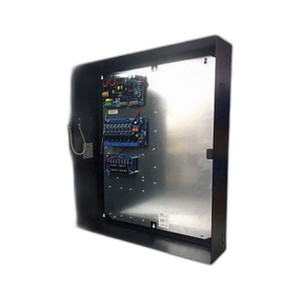
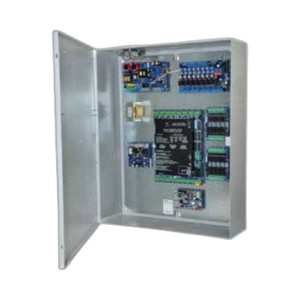
The T2MK7F8Q bundles industry-standard access control modules with dedicated power and backup infrastructure. The system integrates the eFlow104NB controller for door-level logic, the LINQ2 communication module for network connectivity, the ACM8 auxiliary control module for expanded relay outputs, the VR6 voltage regulator for stable power conditioning, and the PDS8 power distribution module managing current allocation across eight controlled points. This architecture supports mixed-voltage environments and provides configurable supervision for each access point.
Key Features
- 8-Door Capacity: Full control and monitoring across eight independent access points with individual relay control and status reporting
- eFlow104NB Controller: Dedicated access control processor with configurable logic programming and door-state supervision
- LINQ2 Module: Network integration for centralized system communication and remote status visibility
- ACM8 Auxiliary Module: Eight additional relay outputs for expanded control functions beyond primary door strikes
- VR6 Voltage Regulator: Stabilized output voltage management protecting downstream access control devices from line fluctuations
- PDS8 Power Distribution: Eight-channel current-managed power distribution with individual amp-per-channel limiting and short-circuit protection
- Modular Architecture: Each component functions as a standalone module, permitting staged deployment or component-level replacement without full system downtime
- Battery Backup Capable: Supports optional battery integration for critical access points during power loss scenarios
Integration and Deployment Considerations
The T2MK7F8Q is purpose-built for integrators standardizing on Altronix access infrastructure. The kit reduces bill-of-materials complexity by pre-selecting compatible modules, ensuring electrical and logical compatibility without field verification. The eFlow104NB operates as the primary decision engine, managing door unlock schedules, access-list processing, and event logging. The LINQ2 provides Ethernet connectivity to central management platforms, enabling remote arming, disarming, and audit trails across all eight doors. The VR6 and PDS8 collectively ensure that current draw from mag locks, electric strikes, and exit request buttons does not exceed design limits, preventing voltage sag that would cause access denial during simultaneous openings.
Installation integrates into existing rack or DIN-rail cabinet infrastructure. Power input connects to facility distribution, with conditioned output feeding each door's strike, lock, and request device. The ACM8 relay bank supports ancillary functions such as alarm relay closure, door-open alerts, or secondary access points requiring supervisory signaling separate from primary strike control.
Package Contents
The Altronix T2MK7F8Q kit includes one eFlow104NB access control module, one LINQ2 network interface, one ACM8 relay expansion module, one VR6 voltage regulator, and one PDS8 eight-channel power distribution unit. Cables, mounting hardware, and terminal blocks are included. Backup battery and enclosure are ordered separately according to site requirements and redundancy specifications.
Jerry Tildsen
I evaluated the Altronix T2MK7F8Q during the planning phase of a 16-door campus access deployment. The kit's modular design proved valuable when facility requirements shifted mid-project—we deployed two kits in series, each managing eight doors, rather than designing a monolithic eight-door system. The T2MK7F8Q reduced procurement complexity and accelerated field testing because all modules were pre-selected for electrical compatibility.
Technical Highlights:
- eFlow104NB Processing: Handles door-level decisions and supervision independently, reducing central management server load and improving fault isolation when network connectivity lapses temporarily
- LINQ2 Network Integration: Enables centralized audit logging and remote status monitoring without requiring proprietary management hardware at each location
- ACM8 Relay Expansion: The eight additional relays were critical for our deployment—five doors required secondary notifications (alarm relay closure on forced entry, door-hold alerts), leaving three relays for future expansion
- PDS8 Current Management: Prevents nuisance voltage sag when multiple mag locks energize simultaneously, a common failure mode in facilities with rapid guest throughput
Deployment Considerations:
- Battery backup sizing: Calculate total wattage for mag locks and strikes in fail-secure mode, then select battery capacity for your required hold time. The kit does not include battery or charger—order the Altronix backup module separately
- LINQ2 network placement: Position the module within 100 feet of your management server or switch to minimize latency in time-critical access decisions
- Current limiting per channel: Configure PDS8 channel limits based on device nameplate current plus 20% margin. Door strikes typically draw 2–4 amps; mag locks 1.5–3 amps. Verify your pin configuration against the eFlow104NB wiring diagram before powering up
The T2MK7F8Q is a solid choice for integrators maintaining standardized Altronix deployments. The kit bundles genuine compatibility and reduces design-phase rework. Budget additional time for battery integration and network testing, but expect straightforward commissioning if you follow the module data sheets.
Specifications
Form Factor:
Modular kit (rack/DIN-rail mountable)
Number of Outputs:
8 doors + 8 relay outputs (ACM8)
Battery_Backup:
Supported (battery and charger ordered separately)
Supervision:
Door-level supervision via eFlow104NB
Warranty:
Lifetime Limited Warranty
Have Questions?
Ask an Expert.
RELATED PRODUCTS

System Design, Deployment & Technical Support
Support services and planning resources for commercial surveillance, access control, and infrastructure deployments.
Fixed scope • Fixed price
System Design Assistance
- Get help validating product compatibility
- Coverage requirements
- Storage planning and deployment architecture before you buy.
Deployment & Configuration Support
- Access fixed-scope support for rollout planning
- User setup guidance
- Migration and system standardization across single-site or multi-site deployments
Guides, Tools & Calculators
- PoE requirements
- Storage retention
- Camera selection and deployment methodology