



Overview
SKU:
APCR640L
Condition:
New
Availability:
Usually ships in 24 hours
Warranty
2-Year Manufacturer Warranty
Write a Review

Write a Review
Speco Technologies
Speco Technologies APCR640L Single Gang Proximity Reader with Blu
Speco Technologies APCR640L Single Gang Proximity Reader with Blu
Speco Technologies APCR640L Single-Gang Proximity Reader and Keypad Overview The Speco APCR640L is a single-gang proximity reader designed for access…
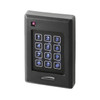
Speco Technologies APCR640L Single Gang Proximity Reader with Blu
$625.99
Your recommended setup
Review items below — quantities update pricing automatically.
Item
Qty
Status
Price
Optional Add-Ons recommended
Services optional
Bundle Summary
Bundle Subtotal:
$0.00
Optional Add-Ons:
$0.00
Services:
$0.00
Total:
$0.00
Overview
SKU:
APCR640L
Condition:
New
Availability:
Usually ships in 24 hours
Warranty
2-Year Manufacturer Warranty
Description

Speco Technologies APCR640L Single-Gang Proximity Reader and Keypad
Overview
The Speco APCR640L is a single-gang proximity reader designed for access control integration in both indoor and outdoor installations. This reader combines contactless proximity card technology with Bluetooth Low Energy (BLE) mobile credential support, offering flexibility in credential deployment across mixed-technology environments. Built with IP67-rated weatherproof construction and tamper-resistant design, the APCR640L serves security integrators requiring multi-credential platform support without complex wiring or external housing.
Key Features and Specifications
- Extended Read Range: Up to 15 feet for mobile credentials via Bluetooth Low Energy; physical proximity cards read up to 4 inches
- Dual Technology Platform: 125 kHz proximity (RFID) and 2.4 GHz Bluetooth Low Energy support, enabling simultaneous proximity card and smartphone-based credential access
- Card Format Support: Sector and card serial number (CSN) reads compatible with standard proximity card protocols
- Integrated Keypad: Numeric keypad with standard audio beeper and four-state LED indicator (red, green, amber, off) for real-time access feedback
- Weather and Tamper Resistant: IP67-rated enclosure suitable for covered outdoor and indoor wall-mount applications; electronics sealed in epoxy potting; black snap-on cover included standard
- Compact Single-Gang Form Factor: 3" W × 4.6" H × 0.75" D (76mm × 117mm × 19mm) mounting on standard mullions, metal door/window frames, and flat surfaces
- Power Efficiency: 0 mA typical draw, 90 mA peak at 12 VDC; operates on +8 to +14 VDC supply
- Output Flexibility: Wiegand (26-bit and custom formats) or OSDP8 interface; compatible with Pyramid and certain HID 125-kHz proximity protocols
- Environmental Rating: Operating temperature –31°F to 150°F (–35°C to +66°C); 0% to 90% relative humidity tolerance
- Cabling Requirements: 24 AWG minimum multiconductor stranded with overall foil shield
- Compliance and Certifications: FCC, ICC, CE, UL Standard 294, ULC 60839-11-12, ETL certified; NDAA Section 889 Part B compliant
Integration and Compatibility
The APCR640L outputs Wiegand or OSDP8 protocol, enabling integration with legacy access control panels and modern IP-based security management systems. Mobile credential provisioning through BLE reduces dependency on physical card issuance logistics, while sector/CSN card support maintains backward compatibility with existing proximity infrastructure. The reader's low power draw and compact footprint simplify retrofit installations in existing single-gang box configurations.
Deployment Flexibility
Weather-resistant construction with IP67 rating allows installation in covered outdoor environments, building entries, and interior secure areas. Epoxy-potted electronics and tamper-resistant housing provide physical security against environmental stress and unauthorized access attempts. The four-state LED and beeper deliver immediate visual and auditory feedback for access events, supporting operational transparency in high-traffic areas.
Jerry Tildsen
I've evaluated the APCR640L in mixed-credential deployments where organizations require both legacy proximity card infrastructure and emerging mobile credential adoption. This reader handles both requirements without forcing parallel hardware—a practical advantage when budget constraints limit retrofit scope. The 15-foot BLE range for mobile credentials is genuinely useful for lobby and common-area access points where card readers traditionally suffer handling delays.
Technical Highlights:
- Dual-Band Architecture: 125 kHz proximity and 2.4 GHz BLE on a single reader eliminates credential type lock-in, preserving investment in existing card libraries while enabling smartphone access for mobile-first sites.
- IP67 Weather Rating with Epoxy Potting: This reader withstands covered outdoor installation and high-humidity spaces where moisture ingress typically requires external protective housings—reducing installation cost and complexity.
- Protocol Flexibility (Wiegand/OSDP8): Support for both legacy Wiegand and modern OSDP8 output ensures compatibility across vintage panel infrastructure and contemporary access management systems.
Deployment Considerations:
- Verify your access panel or controller supports OSDP8 or Wiegand input before final integration; this reader outputs only these two protocols.
- Mobile credentials require BLE-enabled endpoint devices and prior provisioning through your access management platform—confirm your VMS or access software supports credential enrollment and revocation workflows.
- For installations exceeding the 4-inch physical card read range, position card readers within expected hand-presentation distance; the 15-foot mobile range does not apply to proximity cards.
The APCR640L is reliable for integrators modernizing access control in phases, especially where credential diversity and outdoor durability are operational requirements. Its straightforward output protocol and compact footprint reduce installation friction compared to larger, multi-reader solutions.
Specifications
Warranty:
2-Year Manufacturer Warranty
Have Questions?
Ask an Expert.
RELATED PRODUCTS
System Design, Deployment & Technical Support
Support services and planning resources for commercial surveillance, access control, and infrastructure deployments.
Fixed scope • Fixed price
System Design Assistance
- Get help validating product compatibility
- Coverage requirements
- Storage planning and deployment architecture before you buy.
Deployment & Configuration Support
- Access fixed-scope support for rollout planning
- User setup guidance
- Migration and system standardization across single-site or multi-site deployments
Guides, Tools & Calculators
- PoE requirements
- Storage retention
- Camera selection and deployment methodology