
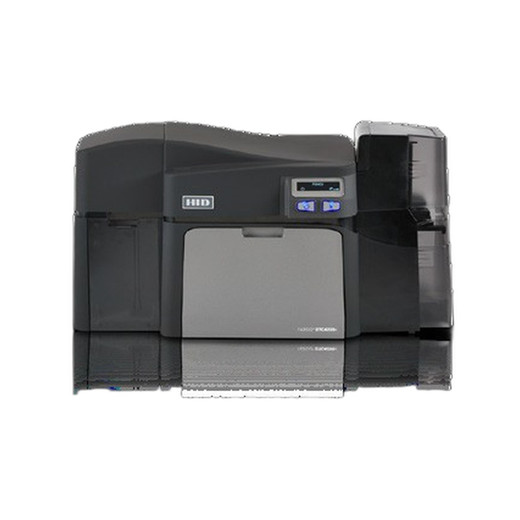

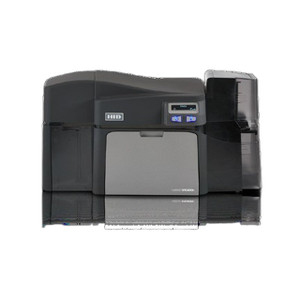

Overview
SKU:
52108
Condition:
New
Availability:
Usually ships in 24 hours
Warranty
2-Year HID Fargo Printer Limited Warranty

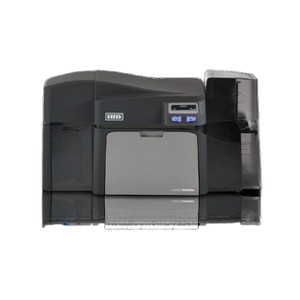
HID 52108 Fargo DTC4250e Dual ETH USB PROX Printer
HID 52108 DTC4250e Dual Ethernet Access Control Server Overview The HID 52108 represents a purpose-built access control platform engineered for mid t…

HID 52108 Fargo DTC4250e Dual ETH USB PROX Printer
$3,998.99
Your recommended setup
Review items below — quantities update pricing automatically.
Item
Qty
Status
Price
Optional Add-Ons recommended
Services optional
Bundle Summary
Bundle Subtotal:
$0.00
Optional Add-Ons:
$0.00
Services:
$0.00
Total:
$0.00
Overview
SKU:
52108
Condition:
New
Availability:
Usually ships in 24 hours
Warranty
2-Year HID Fargo Printer Limited Warranty
Description

HID 52108 DTC4250e Dual Ethernet Access Control Server
Overview
The HID 52108 represents a purpose-built access control platform engineered for mid to large-scale enterprise deployments. The DTC4250e dual Ethernet model delivers redundant network connectivity with integrated server functionality, proximity reader support, and USB port expansion. This architecture eliminates single points of failure in network communication while centralizing credential management and door control logic on a single appliance.
Key Features
- Dual Ethernet Connectivity — Provides network redundancy and failover capability for mission-critical access control operations
- Integrated Proximity Reader — Native support for proximity-based credentials reduces external reader hardware requirements
- USB Port Expansion — Enables connection of additional readers, input/output modules, and peripherals without network overhead
- Internal Point Server Architecture — Centralized door and credential logic reduces latency and improves response time for access decisions
- Scalable Door Capacity — Supports enterprise-scale access control deployments across multiple facility zones
- Credential Flexibility — Compatible with proximity cards and badge formats commonly deployed in enterprise environments
Integration & Compatibility
The DTC4250e 52108 model integrates with enterprise access management software via dual Ethernet pathways, allowing for load-balanced communication and automatic failover. The internal point server function means the device operates as both credential validator and door controller, reducing dependency on external servers for real-time access decisions. USB connectivity supports legacy reader integration and expansion of input/output capacity without requiring additional network infrastructure. Proximity reader integration streamlines credential capture for facilities already invested in proximity badge ecosystems.
The dual Ethernet design is specifically suited for large facilities or multi-building campuses where network redundancy prevents access denial due to single-link failures. Organizations with high-traffic areas benefit from the internal processing capability, which eliminates round-trip latency to remote servers during peak card swipe periods.
Deployment Considerations
The HID 52108 functions as a standalone access control engine, requiring integration with management software and backend databases for full administrative capability. Facilities should plan for network switch redundancy to fully leverage the dual Ethernet ports. USB port capacity should be assessed against existing reader infrastructure to determine whether all readers will connect directly or whether network-based readers will be required for additional zones. Proximity credential support means existing badge stock remains usable without hardware replacement.
Karl Wilson
I've evaluated the HID 52108 during access control platform assessments for multi-building deployments. The dual Ethernet design addresses a specific operational pain point: single-path network dependencies that create access denial scenarios when switches fail or network maintenance occurs. The integrated proximity reader and USB expansion model reduces the bill of materials compared to external reader architectures.
Technical Highlights:
- Dual Ethernet Redundancy: Two independent network paths eliminate network bottlenecks and provide automatic failover, critical for facilities where access disruptions cascade to operations
- Internal Point Server: Real-time credential validation on the 52108 device itself eliminates latency inherent in server-dependent architectures, particularly beneficial during high-traffic periods
- Proximity Integration: Native support means no additional reader hardware required for proximity credentials, streamlining deployments where badge stock already exists
Deployment Considerations:
- Network infrastructure must support dual-path connectivity to realize redundancy benefits — single-switch deployments negate failover advantage
- USB port allocation should be inventoried against existing reader count; assess whether network-based readers will be required for expanded zones
- Integration with management software requires credential database synchronization; plan for software licensing and administrative access during deployment
For facilities with proximity badge infrastructure and multi-building layouts, the DTC4250e represents a solid core platform. The dual Ethernet and internal server capabilities reduce single points of failure that plague simple reader-only architectures. Verify your network switch capabilities support redundant paths before committing to dual Ethernet design.
Specifications
Product Type:
Access Control Server
Communication:
Dual Ethernet
Credential_Type:
Proximity Cards/Badges
Reader_Type:
Integrated Proximity Reader
Have Questions?
Ask an Expert.
RELATED PRODUCTS

System Design, Deployment & Technical Support
Support services and planning resources for commercial surveillance, access control, and infrastructure deployments.
Fixed scope • Fixed price
System Design Assistance
- Get help validating product compatibility
- Coverage requirements
- Storage planning and deployment architecture before you buy.
Deployment & Configuration Support
- Access fixed-scope support for rollout planning
- User setup guidance
- Migration and system standardization across single-site or multi-site deployments
Guides, Tools & Calculators
- PoE requirements
- Storage retention
- Camera selection and deployment methodology