



Overview
SKU:
SPA-P100B
Condition:
New
Availability:
Usually ships in 24 hours

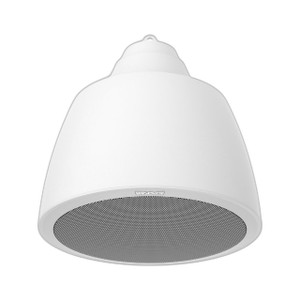
Hanwha SPA-P100B Black IP Pendant Speaker
Hanwha SPA-P100B Black IP Pendant SpeakerThe Hanwha SPA-P100B is a professional-grade IP pendant speaker engineered for networked public address, secu…
Hanwha SPA-P100B Black IP Pendant Speaker
$892.00
$523.99
Your recommended setup
Review items below — quantities update pricing automatically.
Item
Qty
Status
Price
Optional Add-Ons recommended
Services optional
Bundle Summary
Bundle Subtotal:
$0.00
Optional Add-Ons:
$0.00
Services:
$0.00
Total:
$0.00
Overview
SKU:
SPA-P100B
Condition:
New
Availability:
Usually ships in 24 hours
Description

Hanwha SPA-P100B Black IP Pendant Speaker
The Hanwha SPA-P100B is a professional-grade IP pendant speaker engineered for networked public address, security alerting, and audio distribution systems. Delivering up to 101dB of sound pressure level with PoE+ power, this speaker ensures clear, intelligible audio coverage across large indoor and outdoor spaces. Its two-way 8-inch low-frequency and 2-inch high-frequency driver design provides balanced audio reproduction across a 130Hz to 20kHz frequency range, making it suitable for both voice announcements and background music applications.
Key Features
- 10W Class D amplifier with 101dB maximum SPL (PoE+)
- PoE/PoE+ powered—single cable installation simplifies deployment
- Wide frequency response: 130Hz–20kHz (−10dB)
- Two-way 2.5-inch passive speaker configuration
- Horizontal/vertical coverage pattern: 130°/60° (1kHz/4kHz)
- Integrated 1GB storage plus Micro SD slot (up to 32GB SDHC)
- SIP VoIP compatibility with major platforms (Grandstream, Yealink, Cisco, Asterisk)
- Text-to-speech support in five languages (English, German, French, Spanish, Russian)
- Multi-source dynamic PA control: up to 48 audio sources and 256 zones (multicast)
- Dual contact I/O for integration with external devices and sensors
- Built-in speaker test and system logging tools
- Sleek black pendant design with IP-rated construction
Technical Specifications
- Audio Format Support: WAV, MP3 (mono/stereo, 64–320 kbps, 16–48 kHz sampling)
- Network: 10/100 Base-T Ethernet with IPv4, HTTP, SIP, mDNS, DNS, NTP, TCP, UDP, DHCP, ARP, ICMP
- Security: SHA-2 encryption, digest authentication, role-based access (admin, setup, user, guest), user activity logging
- Operating Environment: −20°C to +50°C; 10–85% RH (non-condensing)
- Dimensions: Φ269 × 256mm (H); 2.1kg
- Certifications: FCC Part 15B, ICES-003 (EMC); UL 62368-1, CAN/CSA 62368-1 (Safety)
- API: SUNAPI for third-party integration
Applications
Ideal for enterprise facilities, educational institutions, transportation hubs, retail environments, and security-critical sites requiring networked audio distribution. The SPA-P100B excels in multi-zone PA systems, emergency notification networks, two-way intercom setups, and integrated VoIP environments. Local audio storage and scheduler functions enable autonomous playback of announcements, alerts, and background content without reliance on external servers.
Marty Allison
The SPA-P100B represents a mature integration of IP audio and security infrastructure. Its dual-driver design and wide coverage pattern deliver consistent intelligibility across variable acoustic environments. The 91dB sensitivity at 1W ensures efficient operation within PoE power budgets while supporting high-SPL scenarios via PoE+ (IEEE 802.3at Type 2 Class 4).
Support for 48 simultaneous audio sources with multicast enables scalable enterprise deployments without bandwidth saturation. Built-in SIP compatibility and SUNAPI extensibility allow seamless integration into heterogeneous security ecosystems. Internal storage and TTS eliminate dependency on centralized servers for routine announcements, reducing latency and improving system resilience.
The combination of contact I/O, event triggers, and functional monitoring makes this speaker suitable for closed-loop emergency response and hazard alerting workflows.
Specifications
Product Type:
IP Pendant Speaker
Output Level:
-
THD + N Ratio (AES17 LPF:
-
S/N Ratio (20kHz LPF, A-WTD:
-
Description:
Built in 10W Class D
Ethernet:
10/100 Base-T
Internal Memory:
1 GBytes
External Memory (Micro SD:
SDHC upto 32GB (SANDISK)
Contact Input. Dry contact:
One channel
Contact Output. Dry contact (NO:
One channel
Operating Temperature:
-20 ~ +50℃ (-4°F ~ +122°F)
Operating Humidity:
10~85% RH (Non-Condensing)
IP Rating:
-
Weight:
2.1Kg
Size:
Φ269*256(H)mm
Color:
Black/White
Certificate:
EMC : FCC Part 15 Subpart B, ICES-003 Safety : UL 62368-1, CAN/CSA 62368-1
Power Type:
PoE
PoE:
PoE+(IEEE 802.3 at type 2 Class 4)
Input Sensitivity:
Sound Level Meter
Frequency Response:
Sound Level Meter
Supported Audio Format:
WAV, MP3 in mono/stereo from 64 kbps to 320 kbps. Sampling rate from 16 kHz up to 48 kHz
Speaker Component:
2Way 8" LF Drive & 2" HF Driver. Passive type
Max. Sound Pressure Level (PoE:
97dB
Max. Sound Pressure Level (PoE:
101dB
Frequency Range (-10dB:
130Hz~20kHz
Sensitivity (1Watt:
91dB
Coverage Pattern:
(HxV) : 130°(1kHz) / 60°(4kHz)
Security:
Password protection : admin,setup,user,guest (sha-2, Digest authentication, User access log) Digest authentication, User access log
Supported Protocols:
IPv4, HTTP, SIP, mDNS, DNS, NTP, TCP, UDP, DHCP, ARP, ICMP
API (Application Programming Interface:
SUNAPI
Multi-source Dynamic PA control:
Multi-source up to 48 (Multicast) (Audio 24CH + Mic 24CH) Up to 256 Zone Control (Multicast) Up to 20 Zone Control (Unicast) Up to 255 Groups
VoIP:
Tested with SIP clients such as Grandstream, Yealink, Cisco, MicroSIP softphone and PBX supplier such as Asterisk Tested with SIP client such as Grandstream and PBX supplier such as Grandstream Supported SIP features: DTMF (RFC2833) Supported codecs:
TTS:
English(US, UK), German, French, Spanish, Russian
Audio Monitoring:
Speaker test by graphic level meter (Built in test tool)
Event & Preset:
Virtual Contact, Dry contact
Functional Monitoring:
Connection verification, Built-in system logging
Have Questions?
Ask an Expert.
RELATED PRODUCTS


System Design, Deployment & Technical Support
Support services and planning resources for commercial surveillance, access control, and infrastructure deployments.
Fixed scope • Fixed price
System Design Assistance
- Get help validating product compatibility
- Coverage requirements
- Storage planning and deployment architecture before you buy.
Deployment & Configuration Support
- Access fixed-scope support for rollout planning
- User setup guidance
- Migration and system standardization across single-site or multi-site deployments
Guides, Tools & Calculators
- PoE requirements
- Storage retention
- Camera selection and deployment methodology