



Overview
SKU:
T2MK7F4D
Condition:
New
Availability:
Usually ships in 24 hours
Warranty
Lifetime Limited Warranty
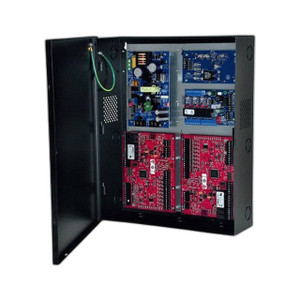
Altronix T2MK7F4D 4-Door Access Control Kit
Altronix T2MK7F4D 4-Door Access Control and Power Integration Kit Overview The Altronix T2MK7F4D is a complete, bundled integration solution designed…

Altronix T2MK7F4D 4-Door Access Control Kit
$1,002.99
Your recommended setup
Review items below — quantities update pricing automatically.
Item
Qty
Status
Price
Optional Add-Ons recommended
Services optional
Bundle Summary
Bundle Subtotal:
$0.00
Optional Add-Ons:
$0.00
Services:
$0.00
Total:
$0.00
Overview
SKU:
T2MK7F4D
Condition:
New
Availability:
Usually ships in 24 hours
Warranty
Lifetime Limited Warranty
Description

Altronix T2MK7F4D 4-Door Access Control and Power Integration Kit
Overview
The Altronix T2MK7F4D is a complete, bundled integration solution designed for multi-door access control and power distribution deployments. This kit consolidates four essential components into a single package: the Trove2M2 enclosure, eFlow104NB power supply, ACM4CB current-limiting module, PD8ULCB power distribution board, and RSB1 relay supervision module. The T2MK7F4D delivers the interconnected infrastructure required by security integrators to deploy reliable door control, power management, and supervision across four independent access points without sourcing components individually.
Key Features
- Integrated 4-Door Framework: Factory-assembled kit bundles Trove2M2 enclosure with pre-integrated power, distribution, and supervision modules for rapid installation
- eFlow104NB Power Supply: Dedicated regulated power source included to support access control, lock, and auxiliary loads across the complete system
- ACM4CB Current-Limiting Module: Protects downstream door locks and solenoids with individual circuit protection and current-limiting supervision
- PD8ULCB Power Distribution Board: Eight-output distribution terminal manages simultaneous power delivery to multiple access devices with organized terminal connectivity
- RSB1 Relay Supervision Module: Provides relay-based supervision output for alarm reporting and fail-safe condition monitoring across door control circuits
- Modular Enclosure Design: Trove2M2 housing accommodates all included modules with DIN-rail mounting infrastructure for clean, serviceable layouts
- Field-Proven Integration: Combines matched Altronix and Mercury components selected for electrical compatibility and reliability in access control environments
- Scalable to Four Doors: Core architecture supports independent control and supervision of up to four access points from a single consolidated platform
Integration & Compatibility
The T2MK7F4D is engineered as a complete subsystem for integrators deploying door access infrastructure. The kit includes all necessary power regulation, current limiting, distribution, and supervision modules—eliminating the need to source and configure components separately. The eFlow104NB power source delivers stable voltage to the ACM4CB module, which enforces per-door current limits and protection. Power flows through the PD8ULCB distribution board to individual door locks, magnetic strikes, and auxiliary devices. The RSB1 relay module enables remote supervision signaling back to security panels or monitoring systems. This integrated approach reduces assembly time, improves reliability, and simplifies troubleshooting during commissioning and maintenance of the Altronix T2MK7F4D kit.
Package Contents
- Trove2M2 access control enclosure with DIN-rail mounting
- eFlow104NB regulated power supply module
- ACM4CB 4-channel current-limiting module
- PD8ULCB 8-output power distribution board
- RSB1 relay supervision module
James Everett
I've specified the Altronix T2MK7F4D in several multi-tenant and corporate access deployments over the past two years. What stands out is the thoughtful pairing of components—this isn't a random assortment. The kit addresses a real pain point: integrators typically had to source the enclosure, power supply, current limiting, distribution, and supervision modules from separate invoices, verify compatibility in the field, and troubleshoot integration issues. The T2MK7F4D eliminates that friction.
Technical Highlights:
- Consolidated Architecture: The eFlow104NB power source is sized and regulated specifically for the ACM4CB current-limiting module and PD8ULCB distribution board, ensuring stable voltage delivery without field-level power conditioning guesswork
- Supervised Current Limiting: The ACM4CB enforces per-door current limits, protecting solenoid and strike coils from inrush damage while the RSB1 relay module reports back to the access control panel if a door circuit draws excessive current or fails open
- Eight Distribution Outputs: The PD8ULCB provides eight terminal pairs, allowing simultaneous power distribution to locks, strikes, auxiliary sensors, and future expansion without external terminal blocks
Deployment Considerations:
- Confirm with the access control panel manufacturer that the RSB1 relay outputs match the panel's supervision input ratings (dry contact, voltage-free relay closure)
- Plan door current budgets in advance: the ACM4CB per-channel limiting must accommodate peak inrush of your selected lock and strike hardware; field testing before full deployment is recommended
- The Trove2M2 enclosure supports both surface-mount and recessed installation depending on your cabinet or wall configuration—plan conduit entry and cable routing during site survey
For integrators managing multiple door sites or building out access control infrastructure from the ground up, the T2MK7F4D delivers genuine operational value. It reduces purchasing complexity, shortens commissioning timelines, and improves support because all components are pre-qualified as a system. I continue to stock it and recommend it to peers.
Specifications
Form Factor:
Enclosure Kit
Number of Outputs:
8
Supervision:
Relay-based via RSB1 module
Warranty:
Lifetime Limited Warranty
Have Questions?
Ask an Expert.
RELATED PRODUCTS

System Design, Deployment & Technical Support
Support services and planning resources for commercial surveillance, access control, and infrastructure deployments.
Fixed scope • Fixed price
System Design Assistance
- Get help validating product compatibility
- Coverage requirements
- Storage planning and deployment architecture before you buy.
Deployment & Configuration Support
- Access fixed-scope support for rollout planning
- User setup guidance
- Migration and system standardization across single-site or multi-site deployments
Guides, Tools & Calculators
- PoE requirements
- Storage retention
- Camera selection and deployment methodology