



Overview
SKU:
AL600ULB
Condition:
New
Availability:
Usually ships in 24 hours
Warranty
Lifetime Limited Warranty
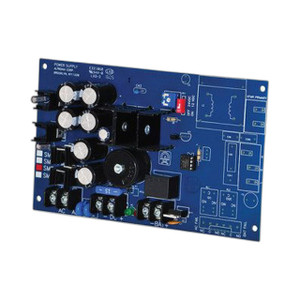
Altronix AL600ULB 12VDC or 24VDC @ 6 amp, AC andbattery mo
Altronix AL600ULB 12VDC/24VDC @ 6A Timer/Relay Module The Altronix AL600ULB is a timer/relay module that provides selectable 12VDC or 24VDC output at…
Altronix AL600ULB 12VDC or 24VDC @ 6 amp, AC andbattery mo
$166.99
Your recommended setup
Review items below — quantities update pricing automatically.
Item
Qty
Status
Price
Optional Add-Ons recommended
Services optional
Bundle Summary
Bundle Subtotal:
$0.00
Optional Add-Ons:
$0.00
Services:
$0.00
Total:
$0.00
Overview
SKU:
AL600ULB
Condition:
New
Availability:
Usually ships in 24 hours
Warranty
Lifetime Limited Warranty
Description
Altronix AL600ULB 12VDC/24VDC @ 6A Timer/Relay Module
The Altronix AL600ULB is a timer/relay module that provides selectable 12VDC or 24VDC output at 6 amps with integrated AC and battery backup capability. This board-level device accepts 28VAC input and supports sealed lead acid or gel-type battery backup (sold separately), making it suitable for access control and fire alarm applications requiring uninterrupted power.
Key Features
- Selectable 12VDC or 24VDC output voltage
- 6A maximum output current
- 28VAC input voltage
- AC Fail and Battery Presence supervision
- Fire alarm disconnect capability
- Single relay output
- UL294 (Access Control) and UL1481 (Fire Alarm) certifications
- Operating temperature range 0°C to 49°C (32°F to 120°F)
Specifications
- Input Voltage: 28VAC
- Output Voltage: 12VDC or 24VDC (selectable)
- Maximum Current: 6A @ 12VDC
- Board Dimensions: 7.1" × 4.3" × 2.3" (180.3mm × 109.2mm × 58.4mm)
- Battery Backup: Sealed lead acid or gel type (sold separately)
- Warranty: Lifetime Limited Warranty
Specifications
Product Type:
Timer/Relay Module
Input Voltage:
28VAC
Max Current:
6A @ 12VDC
fire_alarm_disconnect:
Yes
Supervision:
AC Fail, Battery Presence
Form Factor:
Board
Operating Temperature:
0°C to 49°C (32°F to 120°F)
Approvals:
UL294 (Access Control), UL1481 (Fire Alarm)
Output Voltage:
12VDC or 24VDC selectable
Number of Outputs:
1
Battery_Backup:
Sealed lead acid or gel type (sold separately)
Board_Dimensions:
7.1" x 4.3" x 2.3" (180.3mm x 109.2mm x 58.4mm)
Enclosure_Dimensions:
Shipping: 10" x 8" x 4" (254mm x 203.2mm x 101.6mm)
Warranty:
Lifetime Limited Warranty
Have Questions?
Ask an Expert.
RELATED PRODUCTS

System Design, Deployment & Technical Support
Support services and planning resources for commercial surveillance, access control, and infrastructure deployments.
Fixed scope • Fixed price
System Design Assistance
- Get help validating product compatibility
- Coverage requirements
- Storage planning and deployment architecture before you buy.
Deployment & Configuration Support
- Access fixed-scope support for rollout planning
- User setup guidance
- Migration and system standardization across single-site or multi-site deployments
Guides, Tools & Calculators
- PoE requirements
- Storage retention
- Camera selection and deployment methodology