


Overview
SKU:
O4IT2M
Condition:
New
Availability:
Usually ships in 24 hours
Warranty
3-Year Manufacturer Warranty
Write a Review
Write a Review
Speco Technologies
Speco Technologies O4IT2M 4MP Intensifier AI IP Turret Camera wit
Speco Technologies O4IT2M 4MP Intensifier AI IP Turret Camera wit
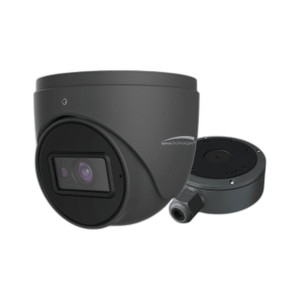
Speco Technologies O4IT2M 4MP Intensifier AI IP Turret Camera Overview The Speco Technologies O4IT2M is a 4MP IP turret camera engineered for surveil…
Speco Technologies O4IT2M 4MP Intensifier AI IP Turret Camera wit
$1,046.99
Your recommended setup
Review items below — quantities update pricing automatically.
Item
Qty
Status
Price
Optional Add-Ons recommended
Services optional
Bundle Summary
Bundle Subtotal:
$0.00
Optional Add-Ons:
$0.00
Services:
$0.00
Total:
$0.00
Overview
SKU:
O4IT2M
Condition:
New
Availability:
Usually ships in 24 hours
Warranty
3-Year Manufacturer Warranty
Description

Speco Technologies O4IT2M 4MP Intensifier AI IP Turret Camera
Overview
The Speco Technologies O4IT2M is a 4MP IP turret camera engineered for surveillance deployments requiring low-light performance and edge-based AI analytics. This model combines a 2.8-12mm motorized varifocal lens with Intensifier technology to deliver visibility in challenging lighting conditions. The O4IT2M includes an integral junction box for simplified field installation and carries NDAA certification for compliance-critical deployments. Built around a network-based architecture, this turret camera integrates into ONVIF-compatible video management systems and supports H.265 and H.264 compression standards for efficient bandwidth and storage utilization.
When this is the correct choice
The O4IT2M is the correct choice for security integrators and IT managers deploying surveillance in low-light indoor or outdoor environments where edge-based analytics and motorized zoom capability are required. Integrators seeking a turret form factor with NDAA compliance for federal, state, and municipal applications will find this model suitable. Organizations requiring variable focal length without separate PTZ infrastructure benefit from the motorized 2.8-12mm lens. The Intensifier imaging technology makes this model appropriate for facilities with inconsistent or minimal lighting where traditional fixed-gain sensors struggle. ONVIF Profile S/T/G compatibility ensures broad VMS ecosystem support.
When to choose a different model
If your deployment requires 360-degree pan or full tilt mechanical movement, a PTZ camera rather than a turret with motorized lens is more appropriate. For resolutions exceeding 4MP in constrained bandwidth environments, higher-resolution models may introduce encoding overhead that the O4IT2M avoids. If your facility operates exclusively in well-lit environments and does not require AI-driven edge analytics, a lower-cost fixed-lens model may provide better ROI. Installations requiring two-way audio should confirm audio capability before selection, as this specification must be verified with the manufacturer.
Optics and field of view
The O4IT2M integrates a 2.8-12mm motorized varifocal lens, delivering variable field-of-view adjustment without PTZ mechanisms. The motorized design enables integrators to adjust zoom during installation and through remote control via the network interface, supporting applications where fixed focal length is insufficient but full PTZ movement is unnecessary. This lens configuration balances wide-area coverage at 2.8mm with telephoto capability at 12mm, accommodating medium to long-range surveillance requirements in single-camera deployments.
Imaging performance and low light
The O4IT2M incorporates Intensifier technology to enhance low-light sensitivity without relying solely on infrared illumination. This approach delivers visibility in dimly lit environments—parking structures, warehouse interiors, and dusk/dawn transitions—where conventional sensors require IR support. The 4MP resolution (2688 x 1520) provides sufficient detail for object identification and evidence-grade recordings. Frame rate capability and minimum illumination specifications should be confirmed during procurement to validate performance against specific site lighting conditions.
Analytics and edge capabilities
The O4IT2M integrates AI capabilities for on-camera analytics processing. Edge-based object detection and classification reduce bandwidth consumption by filtering raw video and transmitting only events of interest. This architecture is particularly valuable in bandwidth-constrained or high-camera-density deployments where centralized analytics processing becomes a bottleneck. Specific analytics modules—people counting, loitering detection, direction vectors—should be verified during project specification to ensure alignment with security objectives.
Video encoding and streaming
The O4IT2M supports H.265 (HEVC) and H.264 (AVC) compression, enabling integrators to balance image quality against bandwidth and storage footprint. H.265 delivers approximately 50% bandwidth reduction versus H.264 at equivalent quality, a critical advantage in IP systems with constrained WAN links or large camera counts. Adaptive bitrate streaming and codec selection through the network interface allow runtime optimization based on available bandwidth and VMS policy.
Network and security
ONVIF Profile S/T/G compatibility ensures this camera integrates into heterogeneous VMS environments including Milestone, Axis Camera Station, and other major platforms. Standard IP camera security practices—firmware signing, secure boot, and network segmentation—apply. The O4IT2M carries NDAA certification, confirming compliance with Buy American Act requirements and supply-chain provenance standards for federal, state, and municipal procurement. Network configuration and credential management should follow your organization's camera security baseline during deployment.
Environmental and durability ratings
The turret form factor and included junction box provide protection suitable for indoor and outdoor installations. Environmental ratings—IP rating, operating temperature range, and materials—should be confirmed during specification to validate suitability for your deployment environment (e.g., coastal salt-air corrosion, extreme temperature ranges, high-vibration locations). Consult the technical datasheet for specific IK impact rating and housing materials if the deployment environment includes vandalism risk or mechanical stress.
Power and installation notes
The O4IT2M supports PoE (Power over Ethernet) operation, eliminating the need for separate power infrastructure at the camera location. The integral junction box simplifies field wiring and reduces installation labor by consolidating connector interfaces. Motorized lens control requires network configuration and driver installation in the VMS or third-party control application. Power consumption and PoE class requirements should be verified during network design to ensure adequate PoE switch capacity and cable runs.
What is included
Contact us for package details.
Jerry Tildsen
I evaluated the Speco O4IT2M during a municipal parking facility upgrade where low-light performance and NDAA compliance were mandatory. The Intensifier approach proved effective in reducing our reliance on IR illumination, which simplified power budgeting and eliminated maintenance issues associated with IR LED degradation over time. The motorized 2.8-12mm lens gave us zoom flexibility without requiring dedicated PTZ infrastructure, and ONVIF compatibility ensured rapid integration into the existing Milestone VMS environment.
Technical Highlights:
- Intensifier low-light imaging: Delivers visibility in dimly lit environments without exclusive dependence on IR; reduces IR maintenance burden and improves operational efficiency in mixed-lighting deployments.
- Motorized varifocal lens (2.8-12mm): Enables field-adjustable zoom during installation and remote focal-length control via network interface; eliminates need for dedicated PTZ equipment in applications requiring variable magnification.
- NDAA certification: Meets Buy American Act and supply-chain provenance requirements; essential for federal, state, and municipal projects with compliance mandates.
- H.265 compression support: Achieves ~50% bandwidth reduction versus H.264; critical for large deployments or constrained WAN environments.
- Edge-based AI analytics: On-camera object detection and classification reduce bandwidth by filtering and transmitting only event-triggered streams; decreases VMS and storage burden in high-camera-count systems.
Deployment Considerations:
- Motorized lens requires network control; ensure your VMS or integration framework supports motorized lens command sets (typically ONVIF Device Management interface).
- Intensifier performance varies with ambient lighting; validate imaging quality during site survey in expected lighting conditions before full-scale rollout.
- PoE power budget planning is essential; confirm your switch supports the camera's wattage requirement and verify cable runs do not exceed IEEE 802.3at distance limitations.
- Edge analytics processing load should be tested in pilot installations to confirm performance does not degrade under sustained operation or when multiple cameras stream simultaneously.
The O4IT2M is a solid choice for integrators needing NDAA-compliant surveillance with low-light capability and motorized zoom in a compact turret form. Its edge analytics and H.265 efficiency address operational cost concerns, and ONVIF standardization keeps integration complexity manageable. Validate Intensifier performance and motorized lens control integration during RFP evaluation, and you'll have a reliable platform for compliance-critical deployments.
Specifications
Warranty:
3-Year Manufacturer Warranty
Have Questions?
Ask an Expert.
RELATED PRODUCTS
System Design, Deployment & Technical Support
Support services and planning resources for commercial surveillance, access control, and infrastructure deployments.
Fixed scope • Fixed price
System Design Assistance
- Get help validating product compatibility
- Coverage requirements
- Storage planning and deployment architecture before you buy.
Deployment & Configuration Support
- Access fixed-scope support for rollout planning
- User setup guidance
- Migration and system standardization across single-site or multi-site deployments
Guides, Tools & Calculators
- PoE requirements
- Storage retention
- Camera selection and deployment methodology