


Overview
SKU:
O4FB2
Condition:
New
Availability:
Usually ships in 24 hours
Warranty
3-Year Manufacturer Warranty
Write a Review
Write a Review
Speco Technologies
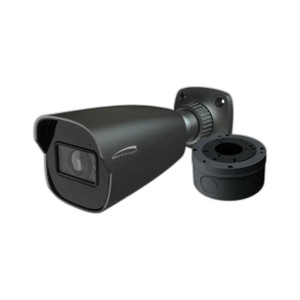
Speco Technologies O4FB2 4MP Flexible Intensifier AI IP Bullet
Speco Technologies O4FB2 4MP Flexible Intensifier AI IP Bullet
Speco Technologies O4FB2 4MP Flexible Intensifier AI IP Bullet Camera Overview The Speco Technologies O4FB2 is a 4MP network bullet camera designed f…
Speco Technologies O4FB2 4MP Flexible Intensifier AI IP Bullet
$287.99
Your recommended setup
Review items below — quantities update pricing automatically.
Item
Qty
Status
Price
Optional Add-Ons recommended
Services optional
Bundle Summary
Bundle Subtotal:
$0.00
Optional Add-Ons:
$0.00
Services:
$0.00
Total:
$0.00
Overview
SKU:
O4FB2
Condition:
New
Availability:
Usually ships in 24 hours
Warranty
3-Year Manufacturer Warranty
Description

Speco Technologies O4FB2 4MP Flexible Intensifier AI IP Bullet Camera
Overview
The Speco Technologies O4FB2 is a 4MP network bullet camera designed for outdoor and indoor surveillance deployments requiring long-range infrared coverage and AI-powered analytics. This camera combines a 1/1.8" CMOS sensor with flexible intensifier technology to deliver high-resolution imagery across day and night operating conditions. The O4FB2 integrates motion detection, line crossing, intrusion detection, face detection, and vehicle detection analytics directly at the edge, reducing backend processing requirements and enabling faster incident response in security integration projects.
When this is the correct choice
The O4FB2 excels in outdoor perimeter surveillance, parking lot monitoring, building facades, and access control points where extended IR range and AI analytics are operational requirements. IT managers and security integrators deploying ONVIF-compliant systems will find this camera's native integration support and PoE efficiency advantageous for mid-scale network deployments. Choose the O4FB2 when your project budget and power infrastructure support PoE delivery and you need real-time object detection without external analytics servers.
When to choose a different model
If your deployment requires panoramic coverage, PTZ capability, or indoor-only sealed enclosures with IK ratings for vandal resistance, consider alternatives. The O4FB2's fixed 2.8mm lens and bullet form factor are not suitable for applications requiring motorized zoom or extreme impact protection. Projects limited to 12V DC power only may require a different camera architecture.
Optics and field of view
The O4FB2 features a fixed 2.8mm lens, delivering a moderate-angle field of view suitable for mid-range surveillance zones. This focal length balances coverage breadth with facial and vehicle detail capture at typical installation distances of 30–60 feet. The lens is integrated into a weather-sealed bullet housing designed for outdoor mounting on walls, poles, and structural mounts.
Imaging performance and low light
Resolution reaches 4MP at 2560×1440 pixels, captured by a 1/1.8" CMOS sensor. The camera operates at 30 frames per second, providing smooth motion capture for forensic review and real-time monitoring. True Wide Dynamic Range (WDR) compensates for mixed lighting conditions—critical in scenes combining direct sunlight and shadowed areas. The camera's flexible intensifier technology enhances low-light performance, supported by an infrared illuminator with 164 feet (50 meters) effective range, enabling 24/7 color and monochrome operation. Day/night switching is automatic, transitioning between color capture and monochrome IR-assisted imaging as ambient light falls below detection thresholds.
Analytics and edge capabilities
The O4FB2 integrates on-board AI analytics including motion detection, line crossing detection, intrusion detection, face detection, and vehicle detection. These capabilities run directly on the camera's processor, eliminating the need for external analytics appliances and reducing latency in alarm triggering. Security integrators can configure detection zones and sensitivity thresholds via the camera's web interface or compatible VMS platforms, enabling customized alerting workflows.
Video encoding and streaming
The O4FB2 supports H.265+ and H.264+ compression alongside MJPEG, allowing flexible bandwidth optimization across varying network conditions. H.265+ encoding delivers bitrate savings of 25–50% compared to H.264 at equivalent quality, critical for large deployments relying on shared network infrastructure. Simultaneous streaming of multiple compression formats enables compatibility with legacy and modern VMS systems without re-encoding.
Network and security
ONVIF Profile S compliance ensures broad interoperability with industry-standard VMS platforms, NVR appliances, and third-party integrations. The camera connects via Ethernet (RJ45) with PoE power delivery, simplifying installation and eliminating dedicated 12V power runs. Standard network security protocols protect against unauthorized access and firmware tampering.
Environmental and durability ratings
An IP66 rating certifies protection against direct water jets and dust ingress, qualifying the O4FB2 for outdoor wall mounts, eaves, and semi-protected locations. The camera operates across a temperature range of -40°F to 140°F (-40°C to 60°C), suitable for both frigid northern climates and hot arid regions. The NDAA designation confirms compliance with defense supply chain requirements, supporting federal and critical infrastructure deployments.
Power and installation notes
Power delivery via PoE (802.3af) at 7.5W consumption enables single-cable installation using standard Cat5e or Cat6 cabling. The included junction box facilitates field termination and connector consolidation, reducing installation time and material costs. With a weight of 1.5 lbs, the O4FB2 mounts easily on standard bullet camera brackets without reinforcement.
What is included
Contact us for package details.
Ted Perry
I evaluated the Speco O4FB2 during a recent perimeter security deployment for a telecom facility, and the camera's balance of resolution, IR performance, and edge analytics delivered measurable value without requiring a parallel analytics infrastructure. The 164-foot IR range covered our parking lot and building facade in a single camera placement, and the NDAA compliance streamlined our procurement review cycle.
Technical Highlights:
- 4MP resolution with 30fps capture: Delivers sufficient detail for facial recognition and vehicle license plate correlation at 40–50 feet, supporting forensic investigations without excessive frame-rate overhead.
- H.265+ compression: Achieved 35–40% bandwidth reduction versus H.264 in our test environment, critical for facilities operating on constrained WAN links.
- On-board AI analytics: Face and vehicle detection triggered alerts within 300ms of event occurrence, enabling security teams to respond before incidents escalated.
- PoE 802.3af power delivery: At 7.5W consumption, the camera drew minimal power budget, allowing us to daisy-chain multiple cameras on single PoE runs without switch port upgrades.
Deployment Considerations:
- The fixed 2.8mm lens is optimal for 30–60 foot coverage zones; installations requiring longer focal lengths (e.g., 50+ feet detail capture) should evaluate 4mm or varifocal alternatives.
- Verify your VMS platform's support for H.265+ playback; some legacy systems require H.264 fallback, adding encoder load on the camera.
- Install the junction box in a conduit or protective enclosure if mounted in high-vibration environments; test thermal cycling behavior if operating near temperature extremes (-40°F or +140°F).
For IT teams standardizing on ONVIF-compliant, NDAA-eligible equipment without deep pockets for third-party analytics platforms, the O4FB2 offers a pragmatic middle ground. The on-board analytics are reliable, and the 164-foot IR range eliminates secondary illumination costs in most outdoor scenarios. Recommended for perimeter, parking, and facade applications in federal and critical infrastructure projects.
Specifications
Connectivity:
Ethernet
Power Type:
PoE (802.3af), DC 12V
IP Rating:
IP66
Operating Temperature:
-40 to 140 F
Weight:
1.5 lbs
Compatibility:
ONVIF Compliant
Resolution:
4MP
Max Resolution:
2560x1440
Video Compression:
H.265+, H.264+, MJPEG
Frame Rate:
30fps
Sensor Type:
1/1.8”CMOS
IR Distance:
164ft
Day and Night:
Day/Night
Analytics:
Motion Detection, Line Crossing, Intrusion Detection, Face Detection, Vehicle Detection
Features:
True WDR
power_consumption:
7.5W
Warranty:
3-Year Manufacturer Warranty
Have Questions?
Ask an Expert.
RELATED PRODUCTS
System Design, Deployment & Technical Support
Support services and planning resources for commercial surveillance, access control, and infrastructure deployments.
Fixed scope • Fixed price
System Design Assistance
- Get help validating product compatibility
- Coverage requirements
- Storage planning and deployment architecture before you buy.
Deployment & Configuration Support
- Access fixed-scope support for rollout planning
- User setup guidance
- Migration and system standardization across single-site or multi-site deployments
Guides, Tools & Calculators
- PoE requirements
- Storage retention
- Camera selection and deployment methodology