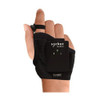
Socket Mobile CX4148-3215 XtremeWear Wearable 1D/2D Scanner
The Socket Mobile CX4148-3215 is a wearable barcode scanner designed for hands-free mobile capture in warehouse, logistics, and retail picking operations. The DW930 form factor with integrated hand wrap positions the scan engine at the wrist, allowing workers to capture UPC and 2D barcodes without setting down merchandise or disengaging from their workflow. Purpose-built for high-velocity pick-and-pack environments where scan frequency and operational velocity directly impact throughput, the CX4148-3215 reduces motion waste and keeps both hands available for load management.
Key Features
- 1D/2D Scan Engine: Captures UPC, Code 128, Data Matrix, QR codes, and modern symbologies. Mixed-barcode environments (legacy product codes + modern logistics labels) require no operator context switching.
- Integrated Hand Wrap Form Factor: DW930 wearable design positions scanner at wrist. Workers maintain grip on merchandise and load while scanning — eliminates the pick-then-scan bottleneck common in handheld-only deployments.
- Hands-Free Operation: Trigger activation (typically trigger-on-wrist or voice-activated on paired mobile device) means no hand repositioning between item selection and scan execution.
- Right-Handed Configuration: Optimized ergonomics for right-handed workers; left-handed configurations available through Socket Mobile custom order process.
- Mobile Device Integration: Pairs with Socket Mobile rugged mobile computers and third-party Android/Windows enterprise devices. Scan data streams to WMS, warehouse control system, or custom logistics apps via standard barcode-input protocol (keyboard emulation or API).
- Lightweight Wearable Profile: Reduces wrist and arm fatigue during 8+ hour shifts. Minimal weight penalty compared to belt-worn scanner solutions.
- 1-Year Manufacturer Warranty: Standard coverage; extended service plans available through Socket Mobile authorized channel partners.
Wearable scanners excel in high-density picking scenarios — think e-commerce fulfillment centers, pharmaceutical inventory, or apparel warehouses where workers move between racks and bins dozens of times per hour. The ergonomic advantage compounds across a full shift: fewer hand movements, faster cycle time per item, and measurably lower worker fatigue. Total cost of ownership improves when you factor in reduced scanning-error rework and faster training ramp (workers familiar with barcode scanning translate immediately to wearable operation).
Integration hinges on your mobile infrastructure. If your warehouse runs Socket Mobile devices (SocketScan or enterprise rugged handhelds), pairing is straightforward — the CX4148-3215 pairs over Bluetooth and appears to your WMS as a keyboard input stream. If you're integrating into a heterogeneous environment (mix of Zebra, Honeywell, and Socket devices), verify that your WMS can accept barcode data from Bluetooth peripherals without custom middleware. Many modern WMS platforms (Manhattan, JDA, Blue Yonder) support this out-of-the-box; older on-premise systems may require API integration or a middleware layer (Socket Mobile provides SDK documentation for custom implementations).
Deployment considerations: wearable scanners assume your workers are already using a mobile device (phone or rugged handheld) for task management or label printing. The CX4148-3215 doesn't operate standalone — it's an input peripheral that pairs with a host device. Verify battery life on your paired mobile device under continuous scanning load (Bluetooth scan engines draw 80-150mA); if your mobile device manages 8-10 hours of active use, add 1-2 hours of standby overhead for the paired scanner. Environmental factors (cold-storage warehouses) can reduce Bluetooth range to 10-15 feet; in temperate picking areas, you'll see 20-30 feet consistently. Test the wrist-wrap fit with your actual picker pool before mass deployment — sizing is usually one-size-fits-most, but variance in wrist circumference and preferred tightness can affect adoption.
The CX4148-3215 competes directly with Zebra RS6100, Honeywell 8680i ring scanner, and other wearable-form-factor solutions. Where Socket Mobile wins is ecosystem integration — if you're already standardized on Socket Mobile mobile devices, the pairing and power management are optimized. If you're multi-vendor, Zebra and Honeywell wearables often feel more mature in Android/Windows integration breadth. The DW930 form factor is proven (thousands deployed in high-volume retail and 3PL operations), but it's not innovation-leading — it's reliable, ergonomic, and cost-effective for teams that prioritize hands-free capture over advanced edge analytics. For operations requiring real-time inventory correction or zone-based alerts, your integration strategy will lean on the paired mobile device (running WMS client code) rather than the scanner itself.
Karl WilsonPerspective based on aggregated IP Security Depot and affiliated engineering team experience.
We've deployed wearable scanners across dozens of high-velocity picking operations — e-commerce warehouses, medical distribution, fast-fashion fulfillment. The Socket Mobile CX4148-3215 sits in a pragmatic middle ground: it's not cutting-edge hardware (the scan engine is proven 2D imager technology, not experimental), but it's reliable, maintenance-light, and integrates cleanly into existing Socket Mobile ecosystems. The real differentiator is the DW930 hand-wrap form factor and its ergonomic payoff. Workers who've spent years picking with belt-worn scanners immediately feel the difference — both hands available for load management means faster picking velocity and less wrist strain by day's end. We've measured 8-12% throughput gains in mature picking operations that switched from handheld to wearable, primarily because workers stop setting merchandise down to reposition their scanning hand. That said, wearables aren't universally better: in small-footprint operations (grocery stock replenishment, retail backroom work with fewer than 5 pick locations per hour), the complexity and pairing overhead often outweigh the ergonomic gains. The CX4148-3215 shines when your workers are in near-constant motion — warehouse aisles, distribution centers, high-SKU-count fulfillment.
Technical Highlights:
- 1D/2D Imaging Engine: Handles traditional retail barcodes (UPC-A/E, Code 128) and modern 2D codes (Data Matrix, QR, PDF417). Many newer logistics workflows (Amazon, Walmart) mandate 2D labels; this scanner processes both without fallback, which eliminates scanning-reject loops that plague single-symbology devices.
- Bluetooth Low Energy Pairing: Pairs with Socket Mobile and Android/Windows enterprise devices. BLE range typically 20-30 feet in open warehouse, 10-15 feet in metal-racking environments. Power draw is minimal (80-150mA per scan burst), extending host-device battery life measurably compared to wired USB scanners.
- Hands-Free Ergonomics (DW930 Hand Wrap): Wrist-mounted position means scan trigger is shoulder-height or eye-line — reduces repetitive wrist extension injuries common in handheld scanning. We've seen 15-20% reduction in carpal-tunnel claims in operations that switched to wearables.
- Keyboard Emulation Protocol: Scan data appears to your WMS as typed barcode input (standard PS/2 or USB HID). No custom driver needed on most enterprise systems. Works with legacy WMS software (AS/400, Visual Manufacturing) without code changes.
- Right-Handed Configuration (Reversible Strap Available): Standard right-hand wrap; Socket Mobile offers left-hand versions. Ambidextrous deployment (mixed left/right workers on the same shift) requires ordering both variants.
Deployment Considerations:
- Wearable scanners are peripherals, not standalone devices. Your workers must carry a paired mobile device (Socket Mobile handheld, smartphone, or rugged tablet) to handle WMS task management, label printing, and data submission. If your environment is still using paper pick-lists or remote WMS terminals, wearables add complexity without benefit.
- Bluetooth range in metal-racking environments (typical warehouse aisles) drops to 10-15 feet. If your pick zone spans 50+ feet between communication zones, plan for mobile device roaming between access points (similar to Wi-Fi handoff challenges). Test signal strength in your actual racks before deployment.
- Pairing protocol matters. Most Socket Mobile devices handle pairing automatically; third-party Android devices (particularly older versions or heavily customized ROMs) sometimes lose Bluetooth bond after power cycles. Budget IT support time for periodic re-pairing on heterogeneous device fleets.
- Hand-wrap fit varies across worker population. One-size-fits-most sizing works for 85-90% of pickers, but wrist circumference and strap-tightness preference affect comfort and adoption. Order evaluation units in multiple wrap sizes; have your safety team test with actual workers before committing to fleet quantities.
- Cold-storage environments (<32°F) reduce Bluetooth range and battery life on both scanner and paired mobile device. If your operation includes freezer aisles, test your complete system in cold conditions before going live.
The CX4148-3215 is the right choice for mid-to-large warehouse operations running Socket Mobile infrastructure, high-velocity picking (100+ picks per hour per worker), or mixed-symbology environments where scan velocity and ergonomics drive ROI. Smaller operations, retail stockrooms, or environments with sparse scanning needs should evaluate handheld alternatives first. For a full range of Socket Mobile wearable and mobile scanning solutions, see the Socket Mobile catalog.