


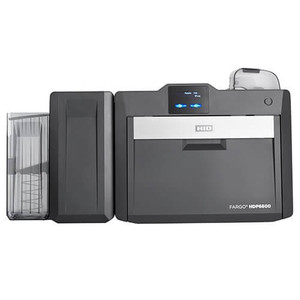

Overview
SKU:
94653
Condition:
New
Availability:
Usually ships in 24 hours
Warranty
2-Year HID Fargo Printer Limited Warranty

HID 94653 HDP6600 dual-side card printer
HID 94653 HDP6600 Dual-Side Card Printer with Magnetic Stripe Encoder Overview The HID 94653 represents a comprehensive card issuance solution design…

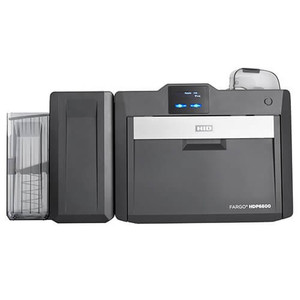
HID 94653 HDP6600 dual-side card printer
$5,658.99
Your recommended setup
Review items below — quantities update pricing automatically.
Item
Qty
Status
Price
Optional Add-Ons recommended
Services optional
Bundle Summary
Bundle Subtotal:
$0.00
Optional Add-Ons:
$0.00
Services:
$0.00
Total:
$0.00
Overview
SKU:
94653
Condition:
New
Availability:
Usually ships in 24 hours
Warranty
2-Year HID Fargo Printer Limited Warranty
Description

HID 94653 HDP6600 Dual-Side Card Printer with Magnetic Stripe Encoder
Overview
The HID 94653 represents a comprehensive card issuance solution designed for organizations requiring simultaneous dual-sided printing with embedded magnetic stripe encoding capability. This system integrates HID's proven printing technology with magnetic stripe encoding and a built-in card flattener, enabling secure credential production in a single, integrated workflow. The HDP6600 platform supports high-volume badge production environments where speed, reliability, and encoding accuracy are critical operational requirements.
Key Features
- Dual-Sided Printing: Simultaneous printing on both card surfaces in a single pass, reducing production cycle time and increasing throughput in high-volume credential environments
- Integrated Magnetic Stripe Encoder: Embedded magnetic stripe encoding capability eliminates the need for separate encoding equipment, streamlining the issuance workflow and reducing infrastructure footprint
- Built-In Card Flattener: Integrated flattening mechanism ensures consistent card flatness and dimensional accuracy, critical for reader compatibility and card longevity in access control systems
- Secure Credential Production: Purpose-built for government, enterprise, and institutional ID programs where credential integrity and encoding reliability are mandatory
- High-Volume Capacity: Engineered for sustained production runs without performance degradation, supporting large-scale issuance initiatives and periodic reissuance programs
- Professional Badge Quality: Produces edge-to-edge color prints with magnetic stripe data encoding, supporting multi-factor credential architectures combining visual identification with machine-readable authentication
Integration & Compatibility
The HID 94653 integrates into enterprise credential management ecosystems where card production demands exceed basic printing requirements. The dual-sided printing capability with simultaneous magnetic stripe encoding supports hybrid credential schemes that require both visual and machine-readable security elements. The flattening mechanism addresses a critical operational issue in high-speed production environments: card warping and dimensional variance that can compromise reader compatibility across door access systems. Organizations deploying large-scale access control networks benefit from the flattener's ability to ensure consistent card performance across thousands of reader installations.
This system is appropriate for centralized ID offices, large campus deployments, government agencies, and enterprise environments managing hundreds to thousands of credential holders. The integration of encoding into the printing platform reduces operational complexity and training requirements for credential staff, while the flattener adds a quality assurance layer that prevents field failures and reader compatibility issues commonly encountered with warped or dimensionally inconsistent cards.
Deployment Context
The HDP6600 (model 94653) serves security integrators and IT managers responsible for credential issuance infrastructure. It is particularly valuable in organizations transitioning from outsourced card production to in-house issuance, or those requiring immediate credential replacement capabilities for emergency situations. The integrated magnetic stripe encoding positions this system for multi-credential deployments where cards must function across legacy magnetic stripe readers and newer contactless systems simultaneously.
Karl Wilson
During deployment planning for a multi-building access control expansion, I evaluated the HID 94653 HDP6600 as the credential issuance backbone. The combination of dual-sided printing, integrated magnetic stripe encoding, and mechanical flattening addresses three distinct operational requirements that are often managed by separate equipment in legacy environments. This consolidation reduces both capital expenditure and ongoing maintenance overhead.
Technical Highlights:
- Dual-Sided Simultaneous Printing: Eliminates the need for manual card flipping or secondary print passes, reducing production time per credential and increasing department throughput during large issuance cycles
- Integrated Magnetic Stripe Encoding: Embedded encoder eliminates separate magnetic stripe encoding devices, reducing footprint, cost, and operational complexity in the credential production workflow
- Built-In Card Flattening: Mechanical flattening compensates for warping and dimensional variance that occurs in high-speed production environments, ensuring consistent reader compatibility across door controllers
Deployment Considerations:
- Magnetic stripe encoding requires clear data formatting and proper staff training to prevent encoding errors that can compromise reader authentication
- The flattening mechanism reduces credential rejection rates at readers, lowering helpdesk volume and improving end-user experience across access control systems
- Suitable for organizations managing 500+ card holders or those with recurring batch issuance requirements
The HID 94653 is a pragmatic choice for integrators supporting mid-to-large enterprise deployments where credential production has become a bottleneck. The integrated encoding and flattening features address real operational pain points encountered in the field, making this system a productive addition to access control infrastructure planning.
Specifications
Product Type:
Dual-Sided Card Printer with Magnetic Stripe Encoder and Flattener
Credential_Type:
ID Cards, Badges
Reader_Type:
Magnetic Stripe Encoder
Have Questions?
Ask an Expert.
RELATED PRODUCTS


System Design, Deployment & Technical Support
Support services and planning resources for commercial surveillance, access control, and infrastructure deployments.
Fixed scope • Fixed price
System Design Assistance
- Get help validating product compatibility
- Coverage requirements
- Storage planning and deployment architecture before you buy.
Deployment & Configuration Support
- Access fixed-scope support for rollout planning
- User setup guidance
- Migration and system standardization across single-site or multi-site deployments
Guides, Tools & Calculators
- PoE requirements
- Storage retention
- Camera selection and deployment methodology