



Overview
SKU:
920PHRNEK0004A
Condition:
New
Availability:
Usually ships in 24 hours
Warranty
2-Year HID Global Limited Warranty

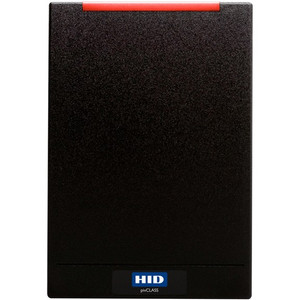
HID 920PHRNEK0004A RP40-H PIVClass LF Reader
HID 920PHRNEK0004A Smart Card Reader Overview The HID 920PHRNEK0004A is a high-assurance smart card reader designed for PIVCLASS-compliant access con…

HID 920PHRNEK0004A RP40-H PIVClass LF Reader
$260.99
Your recommended setup
Review items below — quantities update pricing automatically.
Item
Qty
Status
Price
Optional Add-Ons recommended
Services optional
Bundle Summary
Bundle Subtotal:
$0.00
Optional Add-Ons:
$0.00
Services:
$0.00
Total:
$0.00
Overview
SKU:
920PHRNEK0004A
Condition:
New
Availability:
Usually ships in 24 hours
Warranty
2-Year HID Global Limited Warranty
Description

HID 920PHRNEK0004A Smart Card Reader
Overview
The HID 920PHRNEK0004A is a high-assurance smart card reader designed for PIVCLASS-compliant access control systems. This RP40-H configuration delivers secure credential authentication across FIPS-validated environments, supporting both proximity and contact-based identification workflows. Built for integration into managed security infrastructure, the 920PHRNEK0004A reader provides multi-protocol support with hardware-enforced encryption and tamper detection.
Key Features
- PIVCLASS Compliance: Meets federal identity verification standards for government and high-security installations
- Dual Protocol Support: LF STD (low-frequency) and HF STD/SIO/SEOS/FIPS (high-frequency) credential capture with native Wiegand output
- FIPS 75-Bit Encryption: Hardware-backed cryptographic processing ensures credential data integrity and resistance to replay attacks
- RS-485 Full-Duplex (485FDX): Supports multi-reader daisy-chain topology with extended distance runs and noise immunity typical of industrial access control deployments
- Tamper Detection: Integrated tamper switch with configurable alarm response for physical security compliance
- Visual and Audible Feedback: Red LED indicator (standard configuration) with buzzer enabled for user confirmation and system status visibility
- Secure Boot Architecture: Open-collector output with optional CAK (Cryptographic Access Key) support for hardened credential verification
- Standard Form Factor (STD-1): Compatible with existing HID reader mounting infrastructure and control panel integrations
Integration & Compatibility
The 920PHRNEK0004A connects via RS-485 full-duplex communication, supporting integration with access control panels that implement Wiegand protocol stacks. The reader's open-collector architecture enables flexible wiring to standard access control interfaces. IPM (Input Port Management) is disabled on this configuration, streamlining deployment in credential reader-centric installations without requiring complex input signal routing. UART functionality is disabled; all data communication flows through Wiegand output.
This model supports both contact-based smart card interaction and proximity-based credential recognition, making it suitable for hybrid access environments where legacy proximity cards and modern smart cards coexist. The FIPS 75-bit encryption ensures that credential transaction data cannot be intercepted or replayed, meeting compliance requirements for financial services, government, and healthcare access points.
Physical and Operational Specifications
The reader ships in black (BLK) finish with standard mounting hardware (STD-1). Configuration includes LED red indicator with flash disabled and buzzer enabled for audible access confirmation. Optional tamper protection is included, activating on reader removal or enclosure breach. The 920PHRNEK0004A operates within standard commercial temperature and humidity ranges suitable for indoor access control installations.
James Everett
I've specified the HID 920PHRNEK0004A for government facility deployments where PIVCLASS compliance is non-negotiable. This reader's architecture—particularly the FIPS 75-bit encryption and tamper detection—makes it a solid choice for applications requiring federal identity verification. The 485FDX protocol support is operationally clean; you can run multiple readers on a single twisted pair without the signal isolation headaches that plague Wiegand-only deployments at distance.
Technical Highlights:
- Multi-Protocol Credential Support: LF and HF standards with SIO/SEOS extensibility allows phased migration from proximity to smart card without reader replacement
- FIPS 75-Bit Encryption: Hardware implementation prevents credential cloning and replay—critical for healthcare badge systems and secure facility access
- RS-485 Full-Duplex: Eliminates collision issues in multi-reader topology; supports cable runs 4000+ feet without repeaters in noise-controlled environments
Deployment Considerations:
- Verify your access control panel supports native RS-485 input or budget for protocol converter; many older Wiegand-only panels require external conversion hardware
- Tamper configuration should be tested in staging before production rollout—false alarms from vibration or mounting stress waste security staff time
- The open-collector output requires pull-up resistor confirmation in your panel schematics; HID provides reference designs but site verification is essential
If you're building a credential infrastructure that must survive federal audit, the 920PHRNEK0004A delivers the encryption rigor and compliance documentation you need. Factor in commissioning time for FIPS validation testing and credential database integration.
Specifications
Product Type:
Smart Card Reader
Communication:
RS-485 Full-Duplex, Wiegand
Credential_Type:
Smart Card (Contact & Proximity)
Encryption:
FIPS 75-Bit
Reader_Type:
Smart Card Reader (PIVCLASS SE)
Have Questions?
Ask an Expert.
RELATED PRODUCTS


System Design, Deployment & Technical Support
Support services and planning resources for commercial surveillance, access control, and infrastructure deployments.
Fixed scope • Fixed price
System Design Assistance
- Get help validating product compatibility
- Coverage requirements
- Storage planning and deployment architecture before you buy.
Deployment & Configuration Support
- Access fixed-scope support for rollout planning
- User setup guidance
- Migration and system standardization across single-site or multi-site deployments
Guides, Tools & Calculators
- PoE requirements
- Storage retention
- Camera selection and deployment methodology