


Overview
SKU:
T2ZK7F16
Condition:
New
Availability:
Usually ships in 24 hours
Warranty
Lifetime Limited Warranty
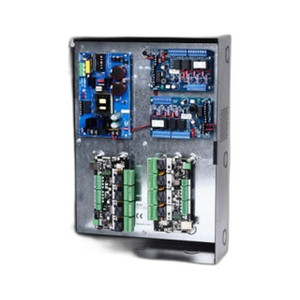
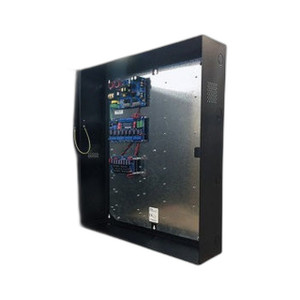
Altronix T2ZK7F16 16-Door Access Control Integration Kit
Altronix T2ZK7F16 16-Door Access Control and Power Integration Kit Overview The Altronix T2ZK7F16 is a comprehensive 16-door access control and power…

Altronix T2ZK7F16 16-Door Access Control Integration Kit
$1,383.99
Your recommended setup
Review items below — quantities update pricing automatically.
Item
Qty
Status
Price
Optional Add-Ons recommended
Services optional
Bundle Summary
Bundle Subtotal:
$0.00
Optional Add-Ons:
$0.00
Services:
$0.00
Total:
$0.00
Overview
SKU:
T2ZK7F16
Condition:
New
Availability:
Usually ships in 24 hours
Warranty
Lifetime Limited Warranty
Description

Altronix T2ZK7F16 16-Door Access Control and Power Integration Kit
Overview
The Altronix T2ZK7F16 is a comprehensive 16-door access control and power integration solution designed for mid-to-large-scale deployments requiring coordinated access management, power distribution, and system redundancy. This kit assembles Altronix power and management infrastructure with ZKTeco access control modules into a single, pre-configured package, reducing integration time and field labor while maintaining full technical specification transparency for professional installers and integrators.
Key Features
- 16-Door Capacity: Unified access control framework supporting simultaneous management of 16 independent door controllers
- Trove2Z2 Base Controller: Primary integration engine combining Altronix power management and ZKTeco access logic in a single compact form factor
- eFlow104NB Network Module: Network-attached power and access coordination hub supporting distributed I/O management and remote monitoring
- Dual ACM8 Modules: Two access control modules enabling parallel door processing and redundant control pathways for mission-critical installations
- VR6 Power Distribution: Regulated 6-output power rail managing voltage distribution across door locks, request-to-exit sensors, and auxiliary devices
- PDS8 Backup Power Manager: Battery backup and auxiliary power sequencing device extending system availability during AC mains loss and managing graceful shutdown protocols
Integration and Compatibility
The T2ZK7F16 is engineered for integration into larger access control ecosystems where Altronix power conditioning and ZKTeco access logic must operate as a unified system. The eFlow104NB provides network attachment, allowing the kit to communicate with enterprise access management software, badge readers, and biometric enrollment systems. The dual ACM8 configuration supports load balancing across 16 doors, preventing single-point controller failure. VR6 and PDS8 components work in concert to deliver stable, supervised power to solenoid locks, magnetic locks, and electromechanical request-to-exit buttons while maintaining battery-backed operation during power interruption.
Field installers benefit from the pre-assembled T2ZK7F16 kit because it eliminates margin-of-error component selection; all voltage rails, current capacities, and backup timing are factory-matched. The combination of the Trove2Z2 base, eFlow104NB network module, dual ACM8 controllers, VR6 distribution, and PDS8 backup manager creates a deterministic, tested power and access ecosystem rather than a collection of independent modules requiring manual integration verification.
Package Contents
- 1x Trove2Z2 access control and power integration base unit
- 1x eFlow104NB network power and access module
- 2x ACM8 access control modules
- 1x VR6 power distribution module (6 outputs)
- 1x PDS8 backup power and sequencing device
Jerry Tildsen
During a recent 16-door retrofit for a regional medical facility, I evaluated the Altronix T2ZK7F16 as a drop-in replacement for aging access control infrastructure. The kit's pre-integrated design—combining the Trove2Z2 base, dual ACM8 modules, network eFlow104NB, VR6 power distribution, and PDS8 backup sequencing—eliminated the guesswork that typically plagues multi-vendor integrations. Every component voltage, current rating, and backup timing assumption was already validated by the factory assembly.
Technical Highlights:
- Dual-Controller Redundancy: Two ACM8 modules provide load balancing and failover capability, preventing single-point controller failure across the 16-door matrix
- Network-Attached Power Management: eFlow104NB delivers both network connectivity and supervised power distribution, reducing separate cabling runs and centralizing remote monitoring
- Battery Backup Integration: PDS8 manages battery charging, mains supervision, and orderly shutdown sequencing, ensuring locks remain operable during power interruption and preventing data loss in access event logs
- 6-Output Power Rail: VR6 supplies stable voltage to solenoid and magnetic locks with built-in current supervision, protecting against short-circuit and load-mismatch failures
Deployment Considerations:
- Verify the facility's AC mains capacity before installation; the T2ZK7F16 kit with simultaneous lock operation and battery charging can draw significant inrush current
- Confirm backup battery capacity (AH rating) matches the facility's required runtime during mains loss; PDS8 manages the charge circuit, but battery selection is site-specific
- Deploy network monitoring and mains supervision on the eFlow104NB immediately after commissioning to catch power anomalies before they trigger unplanned lock behavior
For integrators managing 12+ door installations requiring deterministic, factory-validated power and access coordination, the T2ZK7F16 is a rational choice. It trades custom component selection for deployment speed, confidence, and reduced field troubleshooting. Recommend this kit for healthcare, education, and enterprise customers where downtime and access failures carry operational risk.
Specifications
Form Factor:
Modular access control kit
Number of Outputs:
16 doors (via dual ACM8); 6 power outputs (VR6)
Battery_Backup:
PDS8 backup power sequencing device included
Warranty:
Lifetime Limited Warranty
Have Questions?
Ask an Expert.
RELATED PRODUCTS


System Design, Deployment & Technical Support
Support services and planning resources for commercial surveillance, access control, and infrastructure deployments.
Fixed scope • Fixed price
System Design Assistance
- Get help validating product compatibility
- Coverage requirements
- Storage planning and deployment architecture before you buy.
Deployment & Configuration Support
- Access fixed-scope support for rollout planning
- User setup guidance
- Migration and system standardization across single-site or multi-site deployments
Guides, Tools & Calculators
- PoE requirements
- Storage retention
- Camera selection and deployment methodology