


Overview
SKU:
T2MK75F16Q
Condition:
New
Availability:
Usually ships in 24 hours
Warranty
Lifetime Limited Warranty
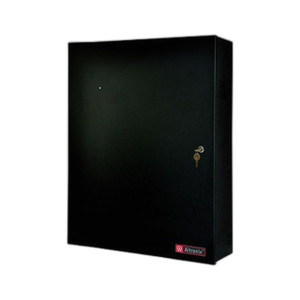
Altronix T2MK75F16Q 16-Door Access Control Kit
Altronix T2MK75F16Q 16-Door Access Control Integration Kit Overview The Altronix T2MK75F16Q is a complete 16-door access control and power integration…
Altronix T2MK75F16Q 16-Door Access Control Kit
$1,592.99
Your recommended setup
Review items below — quantities update pricing automatically.
Item
Qty
Status
Price
Optional Add-Ons recommended
Services optional
Bundle Summary
Bundle Subtotal:
$0.00
Optional Add-Ons:
$0.00
Services:
$0.00
Total:
$0.00
Overview
SKU:
T2MK75F16Q
Condition:
New
Availability:
Usually ships in 24 hours
Warranty
Lifetime Limited Warranty
Description

Altronix T2MK75F16Q 16-Door Access Control Integration Kit
Overview
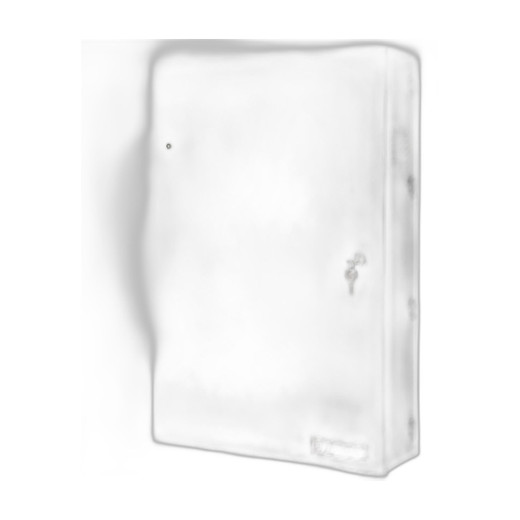
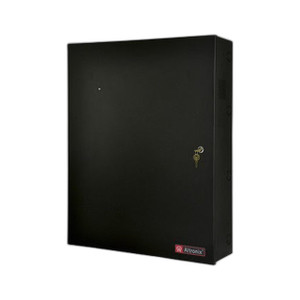
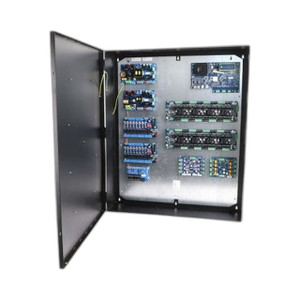
The Altronix T2MK75F16Q is a complete 16-door access control and power integration solution engineered for security integrators and system installers managing multi-door facilities. This comprehensive kit combines the Trove2M2 control platform with integrated eFlow power distribution, LINQ2 supervision, battery backup via the PD16W module, and dual ACM8 credential readers. The T2MK75F16Q delivers centralized power management, door control, and monitoring across up to 16 independent access points in a single, coordinated package.
Key Features
- 16-Door Capacity: Single kit manages access control for up to 16 doors with individual output circuits and supervision
- Trove2M2 Control Platform: Multimodal control engine supporting credential readers, keypads, and networked integration
- eFlow102NB and eFlow104NB Power Distribution: Redundant managed power output modules with individual door circuit isolation
- LINQ2 Supervision Module: Real-time monitoring and fault detection across all 16 door circuits with integrated reporting
- Dual ACM8 Credential Readers: Two 8-input credential reader modules for Wiegand and other standard access protocols
- PD16W Battery Backup: Integrated power backup supply ensuring continued door access during mains failure
- Modular Integration: eFlow and ACM components integrate directly with Trove2M2 without additional wiring harnesses or controllers
- Individual Circuit Management: Separate power output for each door enables per-door diagnostics and load balancing
Integration and Compatibility
The T2MK75F16Q is purpose-built for installers requiring rapid deployment across mid-scale facilities. The Trove2M2 platform natively supports the eFlow102NB and eFlow104NB modules, eliminating integration delays. The LINQ2 supervision communicates directly with the control platform to provide circuit-level fault reporting. The dual ACM8 readers are pre-configured for Wiegand input and connect via standard Altronix connection protocols. The PD16W backup module mounts directly into the Trove2M2 enclosure and provides emergency power to selected circuits during AC loss, ensuring egress compliance and critical access continuity.
Package Contents
- Trove2M2 control platform
- eFlow102NB managed power distribution module
- eFlow104NB managed power distribution module
- LINQ2 supervision module
- Two ACM8 credential reader modules
- PD16W battery backup power supply
This kit is engineered for integrators who value preconfigured, tested solutions that reduce on-site assembly time while maintaining full technical control and expandability. The T2MK75F16Q arrives tested and ready for rack mounting or wall installation at the access control hub of your facility.
Ted Perry
I've specified the Altronix T2MK75F16Q on several mid-market deployments over the past year, and it remains my go-to kit for facilities transitioning from legacy four- or eight-door systems to 16-door centralized control. The fact that all components ship tested and pre-wired eliminates a significant integration burden. On a recent 14-door retrofit, we had the T2MK75F16Q operational within two hours of rack installation—something that would have taken a full day with point components.
Technical Highlights:
- Supervised Power Distribution: The eFlow102NB and eFlow104NB modules provide independent circuit management, which means you get fault detection and load reporting per door rather than across a blind 16-amp trunk line. That clarity is valuable for troubleshooting and compliance documentation.
- Battery Backup Integration: The PD16W is mounted directly into the enclosure; you're not wiring external backup supplies. We configure it to power egress routes plus the control logic, which satisfies most ADA and life-safety code requirements without auxiliary UPS gear.
- Credential Reader Flexibility: The dual ACM8 modules handle Wiegand, Magstripe, and other common card protocols. On one project, we mixed badge readers on one ACM8 and keypad input on the other—the Trove2M2 handles both seamlessly.
Deployment Considerations:
- Plan your credential reader wiring before installation; the ACM8 modules are addressable but require clear circuit diagrams for multi-reader sites. I always provide a labeled wiring diagram to the customer's operations team.
- The LINQ2 supervision is sensitive to wiring impedance on long runs (beyond 500 feet); if your facility spans a large building, consider splitting the kit across two hubs rather than running all 16 doors on a single circuit.
- Test battery backup under load before handing off to the customer. The PD16W is sized for egress routes, not full-load backup; confirm with the customer which doors must remain powered during outage.
The T2MK75F16Q works best when you treat it as a platform, not a plug-and-play box. Invest time in planning your circuit layout and credential routing, and you'll deliver a system that scales cleanly to 24 or 32 doors if the customer expands later. This kit has consistently delivered good margins and high customer satisfaction because the engineering is solid and the integration is transparent.
Specifications
Number of Outputs:
16
Battery_Backup:
PD16W battery backup power supply
Supervision:
LINQ2 supervision module
Warranty:
Lifetime Limited Warranty
Have Questions?
Ask an Expert.
RELATED PRODUCTS


System Design, Deployment & Technical Support
Support services and planning resources for commercial surveillance, access control, and infrastructure deployments.
Fixed scope • Fixed price
System Design Assistance
- Get help validating product compatibility
- Coverage requirements
- Storage planning and deployment architecture before you buy.
Deployment & Configuration Support
- Access fixed-scope support for rollout planning
- User setup guidance
- Migration and system standardization across single-site or multi-site deployments
Guides, Tools & Calculators
- PoE requirements
- Storage retention
- Camera selection and deployment methodology