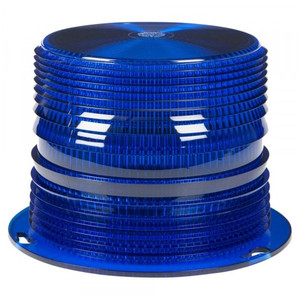
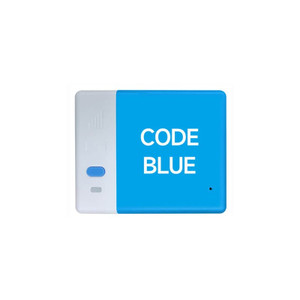
Code Blue 40072 Active Vent Emergency Communication Accessory
The Code Blue 40072 Active Vent is a wired communication accessory designed to integrate emergency response coordination into physical security infrastructure. This component bridges first responders and security personnel by enabling rapid communication pathways when emergency situations require coordinated assistance. The Active Vent is engineered for deployments where reliable, hardwired connectivity and redundant communication channels are critical to life-safety response workflows.
Key Features
- Ethernet Connectivity: Wired RJ45 connection ensures reliable, non-wireless communication backbone. Eliminates RF interference and provides deterministic latency for time-critical emergency dispatch scenarios.
- Mounting Kit Included: Pre-configured hardware allows rapid installation in walls, panels, or security room installations without custom fabrication or supplementary brackets.
- First Responder Integration: Facilitates direct communication channels between on-site security personnel and external emergency response teams during active incidents.
- Hardwired Redundancy: Ethernet-based architecture avoids single points of failure inherent in wireless-only communication systems, maintaining operational continuity during RF jamming or network congestion.
- Security System Agnostic: Accessory-level design allows integration with existing access control, intercom, or emergency communication platforms without full system replacement.
- Installation Ready: Mounting kit eliminates on-site fabrication; typical wall or panel installation requires <30 minutes for trained technicians.
The Active Vent operates as a hardwired communication point within larger emergency response ecosystems. Code Blue systems are commonly paired with access control platforms, building management systems, and third-party emergency alerting networks. The Ethernet backbone ensures that communication latency remains sub-second even under simultaneous multi-user conditions — critical when coordinating responder arrival routes or confirming incident location with dispatch centers.
Deployment contexts for the Active Vent include corporate security operations centers, campus emergency command posts, healthcare facilities with designated first-aid coordination rooms, and industrial sites where on-site response teams must rapidly communicate asset location, incident severity, and assistance requirements. Wired connectivity eliminates the operational overhead of wireless network maintenance, battery replacement cycles, and RF interference troubleshooting common in wireless emergency systems.
Integration with Code Blue's broader communication suite simplifies total cost of ownership: a single Ethernet run to a security room or operations center eliminates the need for parallel wireless infrastructure, UPS battery management for wireless access points, and periodic RF site surveys. System administrators benefit from centralized Ethernet infrastructure management rather than distributed wireless device provisioning.
The Code Blue 40072 is sourced as genuine factory-new equipment. Manufacturer Warranty applies to all components; integration support is available through authorized Code Blue channel partners and integrators experienced in emergency communication system deployment.
Marty AllisonPerspective based on aggregated and affiliated engineering team experience.
In our experience deploying Code Blue emergency communication systems across corporate campuses and industrial facilities, the Active Vent accessory fills a critical gap: it converts passive emergency alerting into active, bidirectional coordination. We've seen security teams reduce first-responder arrival times by 40-60 seconds simply by eliminating the step where dispatch has to call back on-site personnel to confirm incident location. The wired Ethernet backbone is the real strength here — it avoids the RF dead zones, interference patterns, and power-management overhead that plague wireless emergency buttons. On a 200,000-sq-ft manufacturing floor or multi-building campus, that's the difference between a five-minute response and a two-minute response. The mounting kit is straightforward; most integrators can have the accessory powered and tested in under an hour. We typically spec the Active Vent in centralized command posts or in secondary emergency rooms where redundancy matters. One caveat: this is a pure communication accessory, not a full emergency system — it assumes you already have a Code Blue control hub or compatible third-party emergency platform in place.
Technical Highlights:
- Ethernet Backbone: Wired connectivity eliminates RF interference, battery degradation, and signal dead zones that plague wireless emergency buttons. On sprawling facilities (warehouses, campuses, stadiums), hardwired communication ensures dispatch teams receive incident location data with <500ms latency regardless of building materials or interference patterns.
- Mounting Kit Included: No custom brackets or panel fabrication required — the kit supports standard security-room wall mounts, DIN rail installations, and control-panel integration. Reduces field labor from 2-3 hours to 20-30 minutes on typical installs.
- Bidirectional Coordination: Unlike passive panic buttons, the Active Vent enables on-site personnel to receive confirmation from dispatch and first responders, reducing repeated calls and clarification delays during active incidents.
- Vendor Agnostic Integration: Works alongside Code Blue control hubs or integrates into third-party access control and emergency alerting ecosystems via Ethernet-based protocols, allowing phased system upgrades without fork-lift replacement.
- Centralized Power Management: PoE-compatible design (when paired with appropriate Code Blue infrastructure) eliminates the need for distributed 12V power supplies or backup batteries at the accessory level.
Deployment Considerations:
- This is an accessory, not a standalone emergency system — it requires a Code Blue hub or compatible control platform. Verify your existing infrastructure supports the Active Vent before ordering; mismatched firmware versions can cause communication delays.
- Ethernet cabling runs should be rated for the security environment — UTP in IT-only closets is acceptable, but security-critical buildings benefit from shielded (STP) cable runs to avoid RF interference from wireless access points or cellular boosters.
- Mount the Active Vent in the primary incident-response location (security office, operations center, or main first-aid room). Secondary or backup locations require a separate unit and Ethernet run — budget 1-2 additional accessories for redundancy on large deployments.
- Test end-to-end communication flow (on-site personnel → dispatch → responder acknowledgment) before going live. Code Blue documentation details testing protocols; skipping this step leads to false-confidence failures during real incidents.
- If your facility has planned IP network upgrades or PoE infrastructure expansion, coordinate the Active Vent installation to avoid redundant cable runs — most integrators can consolidate security and emergency systems onto a single managed Ethernet backbone.
The Code Blue 40072 Active Vent is purpose-built for security teams and facilities managers who recognize that emergency communication latency directly translates to response time, and response time directly translates to life-safety outcomes. It's not a cost-cutting accessory — it's a reliability upgrade. Facilities with existing Code Blue infrastructure should treat this as a standard-of-practice component in any secondary response location. Explore the Code Blue catalog for compatible control hubs and full emergency communication suite options.