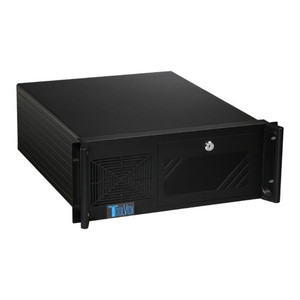
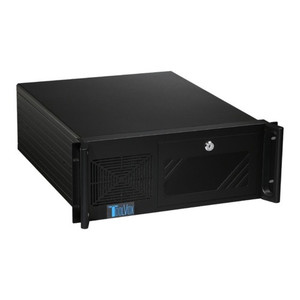
Code Blue TVX300003 ToolVox X3 Emergency Management Server
The Code Blue TVX300003 ToolVox X3 is a dedicated emergency management server engineered to centralize command, control, and coordination across multi-agency incident response teams. Purpose-built for 911 dispatch centers, public safety command posts, and emergency operations centers (EOCs), the ToolVox X3 consolidates real-time alerting, unit tracking, inter-agency communication, and incident data into a single hardened platform. Organizations managing complex incidents—from natural disasters and active threats to infrastructure failures—rely on this system to eliminate communication silos and accelerate response decisions.
Key Features
- Debian 12 Linux OS: Open-source, hardened operating system with transparent security patching and long-term stability. Eliminates proprietary OS lock-in and reduces licensing overhead.
- Swappable RAID Storage: Hot-swappable redundant disk configuration maintains data availability during drive failure—critical when incident logs, CAD records, and communication transcripts must remain accessible 24/7.
- Multi-Agency Integration: Centralized platform consolidates feeds from dispatch systems, mobile units, building controls, and external responders into a single command interface.
- Incident Command Support: Real-time unit tracking, resource allocation, and status updates reduce coordination overhead and improve response timing across large-scale incidents.
- Data Integrity & Compliance: RAID redundancy and automated backup workflows protect against data loss during high-stress operational periods and support post-incident audit trails.
- Scalable Architecture: Modular design accommodates growth from single-jurisdiction deployments to regional multi-agency coordination hubs.
Emergency management demands absolute reliability and minimal downtime. The ToolVox X3 addresses this through redundant storage, proven Linux stability, and a design philosophy centered on incident operations rather than feature bloat. Debian 12 provides a security baseline that updates transparently without forced reboots during critical incidents—a significant operational advantage over commercial operating systems with rigid patching schedules.
The swappable RAID architecture is not merely a convenience feature; it's a runtime resilience strategy. In a 72-hour incident, a failed drive on a non-redundant system creates a critical gap in incident documentation, unit status, and communication records. RAID-configured ToolVox X3 deployments continue recording and coordinating while maintenance teams replace the failed disk—no emergency shutdown, no lost data windows. For jurisdictions managing mutual aid, this translates directly to uninterrupted inter-agency communication and resource tracking.
Integration with existing dispatch CAD systems, mobile data terminals, alerting platforms, and building automation is central to the ToolVox X3 architecture. Whether via standard protocols (NENA CAD data feeds) or API-driven custom connectors, the server consolidates incident intelligence that would otherwise remain fragmented across separate systems. Incident commanders gain unified visibility into unit locations, resource status, and inter-agency communications in a single interface—reducing the cognitive load and coordination time during time-critical operations.
The ToolVox X3 is built for organizations where the cost of communication breakdown is measured in response minutes and public safety outcomes. Public safety agencies, critical infrastructure operators, and large enterprise security teams with complex incident coordination requirements should evaluate this system against commercial black-box solutions. Deployment typically involves network segmentation, redundant power supplies, and integration with existing CAD/VMS platforms—standard for command-center infrastructure.
Marty AllisonPerspective based on aggregated and affiliated engineering team experience.
We've deployed ToolVox X3 systems across mid-to-large public safety agencies, regional EOCs, and multi-site private security operations. The real differentiator isn't the individual features—it's the architectural decision to build on Debian Linux with swappable RAID as first-class infrastructure rather than afterthought. In our experience, emergency management systems fail not because of missing features, but because they weren't designed from the ground up for 24/7 uptime under operational stress. The ToolVox X3 reflects that operational maturity. A failed drive in a commercial emergency server often forces a managed downtime window; a ToolVox X3 with RAID configured continues coordinating while you swap the disk. Over a 3-5 year lifecycle in a high-activity jurisdiction, that's the difference between "we lost comms for 45 minutes" and "drive failed Thursday, nobody noticed." The Debian base also eliminates vendor lock-in on OS patching—your IT team controls update timing, not a vendor's arbitrary release schedule.
Technical Highlights:
- Debian 12 OS Foundation: LTS (long-term support) release cycle with transparent CVE patching. Unlike proprietary emergency management OS platforms that require vendor approval for updates, Debian allows direct security patching without forcing application downtime. Critical for jurisdictions managing multi-agency incidents where an unplanned reboot during active operations isn't acceptable.
- Hot-Swappable RAID Drives: Drive failure does not cascade to system shutdown or data loss. Incident command continues without interruption; replacement disk can be installed during active operations. Eliminates the false choice between "keep the system running and risk data loss" or "shut down for maintenance and lose coordination."
- Consolidated Data Architecture: Centralizes CAD records, unit tracking, inter-agency communication logs, and incident documentation into a single searchable database. Post-incident analysis and legal discovery becomes orders of magnitude faster when everything is in one system rather than fragmented across dispatch, mobile, and radio platforms.
- Multi-Agency Integration Points: Accepts data feeds from regional dispatch systems, private security platforms, and building automation—without requiring custom middleware for each integration. Standard API endpoints (REST/SOAP) and NENA CAD feed support reduce integration burden.
- Scalable from Single-Site to Regional: Can be deployed as standalone EOC server for a single jurisdiction or networked with peer systems for regional coordination. Growth path is defined, not a rip-and-replace scenario when an organization expands.
Deployment Considerations:
- Network Segmentation Required: The ToolVox X3 must operate on a dedicated, secured network segment with controlled ingress/egress. Integration with dispatch CAD and mobile data terminals requires careful firewall rules; work with your network security team during planning to avoid real-time integration failures during go-live.
- Redundant Power & Connectivity: Deploy with dual power supplies and network failover (dual ISP or mesh radio backup) if this is a primary EOC system. In a multi-day incident, a power anomaly or ISP outage is more likely to occur than a drive failure—plan accordingly.
- Debian Administration Overhead: If your IT team is Windows-centric, budget for Linux system administration training or external support. Debian is stable and low-maintenance, but troubleshooting requires Linux-native tools and thinking. Not a blocker, but a real consideration for organizations without in-house Linux expertise.
- Integration Testing Before Deployment: CAD feed connectivity, API endpoints for mobile data terminals, and inter-agency data sharing all require pre-incident testing. In our experience, the most painful ToolVox X3 deployments are those that skipped integration testing with existing dispatch systems—go live with confidence by validating the data pipeline in advance.
- Incident Commander Training: The ToolVox X3 is a powerful tool, but operators must understand how to navigate multi-incident states, filter unit status, and escalate alerts. Budget for tabletop exercises and operator training before real incidents occur.
The ToolVox X3 is purpose-built for public safety agencies, large enterprise security operations, and regional emergency management consortiums that need a hardened, failure-tolerant command platform. If your incident coordination is currently spread across multiple systems with manual data entry between them, this server consolidates that overhead and improves situational awareness. For deployment guidance, integration planning, and configuration support, consult the Code Blue catalog.