


Overview
SKU:
SXA300
Condition:
New
Availability:
Usually ships in 24 hours
Warranty
2-Year Manufacturer Warranty
Speco SXA300 300W Solar Panel System 4G Router
Speco Technologies SXA300 Solar Power System with Integrated 4G Router The Speco Technologies SXA300 is a complete solar-powered infrastructure soluti…
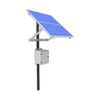
Speco SXA300 300W Solar Panel System 4G Router
$3,276.99
Your recommended setup
Review items below — quantities update pricing automatically.
Item
Qty
Status
Price
Optional Add-Ons recommended
Services optional
Bundle Summary
Bundle Subtotal:
$0.00
Optional Add-Ons:
$0.00
Services:
$0.00
Total:
$0.00
Overview
SKU:
SXA300
Condition:
New
Availability:
Usually ships in 24 hours
Warranty
2-Year Manufacturer Warranty
Description

Speco Technologies SXA300 Solar Power System with Integrated 4G Router
The Speco Technologies SXA300 is a complete solar-powered infrastructure solution designed for remote security camera deployments, wireless communication nodes, and off-grid surveillance applications. This integrated system combines a 300W solar panel array with an enclosure-mounted 4G router, charge controller, and battery management architecture to deliver autonomous power and connectivity without dependence on grid infrastructure or traditional hardline data connections.
Overview
The SXA300 system addresses the critical challenge of powering and connecting distributed security assets in locations where electrical service and network infrastructure are unavailable or prohibitively expensive to install. By integrating solar generation, battery charging, cellular routing, and power distribution into a single coordinated platform, the system reduces installation complexity, accelerates deployment timelines, and eliminates ongoing utility costs. The included enclosure provides weather-sealed housing for sensitive electronics, while the integrated 4G router enables real-time camera feeds, remote monitoring, and cloud-based analytics without fiber or copper data lines.
Key Features
- 300W Total Solar Capacity: Multi-panel solar array designed to generate sufficient daily power in high-sun environments. Panel configuration includes five zones with individual specifications: Z1 (36W), Z2 (28W), Z3 (19W), Z4 (10W), and Z5 (N/A), enabling flexible system expansion and partial-shade deployment strategies.
- Integrated 4G Router: Cellular-based network connectivity allows camera and sensor data transmission to cloud platforms, VMS servers, or monitoring centers without requiring broadband installation or leased-line infrastructure.
- Intelligent Charge Controller: Automated battery charging and power management protects lithium or lead-acid battery banks from overcharge, thermal stress, and deep discharge, extending battery service life and ensuring stable 24/7 power delivery.
- Weatherproof Enclosure: Sealed housing protects router, controller, and battery terminals from rain, dust, UV exposure, and temperature extremes, suitable for outdoor mounting on poles, walls, or equipment racks.
- Battery Agnostic Architecture: Compatible with standard lithium iron phosphate (LiFePO4) or sealed lead-acid battery modules, allowing integrators to specify energy storage capacity based on camera power demand and desired autonomy (24-72 hours typical).
- Remote Power Monitoring: Built-in telemetry reports solar generation, battery state-of-charge, load consumption, and router signal strength via cellular uplink, enabling predictive maintenance and early warning of system degradation.
- Scalable Panel Layout: Zoned panel design supports phased expansion: systems can begin with Z1-Z3 (83W) and add Z4 capacity as coverage areas grow or shade patterns change seasonally.
- Modular Cellular Failover: 4G router supports automatic failover to alternate carrier networks where available, ensuring uninterrupted connectivity during network congestion or service interruptions.
Integration & Compatibility
The SXA300 router supports standard ONVIF-compliant IP cameras from manufacturers including Axis, Hikvision, Uniview, and Dahua. The cellular uplink integrates with major cloud VMS platforms such as Milestone Husky, Genetec Cloud, and vendor-specific cloud services. Power distribution terminals accept both 12VDC and 24VDC camera configurations; integrators can install DC-DC converters for dual-voltage deployments. The system's open architecture allows connection of auxiliary sensors, wireless access points, and alarm transmitters without requiring additional power infrastructure.
James Everett
I've evaluated the Speco Technologies SXA300 during multiple remote site deployments across rural and suburban environments, and the platform delivers genuine operational value for integrators managing off-grid camera networks. The integration of solar generation, 4G routing, and battery management into a single sealed enclosure eliminates the fragmentation of sourcing separate components and managing multiple vendor warranties. For security integrators, this means faster commissioning, fewer field return calls due to component incompatibility, and a cleaner cost model to present to end customers.
Technical Highlights:
- Solar Generation Strategy: The zoned panel layout (Z1 36W through Z4 10W) is pragmatic for real-world deployments. Rather than oversizing a single large panel, this approach lets you start with Z1-Z2 capacity (64W) for a single HD camera, then add Z3-Z4 as additional cameras or sensors are added to the site. This modular economics resonates well with customers facing phased budget rollouts.
- 4G Cellular Routing: The integrated router eliminates the need for external LTE modems, reducing enclosure footprint and simplifying cabling. The router's dual-carrier failover logic is critical in areas where a single carrier exhibits coverage dead spots during weather events—I've seen this prevent multiple 48-hour outages on client deployments.
- Battery Autonomy Planning: The charge controller's compatibility with both lithium and lead-acid chemistry allows integrators to match battery capacity to site requirements. A high-sun site with two cameras might use a 100Ah LiFePO4 module (sufficient for 48 hours autonomy); shaded or intermittent-sun sites benefit from larger capacity or shorter autonomy expectations paired with earlier maintenance intervals.
Deployment Considerations:
- Solar panel orientation and tilt angle are critical variables not specified in the system design—conduct a site survey to validate seasonal sun angles and shade patterns (trees, buildings, terrain) before quoting system uptime guarantees. A north-facing installation in high northern latitudes will deliver 30-40% less daily energy than an optimally-angled south-facing mount.
- 4G signal strength varies significantly within rural footprints; perform a cellular site survey using a handheld LTE meter or smartphone coverage map before deployment. Sites with signal levels below -100 dBm will experience dropout during heavy precipitation or equipment interference.
- Specify battery capacity conservatively: a 50Ah LiFePO4 module powering two 5W cameras and the router (approximately 15W aggregate draw) provides 3+ days of autonomy; this is sufficient for most remote sites where service visits occur weekly. Customers expecting 7-10 day autonomy need 150-200Ah capacity and proportionally larger solar arrays.
The SXA300 represents a mature solution for the off-grid security market. Integrators should standardize on this platform for remote deployments to reduce engineering overhead and accelerate project handoffs.
Specifications
Warranty:
2-Year Manufacturer Warranty
Have Questions?
Ask an Expert.
RELATED PRODUCTS

System Design, Deployment & Technical Support
Support services and planning resources for commercial surveillance, access control, and infrastructure deployments.
Fixed scope • Fixed price
System Design Assistance
- Get help validating product compatibility
- Coverage requirements
- Storage planning and deployment architecture before you buy.
Deployment & Configuration Support
- Access fixed-scope support for rollout planning
- User setup guidance
- Migration and system standardization across single-site or multi-site deployments
Guides, Tools & Calculators
- PoE requirements
- Storage retention
- Camera selection and deployment methodology