




Overview
SKU:
CAMMIC
Condition:
New
Availability:
Usually ships in 24 hours
Warranty
3-Year Manufacturer Warranty
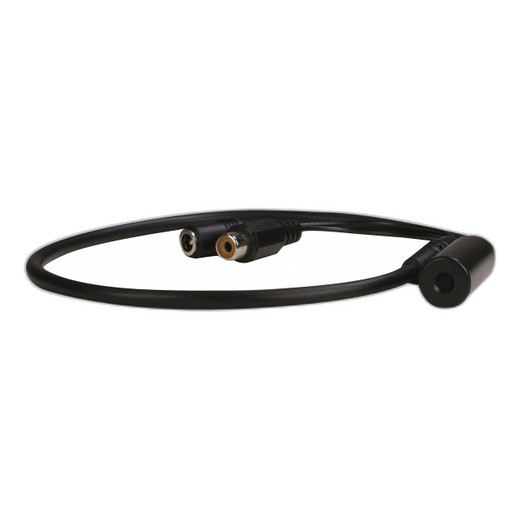
Speco CAMMIC Line-Level Microphone Audio Pickup
Speco Technologies CAMMIC Line Level Microphone Overview The Speco CAMMIC is a specialized add-on microphone designed to expand audio recording flexi…

Speco CAMMIC Line-Level Microphone Audio Pickup
$9.99
Your recommended setup
Review items below — quantities update pricing automatically.
Item
Qty
Status
Price
Optional Add-Ons recommended
Services optional
Bundle Summary
Bundle Subtotal:
$0.00
Optional Add-Ons:
$0.00
Services:
$0.00
Total:
$0.00
Overview
SKU:
CAMMIC
Condition:
New
Availability:
Usually ships in 24 hours
Warranty
3-Year Manufacturer Warranty
Description

Speco Technologies CAMMIC Line Level Microphone
Overview
The Speco CAMMIC is a specialized add-on microphone designed to expand audio recording flexibility in security surveillance systems. Unlike standard microphone-level units, the CAMMIC connects directly to line-level inputs on amplifiers and DVRs, solving a critical integration challenge: providing audio capture when all microphone inputs are occupied or unavailable. This makes it especially valuable for DVR systems with channel-specific audio recording capability. The CAMMIC operates as a 12VDC powered condenser microphone with a 1.5-foot integrated power/audio cable and 10K ohm high impedance design.
Key Features
- Line Level Output Capability: Connects to line-level inputs on amplifiers and DVRs instead of dedicated microphone inputs, providing flexibility when microphone inputs are fully utilized or unavailable
- High Sensitivity Condenser Design: Delivers -62dB ± 3dB sensitivity rating for reliable audio capture across security applications
- Omni-Directional Pickup Pattern: Captures audio from all directions, ideal for open floor surveillance and general area monitoring
- Compact Form Factor: Mini microphone design weighs 0.1 lbs with 1.5-foot integrated cable for easy installation in tight spaces or multiple camera deployments
- Wide Frequency Response: 20Hz to 16kHz frequency range ensures clear voice recording and audio event capture across the security spectrum
- 12VDC Power Operation: Requires external 12VDC power supply (not included; Speco PSW5 optional accessory available)
- Maximum Audio Output: 2Vp-p output level compatible with standard line-level amplifier and DVR inputs
- NDAA Compliant: Meets Section 889 Part B compliance requirements for federal and regulated procurement environments
- Universal Security Application Support: Engineered specifically for DVR voice recording, surveillance audio documentation, and access control audio verification
Integration and Deployment
The CAMMIC solves a common integration problem in multi-camera systems: when DVR microphone inputs reach capacity or when amplifier audio routing requires line-level signal sources. The high impedance design (10K ohms) ensures clean signal integration without impedance mismatch issues common to consumer-grade microphones. Maximum power consumption of 10mA makes the unit suitable for systems using shared or limited power budgets. The 2Vp-p output specification ensures adequate signal level for professional DVR line inputs without requiring additional preamplification.
Installation is straightforward: connect the integrated power/audio cable to a 12VDC power source and route the audio output to any available line-level input. This flexibility enables system integrators to add audio recording capability to existing installations without rewiring camera circuits or adding dedicated microphone infrastructure.
Technical Specifications
Type: Condenser microphone | Impedance: 10K Ohms | Sensitivity: -62dB ± 3dB | Frequency Range: 20Hz ~ 16kHz | Directivity: Omni-directional | Audio Output: Max 2Vp-p | Power Supply: 12VDC (not included) | Power Consumption: 10mA | Cable Length: 1.5 feet | Weight: 0.1 lbs | Compliance: NDAA Section 889 Part B
Marty Allison
The CAMMIC addresses a genuine integration pain point that emerges in mature surveillance deployments. I've evaluated this unit during system expansions where DVR microphone inputs were exhausted but audio recording remained a requirement. The line-level output design eliminates the need for additional microphone preamplifiers and simplifies cable routing in constrained installations.
Technical Highlights:
- Line-Level Integration: The CAMMIC's unique line-level output architecture means you can route audio directly to amplifier or DVR line inputs without additional signal conditioning, reducing component count and failure points in the audio chain.
- Condenser Sensitivity: At -62dB sensitivity with omni-directional response, the CAMMIC captures speech and alarm audio reliably across typical security coverage areas without hot-micing or excessive cable runs.
- Power Efficiency: 10mA current draw integrates cleanly into shared 12VDC power loops, important in field deployments where dedicated power drops are unavailable.
Deployment Considerations:
- Verify that your DVR or amplifier has available line-level inputs before specifying the CAMMIC—this is not a substitute for true microphone inputs on units that lack them entirely.
- Order the optional PSW5 12VDC power supply as part of your bill of materials if your installation does not have existing regulated 12VDC distribution.
- NDAA compliance makes this unit immediately deployable in federal and government procurement workflows without compliance review delays.
For integrators managing multi-camera installs where audio becomes a late-stage requirement, the CAMMIC is a practical solution. The compact form factor and integrated cable reduce installation time, and the line-level design keeps the audio architecture simple. Recommended for DVR systems with channel-specific audio recording capability and situations where microphone input expansion is needed.
Specifications
Warranty:
3-Year Manufacturer Warranty
Have Questions?
Ask an Expert.
RELATED PRODUCTS
System Design, Deployment & Technical Support
Support services and planning resources for commercial surveillance, access control, and infrastructure deployments.
Fixed scope • Fixed price
System Design Assistance
- Get help validating product compatibility
- Coverage requirements
- Storage planning and deployment architecture before you buy.
Deployment & Configuration Support
- Access fixed-scope support for rollout planning
- User setup guidance
- Migration and system standardization across single-site or multi-site deployments
Guides, Tools & Calculators
- PoE requirements
- Storage retention
- Camera selection and deployment methodology