


Overview
SKU:
94656
Condition:
New
Availability:
Usually ships in 24 hours
Warranty
2-Year HID Fargo Printer Limited Warranty

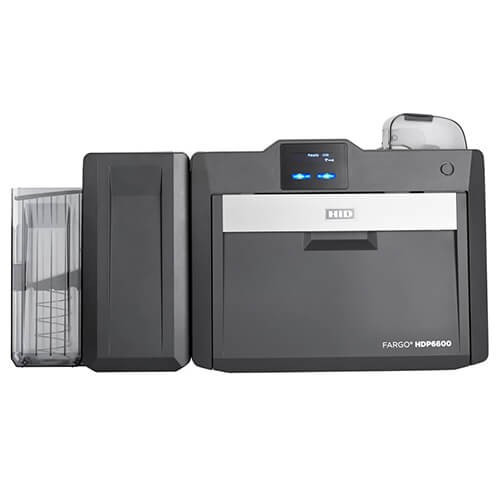
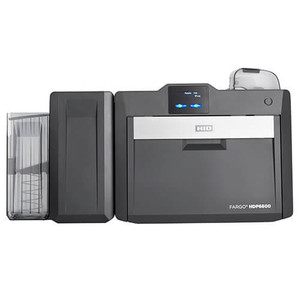
HID 94656 HDP6600 dual-side card printer
HID 94656 Dual-Side Card Printer with Integrated Encoders Overview The HID 94656 represents a comprehensive credential issuance solution designed fo…
HID 94656 HDP6600 dual-side card printer
$6,160.99
Your recommended setup
Review items below — quantities update pricing automatically.
Item
Qty
Status
Price
Optional Add-Ons recommended
Services optional
Bundle Summary
Bundle Subtotal:
$0.00
Optional Add-Ons:
$0.00
Services:
$0.00
Total:
$0.00
Overview
SKU:
94656
Condition:
New
Availability:
Usually ships in 24 hours
Warranty
2-Year HID Fargo Printer Limited Warranty
Description

HID 94656 Dual-Side Card Printer with Integrated Encoders
Overview
The HID 94656 represents a comprehensive credential issuance solution designed for security integrators and identity management programs requiring simultaneous dual-side printing with integrated encoding capability. This system combines high-volume card production with dual encoding technologies—contactless and contact chip—eliminating the need for external encoding hardware in most deployment scenarios. The HDP6600 platform supports enterprise-scale credential programs from initial issuance through replacement cycles.
Key Features
- Dual-Side Printing: Simultaneous front and back card printing reduces production time and minimizes handling between print passes
- Contactless Encoder: Integrated RFID/NFC encoding capability for proximity cards, mobile credentials, and wireless card formats without external reader dependency
- Contact Chip Encoder with Flattener: Built-in contact-based smart card encoding with mechanical flattening function ensures consistent electrical contact and reliable data transfer across ISO/IEC 7816 compliant cards
- High-Volume Output: Designed for sustained production runs supporting large-scale issuance programs, credential renewal cycles, and multi-facility deployments
- Model 94656 Configuration: Pre-configured encoder bundle reduces integration complexity and deployment timeline by combining both encoding methods in a single unit
- Enterprise Credential Support: Compatible with standard ID card formats including PVC, polyester, and composite media types used in access control, visitor management, and employee badge programs
Integration & Compatibility
The HID 94656 integrates with HID identity management platforms and third-party credential issuance software via standard printing and encoding protocols. Security integrators should verify host software compatibility with dual encoding workflows, particularly when deploying mixed-credential environments (contactless + contact chip in single production run). The flattening mechanism on the contact encoder accommodates chip-embedded cards up to standard thickness specifications and reduces encoder wear from repeated contact cycles.
Deployment in access control systems typically involves network-connected issuance workstations or standalone kiosk installations. The integrated encoder eliminates separate USB or serial device management, streamlining IT infrastructure and reducing support complexity. Integrators managing large user populations benefit from batch encoding capability and production queue management features inherent to HID credential software suites.
Operational Considerations
Organizations deploying the HID 94656 should plan for consumables inventory (dye-ribbon, cleaning cards, adhesive rolls) and establish routine maintenance protocols for both encoding heads. Contact encoder cleaning and flattening mechanism calibration ensure sustained encoding reliability across extended production runs. The dual-encoding architecture supports migration strategies for organizations transitioning between legacy proximity systems and modern smart card or mobile credential ecosystems.
Marty Allison
In credential issuance deployments, the HID 94656 eliminates a common integration bottleneck: external encoding hardware. I've specified this system across multi-building access control programs where production volume justifies integrated dual encoding, and the flattener on the contact encoder makes a measurable difference in contact reliability, particularly for high-volume proximity card migration projects.
Technical Highlights:
- Integrated Dual Encoding: Contactless and contact chip encoding in a single device reduces card handling, encoder footprint, and IT device management complexity compared to separate encoder workstations
- Contact Flattening Mechanism: Mechanical flattening on smart card contact surfaces prevents encoder head wear and ensures consistent chip contact resistance across thousands of card issuances
Deployment Considerations:
- Verify credential software support for simultaneous dual-encoding workflows before committing to production schedules, especially in mixed-format environments
- Plan consumables and maintenance intervals around production volume; contact encoder cleaning and flattening calibration are routine but necessary for sustained reliability
The model 94656 works best in environments where you're issuing both contactless and contact-based credentials in a single production run. It's less appropriate for single-credential-type deployments where the secondary encoder sits idle. For large-scale programs (1,000+ annual cards), the productivity gain justifies the hardware investment.
Specifications
Product Type:
Dual-side card printer with integrated encoders
Credential_Type:
PVC, polyester, composite ID cards
Reader_Type:
Contactless encoder, Contact chip encoder with flattener
Have Questions?
Ask an Expert.
RELATED PRODUCTS


System Design, Deployment & Technical Support
Support services and planning resources for commercial surveillance, access control, and infrastructure deployments.
Fixed scope • Fixed price
System Design Assistance
- Get help validating product compatibility
- Coverage requirements
- Storage planning and deployment architecture before you buy.
Deployment & Configuration Support
- Access fixed-scope support for rollout planning
- User setup guidance
- Migration and system standardization across single-site or multi-site deployments
Guides, Tools & Calculators
- PoE requirements
- Storage retention
- Camera selection and deployment methodology