


Overview
SKU:
HID-900-PTNN
Condition:
New
Availability:
Usually ships in 24 hours
Warranty
3-year warranty

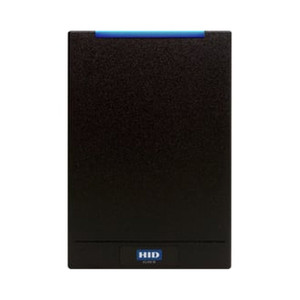
HID 900-PTNN MultiCLASS SE RP10 Proximity Reader
HID HID-900-PTNN MultiCLASS SE RP10 Mini Mullion Proximity Card Reader Overview The HID HID-900-PTNN is a compact, wired proximity card reader engine…

HID 900-PTNN MultiCLASS SE RP10 Proximity Reader
$247.67
$187.99
Your recommended setup
Review items below — quantities update pricing automatically.
Item
Qty
Status
Price
Optional Add-Ons recommended
Services optional
Bundle Summary
Bundle Subtotal:
$0.00
Optional Add-Ons:
$0.00
Services:
$0.00
Total:
$0.00
Overview
SKU:
HID-900-PTNN
Condition:
New
Availability:
Usually ships in 24 hours
Warranty
3-year warranty
Description

HID HID-900-PTNN MultiCLASS SE RP10 Mini Mullion Proximity Card Reader
Overview
The HID HID-900-PTNN is a compact, wired proximity card reader engineered for access control deployments where physical space constraints or aesthetic requirements eliminate traditional reader options. Built on HID's MultiCLASS SE platform, this mini mullion reader delivers enterprise-grade multi-technology credential support in a form factor measuring just 1.9" × 4.1" × 0.9". The RP10 combines secure communications, intelligent power management, and open protocol support to enable flexible credential architectures without requiring standardization across your organization.
Key Features
- Multi-Technology Credential Support: Reads both high-frequency (13.56 MHz) and low-frequency (125 kHz) credential technologies including iCLASS Seos, iCLASS SE, iCLASS, MIFARE Classic, MIFARE DESFire EV1, HID Prox, Indala Prox, Dorado Prox, and EM Prox legacy credentials
- Multiple Form Factor Compatibility: Supports cards, fobs, and mobile devices, with configurable HID Mobile Access® integration for smartphone-based credential deployment
- Compact Mullion Design: Mini form factor (1.9" W × 4.1" H × 0.9" D) optimized for space-constrained installations, retrofit applications, and aesthetic-sensitive environments while maintaining full functionality
- Secure Identity Protection: iCLASS SE platform's Secure Identity Object (SIO) data model provides encrypted credential data protection with additional authentication layer
- Energy-Efficient Operation: Intelligent power management reduces power consumption by up to 59%, delivering measurable reductions in infrastructure load and operational costs across large-scale deployments
- Open Protocol Support: Open Supervised Device Protocol (OSDP) for standardized, secure communications between reader and controller, ensuring interoperability and future compatibility with emerging access control standards
- Communication Flexibility: Supports OSDP, Wiegand, and Clock & Data modes for seamless integration into existing access control architectures
- Environmental Certification: Environmental Product Declaration and Green Circle certifications demonstrate sustainability commitment and qualify toward LEED building credits
- Proven Platform: Limited lifetime warranty backed by HID Global's enterprise access control heritage
Integration & Compatibility
The HID-900-PTNN integrates with any OSDP-compatible access control system, controller, or management platform. Its support for multiple communication protocols (OSDP, Wiegand, Clock & Data) ensures compatibility with legacy and modern systems. The reader's configurable mobile access capability enables progressive deployment strategies where smartphone-based credentials can be implemented without reader replacement. The mini mullion profile is particularly valuable in retrofit scenarios, corporate offices, educational institutions, and healthcare facilities where traditional reader footprints are impractical due to door geometry, mullion width, or aesthetic constraints.
Marty Allison
The HID-900-PTNN represents a pragmatic solution to a recurring deployment constraint: multi-technology access control readers in space-limited installations. In retrofit and new construction scenarios alike, door mullion geometry and aesthetic requirements often conflict with reader placement. This mini mullion form factor eliminates that barrier without sacrificing credential flexibility or security posture.
Technical Highlights:
- Multi-Technology Backbone: The HID-900-PTNN eliminates credential standardization requirements across your organization. Supporting 125 kHz and 13.56 MHz credentials simultaneously means you can retire legacy Prox systems incrementally while deploying modern iCLASS SE infrastructure, reducing both capital outlay and operational risk.
- Power Efficiency at Scale: The 59% power reduction through intelligent power management is significant in large deployments. A 100-reader installation consuming 50W per reader (typical passive reader baseline) becomes 20.5W per reader with the RP10—translating to roughly 2,950 watts saved annually at $0.12/kWh, plus reduced infrastructure load on power distribution and wiring.
- OSDP Compliance: Native OSDP support ensures compatibility with modern access control ecosystems and protects capital investment against protocol obsolescence. Controllers from Salto, Axis, Kaba, Allegion, and others integrate directly without middleware translation.
Deployment Considerations:
- Confirm controller OSDP support before specifying readers. Legacy Wiegand controllers remain supported, but OSDP unlocks encrypted credential data and tamper reporting.
- Mobile Access configurability requires HID Mobile Access subscription and smartphone ecosystem planning—define enrollment workflows before installation.
- The SIO data model protects against credential cloning via encrypted identity objects; document credential issuance procedures to maintain this security layer.
For organizations managing mixed credential environments or planning incremental technology transitions, the HID-900-PTNN delivers flexibility without compromise. The compact footprint solves a genuine installation constraint, and the power efficiency delivers measurable operational cost reduction in medium to large deployments.
Specifications
Product Type:
Mini Mullion Proximity Card Reader
Color:
Black
Credential Compatibility:
Supports a wide variety of high and low-frequency credential technologies
Credential Form Factors:
Compatible with cards, fobs, and mobile devices
Mobile Access:
Configurable for HID Mobile Access®
Power Management:
Intelligent power management reduces power consumption by up to 59%
Features:
Environmental Product Declaration and Green Circle certifications
Communication Protocol:
Open Supervised Device Protocol (OSDP)
Connectivity:
Wired
Power Type:
DC
Communication:
OSDP, Wiegand, Clock & Data
Credential_Type:
125 kHz contactless cards (HID Prox, Indala Prox, Dorado Prox, EM Prox) and 13.56 MHz contactless smart cards (iCLASS Seos, iCLASS SE, iCLASS, MIFARE Classic, MIFARE DESFire EV1)
Encryption:
iCLASS SE Secure Identity Object (SIO) data model with encrypted credential protection
Reader_Type:
Mini Mullion Proximity Card Reader
Have Questions?
Ask an Expert.
RELATED PRODUCTS


System Design, Deployment & Technical Support
Support services and planning resources for commercial surveillance, access control, and infrastructure deployments.
Fixed scope • Fixed price
System Design Assistance
- Get help validating product compatibility
- Coverage requirements
- Storage planning and deployment architecture before you buy.
Deployment & Configuration Support
- Access fixed-scope support for rollout planning
- User setup guidance
- Migration and system standardization across single-site or multi-site deployments
Guides, Tools & Calculators
- PoE requirements
- Storage retention
- Camera selection and deployment methodology