


Overview
SKU:
55230
Condition:
New
Availability:
Usually ships in 24 hours
Warranty
2-Year HID Fargo Printer Limited Warranty

HID 55230 Fargo DTC4500e Single Side ISO MAG Printer
HID 55230 DTC4500e Card Printer-Encoder Overview The HID 55230 is a dedicated card printer-encoder solution designed for high-volume credential issu…
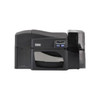
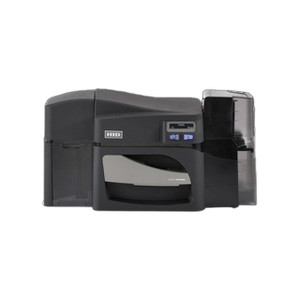
HID 55230 Fargo DTC4500e Single Side ISO MAG Printer
$3,801.99
Your recommended setup
Review items below — quantities update pricing automatically.
Item
Qty
Status
Price
Optional Add-Ons recommended
Services optional
Bundle Summary
Bundle Subtotal:
$0.00
Optional Add-Ons:
$0.00
Services:
$0.00
Total:
$0.00
Overview
SKU:
55230
Condition:
New
Availability:
Usually ships in 24 hours
Warranty
2-Year HID Fargo Printer Limited Warranty
Description

HID 55230 DTC4500e Card Printer-Encoder
Overview
The HID 55230 is a dedicated card printer-encoder solution designed for high-volume credential issuance in enterprise access control, identity management, and credential production environments. This single-side printer-encoder combines ISO magnetic stripe encoding with secure card handling through its integrated locking hopper mechanism. The DTC4500e model delivers reliable, consistent output for organizations requiring secure badge and card production with on-card magnetic encoding capabilities.
Key Features
- Single-Side Printing: Optimized for efficient production workflows requiring one-pass credential printing
- ISO Magnetic Stripe Encoding: Integrated encoder handles standard ISO magnetic stripe encoding for multi-factor credential verification
- Same-Side Hopper Configuration: Streamlined card feed system supporting continuous production runs without operational complexity
- Locking Hopper Mechanism: Secure card storage with physical locking prevents unauthorized card access during non-operation and enhances credential chain-of-custody compliance
- DTC4500e Platform: Proven printer-encoder architecture delivering consistent throughput and encoding reliability across enterprise deployment scenarios
- Access Control Integration Ready: Compatible with standard credential management systems requiring magnetic stripe data embedding alongside printed identification elements
Integration & Compatibility
The HID 55230 integrates into multi-credential ecosystems where magnetic stripe encoding supports legacy and hybrid access control systems. The printer-encoder accepts standard CR80 card stock and operates within existing badge production workflows. Organizations leveraging both proximity readers and magnetic stripe authentication benefit from the dual-credential capability embedded in a single printing pass. The locking hopper provides security assurance for facilities managing high-value credential blanks and reduces operational overhead in controlled issuance environments.
This model supports credential personalization workflows where on-card encoding must occur simultaneously with visual identity printing, eliminating secondary encoding steps and reducing production time. Integration with badge management software enables automated card data assignment and track-and-trace compliance for regulated industries including government, healthcare, and financial services.
Operational Specifications
The DTC4500e single-side configuration prioritizes efficiency in high-throughput credential environments. Same-side hopper loading simplifies operator training and reduces card jam incidents common in complex multi-hopper systems. The magnetic stripe encoder operates to ISO standards, ensuring compatibility with standard access control reader hardware across diverse facility deployments. Locking hopper security meets credential custody requirements mandated by federal ID programs and corporate security policies.
The HID 55230 serves as a production-grade solution for badge shops, system integrators managing large-scale access control rollouts, and enterprise identity teams requiring in-house credential manufacturing. Magnetic stripe encoding capability extends credential functionality to legacy magnetic-dependent readers while new smart card or RF technologies are gradually deployed, providing cost-effective credential lifecycle extension.
Karl Wilson
The HID 55230 addresses a specific but critical niche in credential production: organizations operating hybrid access control systems where magnetic stripe encoding remains a required secondary factor alongside modern authentication methods. During recent multi-site access control deployments, I've observed that facilities transitioning away from purely magnetic-dependent readers still maintain magnetic encoding as a fallback or secondary verification method, making models like the 55230 operationally essential during extended migration periods.
Technical Highlights:
- ISO Magnetic Stripe Encoding: Ensures compatibility with existing magnetic reader infrastructure across facilities, supporting parallel deployment of newer credential technologies without full infrastructure replacement
- Locking Hopper Security: Meets credential custody documentation requirements and reduces risk of blank card diversion in high-security environments
- Single-Pass Operation: Eliminates secondary encoding steps, reducing labor costs and credential processing time in high-volume badge shops
Deployment Considerations:
- Verify magnetic stripe reader compatibility across target facility access control readers before large-scale deployment; some modern readers no longer support magnetic authentication natively
- Confirm card stock specifications with your credential management software to ensure encoded data aligns with reader parsing rules and access control database expectations
- The locking hopper requires periodic physical inspection and cleaning to maintain smooth card feed reliability during multi-shift production operations
The 55230 represents mature, reliable credential encoding technology. For facilities maintaining hybrid systems or requiring magnetic stripe as a required secondary factor, this printer-encoder delivers the secure, auditable production capability required by compliance standards. Integration is straightforward with standard badge management platforms and access control middleware.
Specifications
Product Type:
Card Printer-Encoder
Credential_Type:
ISO Magnetic Stripe Card
Reader_Type:
Magnetic Stripe Encoder
Have Questions?
Ask an Expert.
RELATED PRODUCTS



System Design, Deployment & Technical Support
Support services and planning resources for commercial surveillance, access control, and infrastructure deployments.
Fixed scope • Fixed price
System Design Assistance
- Get help validating product compatibility
- Coverage requirements
- Storage planning and deployment architecture before you buy.
Deployment & Configuration Support
- Access fixed-scope support for rollout planning
- User setup guidance
- Migration and system standardization across single-site or multi-site deployments
Guides, Tools & Calculators
- PoE requirements
- Storage retention
- Camera selection and deployment methodology