


Overview
SKU:
55030
Condition:
New
Availability:
Usually ships in 24 hours
Warranty
2-Year HID Fargo Printer Limited Warranty

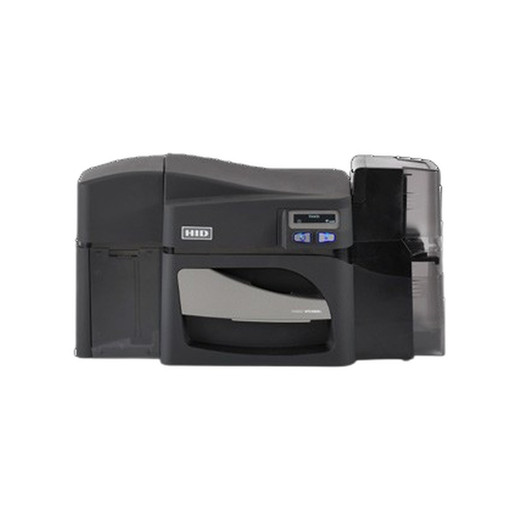
HID 55030 Fargo DTC4500e Single Side ISO MAG Printer
HID 55030 DTC4500e Card Printer-Encoder Overview The HID 55030 DTC4500e is a dye sublimation/thermal resin card printer designed for organizations re…

HID 55030 Fargo DTC4500e Single Side ISO MAG Printer
$3,326.99
Your recommended setup
Review items below — quantities update pricing automatically.
Item
Qty
Status
Price
Optional Add-Ons recommended
Services optional
Bundle Summary
Bundle Subtotal:
$0.00
Optional Add-Ons:
$0.00
Services:
$0.00
Total:
$0.00
Overview
SKU:
55030
Condition:
New
Availability:
Usually ships in 24 hours
Warranty
2-Year HID Fargo Printer Limited Warranty
Description

HID 55030 DTC4500e Card Printer-Encoder
Overview
The HID 55030 DTC4500e is a dye sublimation/thermal resin card printer designed for organizations requiring credential issuance with integrated magnetic stripe encoding. This single-side printer configuration delivers color printing at up to 150 cards per hour, supporting both CR-79 (3.303 in × 2.051 in) and CR-80 (3.37 in × 2.13 in) card formats. The model 55030 integrates ISO magnetic stripe encoding capability, enabling direct encoding of payment cards, access credentials, and multi-function ID cards without external encoding stations.
Key Features
- Single-Side Printing: Dye sublimation and thermal resin print technology for full-color credential production on one surface
- Print Speed: Maximum 150 cards per hour in color mode, meeting moderate-to-high volume issuance workflows
- Card Format Support: CR-79 and CR-80 card compatibility ensures flexibility for standard ID, payment, and access cards
- ISO Magnetic Stripe Encoder: Built-in encoding eliminates secondary encoding hardware; supports Track 1, Track 2, and Track 3 data per ISO/IEC 7811 standards
- Password Security: Device-level password protection restricts unauthorized access to printer settings and card production functions
- Cross-Platform Compatibility: Operates on Windows XP (32-bit), Windows Vista (32/64-bit), Windows 7 (32/64-bit), Windows 8 (32/64-bit), Windows Server 2003, Windows Server 2008, macOS X 10.5, macOS X 10.6, macOS Lion 10.7, macOS Mountain Lion 10.8, and Linux environments
- 3-Year Limited Warranty: Manufacturer-backed coverage provides peace of mind on hardware investment
- No Locking Hoppers: Standard card input and output configuration suitable for supervised production environments
Integration and Compatibility
The HID 55030 integrates seamlessly into access control and credential management ecosystems. The integrated ISO magnetic stripe encoder eliminates the need for external encoding appliances, reducing infrastructure complexity and space requirements. Organizations deploying multi-technology credentials—combining visual identification with magnetic stripe data for door readers or payment systems—can consolidate issuance workflows onto a single printer platform. The device supports standard Windows and Linux printing protocols, permitting integration with established identity management systems and card design software.
Magnetic stripe encoding on the model 55030 DTC4500e adheres to ISO/IEC 7811 magnetic card specifications, ensuring compatibility with standard stripe readers deployed across access control, time and attendance, and payment environments. Password-protected settings prevent unauthorized card production and encoding parameters modification, maintaining credential integrity in regulated issuance workflows.
Specifications Summary
Print technology combines dye sublimation with thermal resin transfer, delivering photographic-quality color on plastic card substrates. Maximum card throughput reaches 150 cards per hour, with support for both standard CR-79 and CR-80 card dimensions. The printer accommodates single-side printing without requiring dual-head configuration, reducing capital expense for organizations not requiring both-sides printing. Built-in ISO magnetic stripe encoding capability encodes data directly during the print cycle, synchronizing visual and magnetic data on each card produced.
James Everett
The HID 55030 DTC4500e addresses a common requirement in access control deployments: the need for on-site credential issuance with magnetic encoding in a compact footprint. I've evaluated this printer during planning phases for organizations consolidating badge issuance and door reader compatibility into a single production system. The 150 cards-per-hour throughput sits in the moderate production tier—sufficient for enterprise branch offices and mid-sized facilities without requiring the complexity of high-volume industrial systems.
Technical Highlights:
- Integrated Encoding: ISO magnetic stripe encoding eliminates secondary processing steps. Data written during print reduces error rates and ensures synchronized visual/magnetic content on each credential.
- Dual Print Technology: Dye sublimation with thermal resin transfer delivers durable, color-accurate credentials resistant to fading and physical wear in field environments.
- OS Flexibility: Support across Windows (XP through 8 Server editions) and Linux environments simplifies integration into existing IT infrastructure without driver or compatibility constraints.
Deployment Considerations:
- Confirm card design software compatibility with your identity management system before procurement. Standard print drivers handle most credential design platforms, but magnetic data field mapping requires integration testing.
- The single-side configuration suits facilities issuing visual ID with encoded access data. If dual-sided credentials are required, consider higher-tier models with both-sides capability.
- Password security protects against casual misuse but should be coupled with role-based access controls in your card design and issuance workflow to prevent social engineering.
For integrators provisioning badge systems requiring integrated magnetic encoding without the capital commitment of high-speed dual-side systems, the 55030 DTC4500e provides reliable throughput and straightforward integration into Windows and Linux card management platforms. Verify magnetic stripe encoding specifications align with your reader technology before deployment.
Specifications
Product Type:
Single-Side Card Printer-Encoder with ISO Magnetic Stripe
Communication:
Windows/Linux Print Protocol
Credential_Type:
Plastic Cards (CR-79, CR-80)
Encryption:
Password Security
Reader_Type:
Magnetic Stripe Reader (ISO/IEC 7811)
Have Questions?
Ask an Expert.
RELATED PRODUCTS



System Design, Deployment & Technical Support
Support services and planning resources for commercial surveillance, access control, and infrastructure deployments.
Fixed scope • Fixed price
System Design Assistance
- Get help validating product compatibility
- Coverage requirements
- Storage planning and deployment architecture before you buy.
Deployment & Configuration Support
- Access fixed-scope support for rollout planning
- User setup guidance
- Migration and system standardization across single-site or multi-site deployments
Guides, Tools & Calculators
- PoE requirements
- Storage retention
- Camera selection and deployment methodology