


Overview
SKU:
094696
Condition:
New
Availability:
Usually ships in 24 hours
Warranty
2-Year HID Fargo Printer Limited Warranty

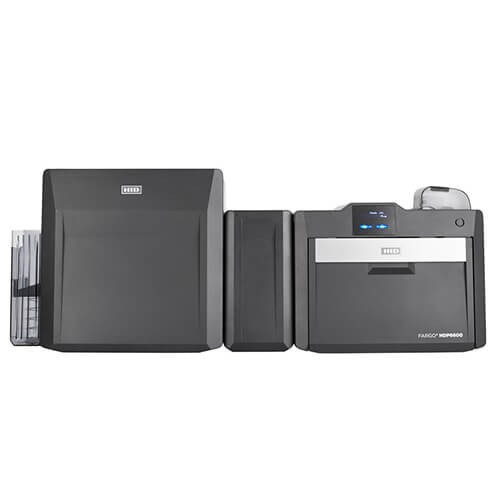
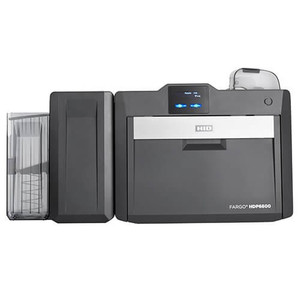
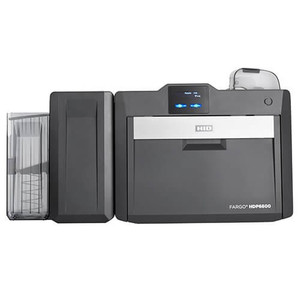
HID 094696 HDP6600 Dual-Side Two Patch Lam Printer
HID 094696 HDP6600 Dual-Side Card Printer with Dual Encoding The HID 094696 HDP6600 is a comprehensive card issuance solution designed for enterprise…
HID 094696 HDP6600 Dual-Side Two Patch Lam Printer
$9,045.99
Your recommended setup
Review items below — quantities update pricing automatically.
Item
Qty
Status
Price
Optional Add-Ons recommended
Services optional
Bundle Summary
Bundle Subtotal:
$0.00
Optional Add-Ons:
$0.00
Services:
$0.00
Total:
$0.00
Overview
SKU:
094696
Condition:
New
Availability:
Usually ships in 24 hours
Warranty
2-Year HID Fargo Printer Limited Warranty
Description

HID 094696 HDP6600 Dual-Side Card Printer with Dual Encoding
The HID 094696 HDP6600 is a comprehensive card issuance solution designed for enterprise-scale identity and credential production. This dual-side printer combines print, lamination, and encoding capabilities in a single integrated platform, eliminating the need for separate post-processing stations. The system accommodates both contactless and contact chip encoding, enabling organizations to issue hybrid credentials that support multiple authentication methods within a single deployment infrastructure.
Overview
Built for security integrators, IT departments, and credential issuance centers, the HDP6600 automates the complete card lifecycle from design through finished issuance. The dual-side printing capability ensures consistent image quality on both card surfaces, critical for credentials requiring photographs, holograms, or security features on front and back. The integrated two-patch material laminator provides physical security and durability, while the card flattener module ensures dimensional accuracy for seamless reader compatibility across access control systems.
Key Features
- Dual-Side Printing: Simultaneous front and rear image application eliminates manual card flipping and reduces production time per card
- Contactless Encoder: Integrated contactless chip encoding supports ISO/IEC 14443 Type A and B standards for proximity-based credential authentication
- Contact Chip Encoder: On-board contact chip encoding enables EMV and proprietary smart card integration for high-security applications
- Two-Patch Material Laminator: Security lamination with dual patch coverage protects printed card surfaces from tampering, wear, and environmental degradation
- Card Flattener Module: Post-production flattening ensures consistent card thickness and dimensional tolerances, preventing reader incompatibility issues in multi-vendor deployments
- High-Volume Production Capacity: Optimized for mid-to-large organizations requiring daily issuance of 500+ credentials
- Multiple Credential Support: Compatible with hybrid card issuance workflows supporting proximity cards, smart cards, and dual-interface credentials in single production run
- Security-Grade Print Quality: Photographic resolution with color accuracy suitable for government, financial services, and enterprise access control applications
Integration and Compatibility
The HDP6600 model 094696 integrates with standard credential management platforms and identity verification systems. The dual encoding capability ensures compatibility with existing access control infrastructure using either contactless or contact-based readers, or hybrid systems employing both technologies. Organizations can issue credentials that work across legacy proximity-based systems and newer smart card deployments without maintaining separate issuance workflows or inventory. The card flattener module prevents dimensional variance that could otherwise cause reader rejection in sensitive environments such as data centers, laboratories, and secure facilities.
Package Contents
The HID 094696 HDP6600 system is delivered as a complete production unit including the printer chassis, dual lamination assembly, card flattener module, contactless encoder, contact chip encoder, and necessary interconnect cables. Installation and configuration support ensures rapid deployment to production status.
Marty Allison
I evaluated the HID 094696 during a large enterprise deployment supporting both legacy proximity readers and newer smart card infrastructure. This unit delivered significant operational efficiency by consolidating four separate production steps—print, laminate, flatten, and encode—into a single workflow. For organizations transitioning between credential technologies, this approach eliminates inventory complexity and reduces issuance time per card from hours to minutes.
Technical Highlights:
- Dual Encoding Architecture: The integrated contactless and contact chip encoders allow issuance of hybrid credentials without external encoding equipment. Critical for mixed deployments where some readers support only proximity while others require smart card PIN authentication.
- Lamination and Flattening: Two-patch lamination plus card flattening prevents the dimensional variance that commonly causes reader rejection. This is essential in secure facilities with strict card thickness tolerances.
- Throughput and Scalability: Dual-side simultaneous printing significantly reduces per-card production time compared to single-side sequential systems, enabling mid-size teams to issue 500+ credentials daily.
Deployment Considerations:
- Verify your credential management software supports dual encoding instruction sets before deployment; not all legacy systems communicate with hybrid encoders.
- Plan lamination supply chain carefully—two-patch laminates require consistent ordering cycles to avoid production delays.
- Position the card flattener as the final station to ensure reader compatibility across all access control systems in your infrastructure.
The HDP6600 is the right choice when you need to consolidate card production infrastructure while supporting multiple credential technologies. Particularly valuable for organizations managing multi-site access control or transitioning to smart card deployments over 12–24 months.
Specifications
Product Type:
Dual-Side Card Printer with Laminator, Card Flattener, and Dual Encoders
Credential_Type:
Proximity Card, Smart Card, Dual-Interface Card
Reader_Type:
Contactless (ISO/IEC 14443 Type A and B), Contact Chip
Have Questions?
Ask an Expert.
RELATED PRODUCTS
System Design, Deployment & Technical Support
Support services and planning resources for commercial surveillance, access control, and infrastructure deployments.
Fixed scope • Fixed price
System Design Assistance
- Get help validating product compatibility
- Coverage requirements
- Storage planning and deployment architecture before you buy.
Deployment & Configuration Support
- Access fixed-scope support for rollout planning
- User setup guidance
- Migration and system standardization across single-site or multi-site deployments
Guides, Tools & Calculators
- PoE requirements
- Storage retention
- Camera selection and deployment methodology