
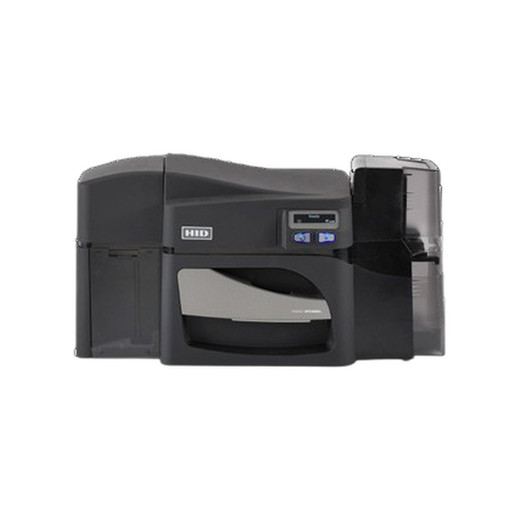


Overview
SKU:
055528
Condition:
New
Availability:
Usually ships in 24 hours
Warranty
2-Year HID Fargo Printer Limited Warranty

HID 055528 DTC4500e Dual-Side Printer with Dual-Sid
HID 055528 DTC4500e Dual-Side Card Printer with Integrated Smart Card EncodingThe HID 055528 DTC4500e represents a comprehensive credential production…

HID 055528 DTC4500e Dual-Side Printer with Dual-Sid
$6,374.99
Your recommended setup
Review items below — quantities update pricing automatically.
Item
Qty
Status
Price
Optional Add-Ons recommended
Services optional
Bundle Summary
Bundle Subtotal:
$0.00
Optional Add-Ons:
$0.00
Services:
$0.00
Total:
$0.00
Overview
SKU:
055528
Condition:
New
Availability:
Usually ships in 24 hours
Warranty
2-Year HID Fargo Printer Limited Warranty
Description

HID 055528 DTC4500e Dual-Side Card Printer with Integrated Smart Card Encoding
The HID 055528 DTC4500e represents a comprehensive credential production platform purpose-built for organizations requiring high-volume card issuance with simultaneous encoding and lamination capabilities. This base model combines dual-side printing with dual-side lamination, HID Prox, iCLASS, MIFARE/DESFire, and contact smart card encoding in a single integrated system. The unit ships with locking hoppers and includes integrated OMNIKEY Cardman 5121 and 5125 card encoders, eliminating the need for external encoding hardware and streamlining credential workflow from design through issuance.
Overview
The DTC4500e is engineered for security integrators, IT managers, and identity management teams tasked with issuing multi-technology credentials at scale. The system accommodates both USB and Ethernet connectivity, enabling flexible deployment in networked environments or standalone configurations. Dual-side printing with lamination protects printed and encoded data while enabling full-surface card design, photograph integration, and dual-sided security features. Locking hoppers protect blank card stock and finished inventory, addressing physical security requirements common in badge production facilities.
Key Features
- Dual-Side Printing and Lamination: Print and laminate both sides in a single pass, protecting credentials against tampering and environmental degradation
- Integrated Multi-Technology Encoding: OMNIKEY Cardman 5121 and 5125 encoders support HID Prox, iCLASS, MIFARE/DESFire, and contact smart card technologies without external encoding modules
- Locking Hoppers: Secure blank card and finished credential storage with keyed access control
- Dual Connectivity: USB and Ethernet ports provide flexible network integration or direct-attach operation
- Contact and Contactless Support: Single platform handles magnetic stripe, contact chip, proximity, and RF-based smart card credentials
- MIFARE and iCLASS Compatibility: Support for MIFARE Classic, MIFARE DESFire, and HID iCLASS technologies enables mixed-credential environments
- HID Prox Encoding: Native Prox encoding support streamlines legacy and modern access control system integration
- Base Configuration: Entry-level model without advanced finishing options, suitable for standard card production workflows
Integration and Compatibility
The HID 055528 integrates seamlessly into access control ecosystems using HID Prox, iCLASS, MIFARE, and DESFire technologies. Ethernet connectivity enables deployment in centralized credential issuance centers with network-based job queuing and real-time production monitoring. USB support allows direct workstation connectivity for smaller installations or decentralized card production. The integrated OMNIKEY encoders eliminate external hardware dependencies, reducing form factor and simplifying credential production workflows. Organizations standardizing on mixed-credential strategies benefit from unified issuance hardware rather than maintaining separate systems for contact, contactless proximity, and smart card encoding.
Package Contents
The DTC4500e base model includes the main printing and encoding unit, locking hoppers for blank card and finished credential storage, integrated OMNIKEY Cardman 5121 and 5125 card encoders, USB and Ethernet connectivity modules, and power supply. No external encoding hardware is required for immediate deployment.
Jerry Tildsen
I evaluated the HID 055528 DTC4500e during a large-scale badge production deployment for a financial services client requiring simultaneous issuance of proximity and smart card credentials. The integrated encoding eliminates external encoder complexity while dual-side lamination significantly improves credential durability in high-turnover environments. The locking hoppers met our physical security requirements without requiring additional cabinet infrastructure.
Technical Highlights:
- Integrated Encoding: OMNIKEY Cardman 5121 and 5125 encoders handle HID Prox, iCLASS, MIFARE/DESFire, and contact smart card encoding without external hardware modules
- Dual-Side Capability: Simultaneous printing and lamination on both card surfaces reduces production time and improves visual design flexibility
- Multi-Technology Support: Single platform accommodates proximity, smart card, and contact-based credentials for mixed-environment deployments
- Connectivity Options: USB and Ethernet ports support both centralized and distributed production workflows
Deployment Considerations:
- The base model configuration suits standard card production; organizations requiring specialty finishing should confirm compatibility before procurement
- Locking hoppers provide credential inventory protection without external storage systems, streamlining facility design
- Integrate network-based job management systems to maximize throughput and track production metrics across distributed issuance points
- Verify encoding template compatibility with your specific access control platform before full-scale migration
The DTC4500e is a practical, integration-friendly choice for organizations consolidating credential issuance across multiple technology standards. Integrated encoding and dual-side lamination eliminate external hardware complexity while maintaining production scalability.
Specifications
Product Type:
Dual-Side Card Printer with Dual-Side Lamination and Integrated Smart Card Encoder
Communication:
USB, Ethernet
Credential_Type:
HID Prox, iCLASS, MIFARE/DESFire, Contact Smart Card
Reader_Type:
HID Prox, iCLASS, MIFARE/DESFire, Contact Smart Card
Have Questions?
Ask an Expert.
RELATED PRODUCTS



System Design, Deployment & Technical Support
Support services and planning resources for commercial surveillance, access control, and infrastructure deployments.
Fixed scope • Fixed price
System Design Assistance
- Get help validating product compatibility
- Coverage requirements
- Storage planning and deployment architecture before you buy.
Deployment & Configuration Support
- Access fixed-scope support for rollout planning
- User setup guidance
- Migration and system standardization across single-site or multi-site deployments
Guides, Tools & Calculators
- PoE requirements
- Storage retention
- Camera selection and deployment methodology