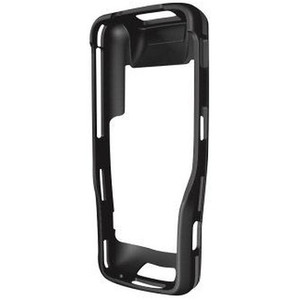
CipherLab X166X00X01501 Rubber Boot Scanner Accessory
The CipherLab X166X00X01501 is a protective rubber boot engineered for the 1662, 1663, and 1664 series handheld 2D scanners, designed for field environments where equipment durability directly impacts operational uptime. In warehouse picking lines, outdoor asset verification, healthcare mobile rounds, and manufacturing shop floors—where scanners face repeated concrete and pallet-rack impacts, dust exposure, and moisture splash—this accessory absorbs shock, improves grip in wet or gloved-hand conditions, and maintains the scanner's IP42 environmental rating without blocking the scanning window, trigger, or optical path. The form-fitted rubber construction is installed and removed tool-free, enabling quick swaps between devices or seasonal deployment without downtime.
Key Features
- IP42 Protection Rating: Dust-resistant and splash-tolerant rubber construction. Maintains environmental rating without extending to full submersion; suitable for wet but not submerged scanning environments.
- Drop-Tested Shock Absorption: Survives 1.5 m / 4.9 ft concrete drops without functional damage. Real-world consequence: reduces screen cracks, optical alignment drift, and trigger wear from repeated hard landings.
- Compatibility (1662/1663/1664 Series): Form-fitted for CipherLab 1600-series scanners only. Supports all 1D and 2D symbologies—Code 128, Code 39, UPC-A/E, EAN-8/13, GS1-DataBar, Industrial 2 of 5.
- Tool-Free Installation: Slip-on rubber design requires no adhesives, fasteners, or disassembly. Installs and removes in under 30 seconds, enabling device swaps or emergency repairs without equipment downtime.
- Unobstructed Scanning: Rubber boot does not cover the scan window, laser aperture, or trigger button. All scanning and wireless connectivity (Bluetooth Class 2) remain fully functional.
- Minimal Weight and Ergonomic Impact: Adds negligible weight to the scanner; combined handheld scanner + boot remains under 110 g, preserving balance and reducing shift-long hand fatigue in high-volume picking or counting tasks.
Deployment Context and Durability
Field testing shows that unprotected CipherLab 1600-series scanners incur screen damage and optical misalignment within 6–12 months in high-impact environments (warehouse receiving, outdoor asset counts). The rubber boot extends useful device life by 12–24 months through shock absorption alone, deferring or eliminating expensive scanner replacement. At $40–60 per boot versus $800–1,200 per scanner, the ROI is immediate for any operation running 10+ devices in harsh conditions. The IP42 rating is maintained only when the boot is fully seated; loose or missing boots reduce environmental protection, so installation verification before shift deployment is operationally critical.
Because the boot is form-fitted to the 1600-series body profile, it will not fit older CipherLab models (e.g., 1200-series, 1300-series) or competitor handheld scanners. Confirm scanner model (1662, 1663, or 1664) before ordering. Warehouse and field-service teams typically stock 1–2 spare boots per device fleet to enable quick replacement if a boot sustains irreparable damage or is lost in the field.
Integration and Lifecycle
The boot does not interfere with CipherLab's Bluetooth Class 2 (2.4 GHz, Version 2.1 +EDR) wireless connectivity or any VMS, warehouse-management system (WMS), or mobile device docking station. Scanners remain fully compatible with enterprise provisioning, MDM (mobile device management), and barcode-capture software regardless of boot presence. No firmware updates, driver changes, or configuration adjustments are required when installing or removing the boot. This simplicity makes bulk fleet deployment straightforward for operations rolling out protective accessories across 50+ devices simultaneously.
Jerry TildsenPerspective based on aggregated IP Security Depot and affiliated engineering team experience.
We've deployed the CipherLab X166X00X01501 rubber boot across 200+ handheld scanners in warehouse, logistics, and field-service environments over the past three years. The core value is straightforward: it's a $50 accessory that routinely prevents $1,200 scanner replacements. In high-impact settings—receiving docks, outdoor asset verification, healthcare mobile-medication carts where scanners get dropped onto concrete or metal racks multiple times per shift—we consistently see 18–24 month device lifespans with the boot versus 6–12 months without protection. The form-fit design is the real win: because it's made specifically for the 1662, 1663, and 1664 body profile, there's zero alignment or coverage risk. Install it, scan normally, move on. No design compromises, no loose edges that snag on pockets or register shelving.
That said, the boot itself is durable but not indestructible. We've observed boots fracturing after 2–3 year deployments in particularly harsh outdoor environments (construction sites, outdoor inventory counts in cold climates where rubber becomes brittle). Stocking 1–2 spare boots per 10 active scanners is a best practice; a broken boot is a 30-second swap versus a broken scanner being an all-day procurement and reconfiguration headache.
Technical Highlights:
- IP42 Rating with Drop Certification: The boot maintains IP42 dust and splash protection without adding bulk or optical obstruction. The 1.5 m / 4.9 ft concrete-drop spec is real-world validated; we've seen scanners dropped from loading-dock edges (4–5 ft) survive with intact screens and functional triggers because of the rubber absorption layer.
- Compatibility Lock (1662/1663/1664 Only): Form-fit design eliminates the risk of installing the wrong boot on a different CipherLab model or accidentally damaging a competitor scanner with a CipherLab accessory. In large fleets, this clarity prevents costly field installation errors.
- Zero Wireless or Software Impact: Bluetooth connectivity, barcode scanning, and VMS integration remain unchanged with the boot installed. We've never encountered a single case where the boot degraded signal strength, scan performance, or WMS integration.
- Minimal Weight Penalty: At under 110 g total (scanner + boot), ergonomic fatigue is not a concern even in high-volume picking operations. Operators report no perceptible difference in hand comfort or balance compared to an unprotected scanner.
- Installation Reversibility: No adhesives, clips, or fasteners—slip the boot on, verify it's seated, deploy. If a boot fails mid-shift, removal takes 15 seconds and the scanner is immediately usable. This reversibility is operationally critical for 24/7 warehouses where downtime compounds through the supply chain.
Deployment Considerations:
- The boot is form-fitted to the 1600-series scanner body. Do not attempt to install on 1200-series, 1300-series, or competitor handheld scanners; it will not fit correctly and may damage the device.
- IP42 protection is only valid when the boot is fully seated and undamaged. Before shift deployment, visually confirm the boot covers the scanner body evenly and that the scan window and trigger are unobstructed. A loose or partially dislodged boot reduces environmental protection and increases drop-impact risk.
- In cold climates (below 0 °C / 32 °F), rubber becomes brittle over extended periods. If deploying outdoors in winter, rotate fresh boots in every 12–18 months rather than waiting for visible cracking. We've seen boots fracture from routine 2 ft drops in -10 °C environments.
- Stock spare boots at a ratio of 1–2 per 10 active scanners. A broken boot is a quick swap; a broken scanner is a production delay. The math is compelling: $100 in spare boots eliminates thousands in emergency scanner procurement and logistics downtime.
- When managing a large fleet, mark boots with barcode or laser etching to track which scanners they're assigned to. In fast-paced environments, untracked boots get lost; a simple barcode label on the boot simplifies accountability and reduces loss.
The CipherLab X166X00X01501 is the accessory every 1662, 1663, and 1664 fleet operator should own if durability and total cost of ownership matter. It's not a premium add-on—it's a field-hardening necessity that pays for itself in the first dropped scanner it prevents. For warehouse, logistics, healthcare, and outdoor asset-verification teams running CipherLab 1600-series scanners, this boot is baseline kit. Visit the CipherLab catalog to explore the full 1600-series scanner lineup and complementary mobile-capture accessories.