



Overview
SKU:
T1RM3F4
Condition:
New
Availability:
Usually ships in 24 hours
Warranty
Lifetime Limited Warranty
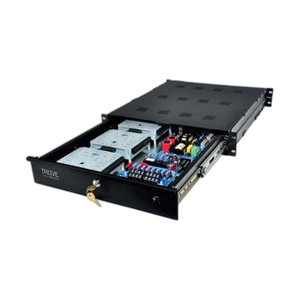
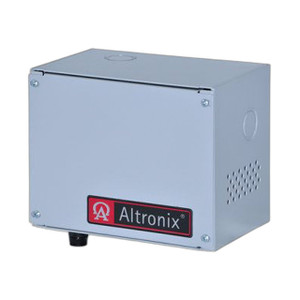
Altronix T1RM3F4 Kit includes Trove1R enclosure
Altronix T1RM3F4 4-Door Access Control and Power Integration Kit Overview The Altronix T1RM3F4 is a comprehensive 4-door access control and power int…

Altronix T1RM3F4 Kit includes Trove1R enclosure
$1,187.99
Your recommended setup
Review items below — quantities update pricing automatically.
Item
Qty
Status
Price
Optional Add-Ons recommended
Services optional
Bundle Summary
Bundle Subtotal:
$0.00
Optional Add-Ons:
$0.00
Services:
$0.00
Total:
$0.00
Overview
SKU:
T1RM3F4
Condition:
New
Availability:
Usually ships in 24 hours
Warranty
Lifetime Limited Warranty
Description

Altronix T1RM3F4 4-Door Access Control and Power Integration Kit
Overview
The Altronix T1RM3F4 is a comprehensive 4-door access control and power integration solution designed for security integrators and installation professionals. This complete kit combines the Trove1M1R access control module, eFlow6NB power supply, ACM4 control module, PDS8 power distribution system, and VR6 voltage regulator into a unified platform. The T1RM3F4 streamlines multi-door installations by consolidating controller, power management, and distribution into a single integrated system, reducing design complexity and deployment time across medium-scale access control projects.
Key Features
- 4-Door Access Control Integration: Manages credential readers, electronic locks, and request-to-exit devices across four independent access points with centralized control
- Trove1M1R Access Module: Mercury-compatible access control engine providing managed credential processing and door-level supervision
- eFlow6NB Power Supply: Dedicated power conditioning and backup for access control circuits, integrated into the kit for simplified wiring
- ACM4 Control Module: Four-channel access control module delivering output switching and supervised relay circuits for door hardware activation
- PDS8 Power Distribution: Eight-output power distribution with individual fusing and load monitoring, supporting both access and auxiliary loads
- VR6 Voltage Regulation: Integrated voltage management ensuring stable output across the entire system under varying load conditions
- Modular Design: Component-based architecture allows field customization and upgrade paths without full system replacement
- Mercury Protocol Compatibility: Native support for Mercury access control platforms, enabling integration into existing enterprise environments
- Supervised Circuits: Built-in supervision on control and power distribution circuits for tamper detection and fault reporting
- Scalable Architecture: Four-door foundation supports staged deployment and multi-kit networked configurations for larger facilities
Integration and Compatibility
The T1RM3F4 is engineered for Mercury-based access control architectures and integrates directly with Altronix power management platforms. The kit combines access control logic, supervised power distribution, and voltage regulation into a single enclosure, eliminating separate component procurement and coordination. This integration approach reduces field assembly time and improves system reliability through factory-tested component matching. Integrators can deploy the T1RM3F4 as a standalone 4-door controller or network multiple kits for larger installations requiring distributed access management across building zones.
Package Contents
The T1RM3F4 ships as a complete integrated assembly including the Trove1M1R access module, eFlow6NB power supply, ACM4 control module, PDS8 power distribution system, and VR6 voltage regulator. All components are pre-assembled and tested. Integration documentation covers wiring diagrams, Mercury configuration, and supervised circuit setup. The kit is ready for field installation after credential reader and lock hardware connections.
Karl Wilson
The Altronix T1RM3F4 represents a well-integrated approach to mid-scale access control deployment. In planning installations across multiple buildings or zones, having a pre-validated kit like the T1RM3F4 eliminates the typical integration burden of sourcing and coordinating separate access modules, power supplies, and distribution components from different product lines.
Technical Highlights:
- Four Independent Door Circuits: The ACM4 control module within the T1RM3F4 delivers four supervised relay outputs with individual credential processing per door, removing the need for external relay boards in small-to-medium deployments
- Integrated Power Management: The eFlow6NB power supply and PDS8 distribution handle both access control circuits and auxiliary loads through eight fused outputs, simplifying enclosure design and reducing field wiring complexity
- Voltage Stability: The VR6 regulator maintains consistent output during peak lock activation, preventing brown-out conditions that can corrupt Mercury protocol communication
Deployment Considerations:
- Confirm Mercury server connectivity and credential database readiness before field installation; the T1RM3F4 requires active enrollment of reader MAC addresses and door hardware mappings in the access control platform
- Plan supervised circuit wiring to ensure tamper detection zones are properly terminated; open or shorted supervision lines will lock down access until cleared through the Mercury administrative interface
- Calculate peak current load across all four doors during simultaneous lock activation to verify PDS8 output capacity; oversized solenoid locks may require additional power distribution
For integrators managing 4-to-12 door installations, the T1RM3F4 offers a solid foundation that scales through multi-kit networking without requiring a full central access server. Field support is streamlined by having all major subsystems pre-tested and paired within a single SKU.
Specifications
Form Factor:
Access Control Kit
Number of Outputs:
8
Battery_Backup:
Yes
Supervision:
Yes
Warranty:
Lifetime Limited Warranty
Have Questions?
Ask an Expert.
RELATED PRODUCTS
System Design, Deployment & Technical Support
Support services and planning resources for commercial surveillance, access control, and infrastructure deployments.
Fixed scope • Fixed price
System Design Assistance
- Get help validating product compatibility
- Coverage requirements
- Storage planning and deployment architecture before you buy.
Deployment & Configuration Support
- Access fixed-scope support for rollout planning
- User setup guidance
- Migration and system standardization across single-site or multi-site deployments
Guides, Tools & Calculators
- PoE requirements
- Storage retention
- Camera selection and deployment methodology