


Overview
SKU:
T1MK7F4QFM
Condition:
New
Availability:
Usually ships in 24 hours
Warranty
Lifetime Limited Warranty
Altronix T1MK7F4QFM 4-Door Altronix/Mercury Access Trove1M1
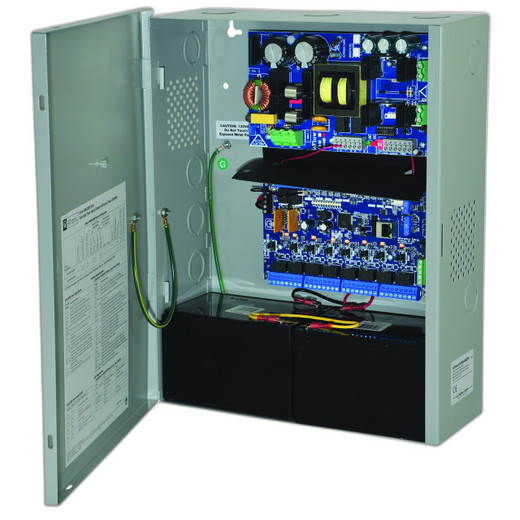
Altronix T1MK7F4QFM 4-Door Access Control System Overview The Altronix T1MK7F4QFM is a four-door access control solution combining the Mercury Trove1…

Altronix T1MK7F4QFM 4-Door Altronix/Mercury Access Trove1M1
$1,154.99
Your recommended setup
Review items below — quantities update pricing automatically.
Item
Qty
Status
Price
Optional Add-Ons recommended
Services optional
Bundle Summary
Bundle Subtotal:
$0.00
Optional Add-Ons:
$0.00
Services:
$0.00
Total:
$0.00
Overview
SKU:
T1MK7F4QFM
Condition:
New
Availability:
Usually ships in 24 hours
Warranty
Lifetime Limited Warranty
Description

Altronix T1MK7F4QFM 4-Door Access Control System
Overview
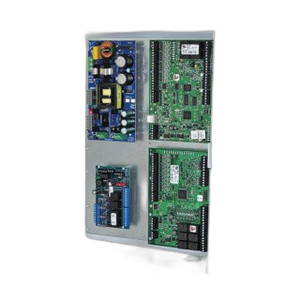
The Altronix T1MK7F4QFM is a four-door access control solution combining the Mercury Trove1M1 controller with the eFlow104NB power module. This integrated package delivers centralized credential verification and door relay control for mid-sized commercial security deployments. The T1MK7F4QFM scales across multiple entry points while maintaining synchronized credential management and audit logging across all four door positions.
Key Features
- Four-Door Control Architecture: Manages four independent access points with individual relay outputs, enabling distributed entry control without cascading hardware
- Mercury Trove1M1 Controller: Cloud-agnostic access management platform with credential storage and real-time decision logic
- eFlow104NB Power Module: Integrated power conditioning and battery charging for backup power on door strikes and credential readers
- Battery Backup Capability: Supports connected battery packs to maintain door control and credential verification during mains power loss
- Relay Output Control: Discrete relay outputs for each door position enabling electric strike, mag lock, or request-to-exit (REX) device activation
- Centralized Credential Management: Single controller interface for provisioning and revoking access across all four doors simultaneously
- Integration Ready: Compatible with standard credential readers (proximity, smart card, keypad) and third-party access management software via network connectivity
- Audit Trail Support: Maintains transaction logs for access events, door holds, and credential usage across all controlled points
Integration & Compatibility
The T1MK7F4QFM architecture separates control logic (Trove1M1) from power distribution (eFlow104NB), enabling flexible integration into existing security infrastructure. The eFlow104NB power module conditions 12VDC or 24VDC input depending on configuration and distributes regulated output to door strikes, electromagnetic locks, and credential reader power requirements. The Trove1M1 accepts inputs from standard door status sensors and outputs discrete relay commands for each door position. This modular approach allows installers to adapt the system to varied facility layouts without redesign of the core control platform.
System Architecture
The four-door configuration is suitable for secured facilities requiring synchronized access management across lobbies, server rooms, data centers, and restricted areas. Each door output is independently switched, allowing different access policies per door (e.g., full-time access, time-window restrictions, or emergency override modes). The battery backup capability ensures that credential verification continues and doors can be unlocked during power interruptions, meeting egress requirements under emergency conditions.
Marty Allison
I've evaluated the Altronix T1MK7F4QFM during planning for a multi-floor corporate access refresh. The separation of the Trove1M1 controller from the eFlow104NB power module provides real deployment flexibility—you're not locked into a single integrated unit if power architecture or control placement requires adjustment on-site.
Technical Highlights:
- Four Independent Relay Outputs: The T1MK7F4QFM provides discrete switching for each door, eliminating daisy-chain complexity and simplifying troubleshooting when a single door experiences relay drift or contact wear.
- Battery Backup Integration: The eFlow104NB module supports connected battery packs, ensuring credential readers and door strikes remain powered during utility outages—critical for maintaining egress control and audit compliance.
- Centralized Credential Sync: Provisioning changes made in the Trove1M1 management interface apply across all four doors without manual propagation, reducing provisioning errors in large deployments.
Deployment Considerations:
- Power budget planning is essential—verify that your facility's UPS or backup battery capacity can sustain credential readers, door strikes, and the Trove1M1 logic for your required hold-up time (typically 2–4 hours in commercial environments).
- Credential reader compatibility should be confirmed with your chosen reader vendor; the T1MK7F4QFM supports standard Wiegand and serial interfaces, but proprietary reader firmware variants may require adapter modules.
- Door sensor wiring (door position monitoring) must be run independently from relay output circuits to avoid cross-coupling noise that can trigger false state changes in the audit log.
The T1MK7F4QFM delivers solid mid-range capacity for corporate campuses, healthcare facilities, and government installations where credential synchronization and battery resilience matter. It's not an entry-level product, nor is it over-provisioned for small single-site deployments—it occupies the practical sweet spot for integrators managing 10–50 access points across a single facility.
Specifications
Number of Outputs:
4
Battery_Backup:
Yes
Warranty:
Lifetime Limited Warranty
Have Questions?
Ask an Expert.
RELATED PRODUCTS


System Design, Deployment & Technical Support
Support services and planning resources for commercial surveillance, access control, and infrastructure deployments.
Fixed scope • Fixed price
System Design Assistance
- Get help validating product compatibility
- Coverage requirements
- Storage planning and deployment architecture before you buy.
Deployment & Configuration Support
- Access fixed-scope support for rollout planning
- User setup guidance
- Migration and system standardization across single-site or multi-site deployments
Guides, Tools & Calculators
- PoE requirements
- Storage retention
- Camera selection and deployment methodology