


Overview
SKU:
NETWAYSP1BT2WPX
Condition:
New
Availability:
Usually ships in 24 hours
Warranty
Lifetime Limited Warranty
Altronix NETWAYSP1BT2WPX 2-Port 802.3BT PoE++ Injector
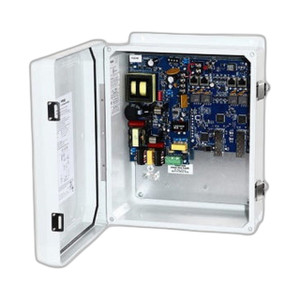
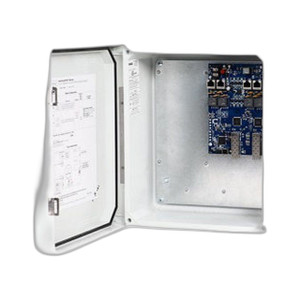
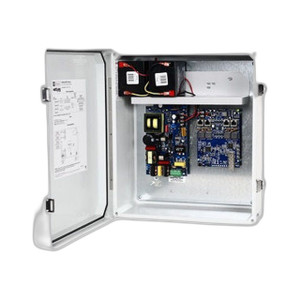
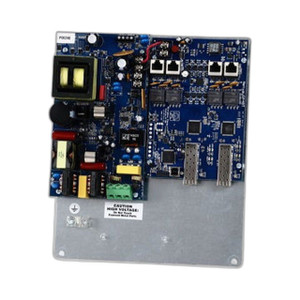
Altronix NETWAYSP1BT2WPX 2-Port 802.3BT PoE++ Power Supply Injector Overview The Altronix NETWAYSP1BT2WPX is a dual-port PoE++ power supply and injec…

Altronix NETWAYSP1BT2WPX 2-Port 802.3BT PoE++ Injector
$890.99
Your recommended setup
Review items below — quantities update pricing automatically.
Item
Qty
Status
Price
Optional Add-Ons recommended
Services optional
Bundle Summary
Bundle Subtotal:
$0.00
Optional Add-Ons:
$0.00
Services:
$0.00
Total:
$0.00
Overview
SKU:
NETWAYSP1BT2WPX
Condition:
New
Availability:
Usually ships in 24 hours
Warranty
Lifetime Limited Warranty
Description

Altronix NETWAYSP1BT2WPX 2-Port 802.3BT PoE++ Power Supply Injector
Overview
The Altronix NETWAYSP1BT2WPX is a dual-port PoE++ power supply and injector designed for professional security and networked device deployments requiring 802.3BT compliance. Operating from 230VAC mains input, this injector delivers PoE++ (High Power over Ethernet) to two independent outputs, supporting the latest generation of power-hungry network cameras, access control readers, and IoT endpoints. The long-output configuration enables flexible cable run layouts without voltage drop complications across distributed installations.
Key Features
- Dual-Port PoE++ Delivery: 2 independent 802.3BT compliant ports providing PoE++ power simultaneously to two devices
- High Input Voltage: 230VAC mains supply input for global and international deployment scenarios
- Extended Output Length: Long cable output configuration (LG OUT) for remote equipment positioning and cable management flexibility
- 802.3BT Standard Compliance: Full IEEE 802.3BT PoE++ protocol support for interoperability with certified endpoint devices
- Power Supply Function: Dedicated power supply mode with integrated power injection capability for seamless integration into existing network infrastructure
- Two-Port Architecture: Simultaneous dual-port operation eliminates the need for cascaded injectors in small to mid-scale deployments
Integration & Compatibility
The NETWAYSP1BT2WPX integrates into both switch-based and injector-based network topologies. For integrators deploying non-PoE-capable network infrastructure, this injector bridges the gap between legacy switches and PoE++ endpoint devices. The dual-port design accommodates parallel camera pairs, dual access control readers, or mixed-mode endpoint scenarios without additional rack space or external power distribution.
The 230VAC input voltage specification supports international installations across regions with European and global mains standards. The long-output cable configuration reduces intermediate junction requirements and simplifies conduit runs in building automation and video surveillance systems where equipment may be distributed across floor plates or exterior positions.
Security integrators should confirm endpoint compatibility with 802.3BT power delivery parameters during specification phase. The NETWAYSP1BT2WPX operates as a true power supply unit, eliminating dependency on network switch uplink PoE capacity and enabling independent power budgeting for the dual endpoint pair.
Operational Deployment
Installation requires standard 230VAC wall outlet or UPS-backed mains connection. No additional configuration is required for PoE++ delivery once power is applied. Each port functions independently, permitting asymmetrical load scenarios where one endpoint draws maximum 802.3BT power while the second operates at lower consumption.
The unit's power supply topology makes it suitable for 24/7 continuous operation in video surveillance, access control, and networked sensor installations. Cable length specifications and power budget calculations should be performed per IEEE 802.3BT guidelines to ensure full power delivery across the extended output runs.
Karl Wilson
During integration planning for a distributed security installation spanning multiple zones, I evaluated the Altronix NETWAYSP1BT2WPX for its ability to power two independent 802.3BT endpoints without consuming valuable switch PoE budget. This injector proved essential where the core network switch lacked sufficient PoE++ capacity or where remote camera placement created power delivery challenges across long cable runs.
Technical Highlights:
- 230VAC Input: Eliminates regional power supply variability; operates reliably across European and international mains standards without voltage conversion
- Dual Independent Ports: Two simultaneous PoE++ outputs allow parallel endpoint power without cascading or daisy-chaining additional injectors
- Long Output Configuration: Extended cable length reduces intermediate connection points and supports flexible endpoint positioning beyond typical switch proximity
- 802.3BT Compliance: Native PoE++ protocol support ensures full interoperability with current and next-generation high-power network devices
Deployment Considerations:
- Verify endpoint 802.3BT power class rating before assignment to either port; unmatched load scenarios will not cause contention
- Position the NETWAYSP1BT2WPX adjacent to mains infrastructure or on UPS-backed circuits for critical security camera chains
- Confirm cable routing from the long-output connectors meets building code conduit requirements and does not exceed 802.3BT voltage drop tolerances
- Monitor cumulative power draw across both ports during commissioning; 802.3BT maximum delivered power per port supports high-consumption devices including 4K PTZ cameras and powered access readers
I recommend the NETWAYSP1BT2WPX for integrators standardizing on PoE++ infrastructure in systems where switch-based power delivery is insufficient or unavailable. Its dual-port architecture and extended output length reduce component count and simplify cable management across commercial deployments.
Specifications
Product Type:
Power Supply/Charger
Power Type:
PoE++
Input Voltage:
230VAC
Number of Outputs:
2
PoE_Budget:
802.3BT PoE++
Warranty:
Lifetime Limited Warranty
Have Questions?
Ask an Expert.
RELATED PRODUCTS
System Design, Deployment & Technical Support
Support services and planning resources for commercial surveillance, access control, and infrastructure deployments.
Fixed scope • Fixed price
System Design Assistance
- Get help validating product compatibility
- Coverage requirements
- Storage planning and deployment architecture before you buy.
Deployment & Configuration Support
- Access fixed-scope support for rollout planning
- User setup guidance
- Migration and system standardization across single-site or multi-site deployments
Guides, Tools & Calculators
- PoE requirements
- Storage retention
- Camera selection and deployment methodology