



Overview
SKU:
NETWAY4EB
Condition:
New
Availability:
Usually ships in 24 hours
Warranty
Lifetime Limited Warranty
Altronix NETWAY4EB 4-Port Gigabit PoE Switch SFP
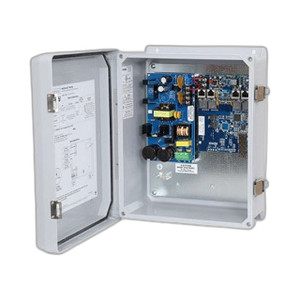
Altronix NETWAY4EB 4-Port Gigabit PoE Switch with Fiber SFPThe Altronix NETWAY4EB is a hardened managed switch board designed for professional securit…

Altronix NETWAY4EB 4-Port Gigabit PoE Switch SFP
$383.99
Your recommended setup
Review items below — quantities update pricing automatically.
Item
Qty
Status
Price
Optional Add-Ons recommended
Services optional
Bundle Summary
Bundle Subtotal:
$0.00
Optional Add-Ons:
$0.00
Services:
$0.00
Total:
$0.00
Overview
SKU:
NETWAY4EB
Condition:
New
Availability:
Usually ships in 24 hours
Warranty
Lifetime Limited Warranty
Description

Altronix NETWAY4EB 4-Port Gigabit PoE Switch with Fiber SFP
The Altronix NETWAY4EB is a hardened managed switch board designed for professional security and network infrastructure deployments. This compact switch delivers four 10/100/1000 Mbps Ethernet ports with integrated PoE/PoE+ power delivery, plus a single 1G fiber SFP uplink for backbone connectivity. The NETWAY4EB is configured to support two ports at 60W Hi-PoE output for demanding powered devices, making it suitable for high-draw applications such as advanced PTZ cameras, access control systems, and enterprise-grade network endpoints.
Key Features
- 4 Gigabit Ethernet Ports: 10/100/1000 Mbps auto-negotiating RJ45 connections with integrated PoE and PoE+ support
- Dual 60W Hi-PoE Configuration: Two ports configurable for 60W output to power high-current devices; remaining ports support standard PoE/PoE+ levels
- Single 1G SFP Uplink: Fiber optic connectivity via 1 Gigabit SFP module for extended range, EMI immunity, and backbone aggregation
- 48–56V Input Requirement: Operates on 48–56V DC input, requiring external power supply appropriate to site architecture and load profile
- Hardened Design: Industrial-grade construction suitable for outdoor and harsh-environment installations
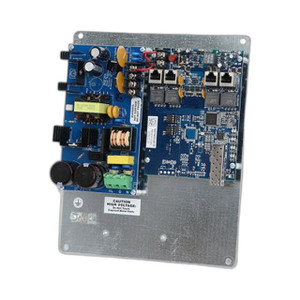
- Switch Board Form Factor: Compact DIN-rail mountable board configuration for integration into power/network enclosures or distributed architectures
- LINQ Integration: Compatible with Altronix LINQ management and monitoring ecosystem for centralized device oversight
Integration and Deployment
The NETWAY4EB functions as both a PoE injector and managed network switch, eliminating the need for separate PoE midspans in many topologies. Security integrators and IT managers commonly deploy this switch in distributed video surveillance systems where power-over-Ethernet devices are located at remote or difficult-to-reach points. The fiber SFP uplink enables long-distance backbone connections—critical for campus installations, multi-building facilities, and environments where copper Ethernet is impractical due to distance or electromagnetic interference.
The configurable Hi-PoE ports accommodate next-generation cameras with built-in processing, thermal modules, or auxiliary payloads that exceed standard PoE power budgets. The 48–56V input specification aligns with professional UPS and battery backup systems common in security installations, ensuring reliable operation during mains loss. Integration with LINQ allows remote port configuration, monitoring, and diagnostics without on-site visits.
Specifications and Configuration
Input voltage range is 48–56V DC. The switch board operates as a managed Layer 2/3 device with four PoE-enabled Gigabit ports and one 1G SFP fiber uplink. Two of the four copper ports are configurable for 60W output; the remaining two support standard PoE levels dependent on power budget allocation. The compact board design fits within standard 19-inch enclosure rails and integrates seamlessly into modular power distribution and network management systems. No external switching fabric or controller is required—the NETWAY4EB functions as a standalone managed switch or as part of a larger Altronix LINQ infrastructure.
Ted Perry
I have evaluated the Altronix NETWAY4EB during planning for a large multi-building security refresh. This switch board offers a practical solution for distributed PoE environments where backbone fiber connectivity and high-power device support are non-negotiable. The dual 60W Hi-PoE configuration addresses a real market gap—standard PoE is insufficient for many modern cameras with integrated analytics or thermal payloads.
Technical Highlights:
- Dual 60W Hi-PoE Output: Eliminates the need for separate midspans or external power injectors for two high-current devices per node.
- 1G Fiber SFP Uplink: Provides EMI-immune backbone connectivity and extended range, critical for outdoor or industrial installations where copper runs are compromised.
- 48–56V Input: Direct compatibility with professional UPS and battery backup systems typical in security-grade deployments.
- LINQ Integration: Centralized monitoring and port-level configuration reduce on-site troubleshooting time and enable proactive device management.
Deployment Considerations:
- Confirm that your external 48–56V power supply has sufficient capacity for the total Hi-PoE and standard PoE load across all four ports; power budget planning is essential in multi-camera or multi-endpoint nodes.
- Plan fiber SFP module procurement separately—verify module type and compatibility with your upstream network infrastructure before installation.
- Use hardened enclosures and properly sized DC distribution boards when deploying the NETWAY4EB in outdoor or harsh-environment settings to ensure input voltage stability and device longevity.
For integrators managing security networks across multiple sites or buildings, the NETWAY4EB delivers the fiber backbone reach and high-power device support that PoE-only switches cannot provide. Pair it with appropriate 48–56V power conditioning and UPS backup, and you have a resilient, manageable node in a professional surveillance or access control architecture.
Specifications
Product Type:
PoE Switch
Power Type:
PoE
Network Ports:
4
Form Factor:
Switch Board
Input Voltage:
48–56V DC
Number of Outputs:
4
PoE_Budget:
2x 60W Hi-PoE configurable
Warranty:
Lifetime Limited Warranty
Have Questions?
Ask an Expert.
RELATED PRODUCTS


System Design, Deployment & Technical Support
Support services and planning resources for commercial surveillance, access control, and infrastructure deployments.
Fixed scope • Fixed price
System Design Assistance
- Get help validating product compatibility
- Coverage requirements
- Storage planning and deployment architecture before you buy.
Deployment & Configuration Support
- Access fixed-scope support for rollout planning
- User setup guidance
- Migration and system standardization across single-site or multi-site deployments
Guides, Tools & Calculators
- PoE requirements
- Storage retention
- Camera selection and deployment methodology