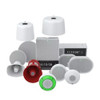
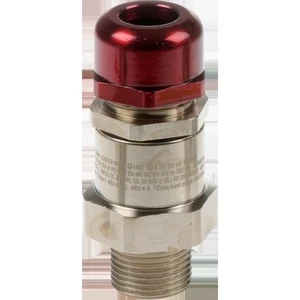
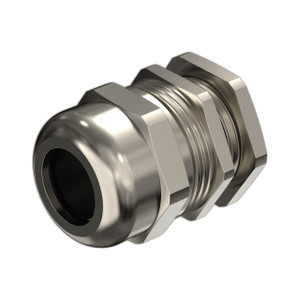
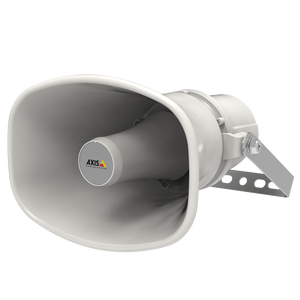
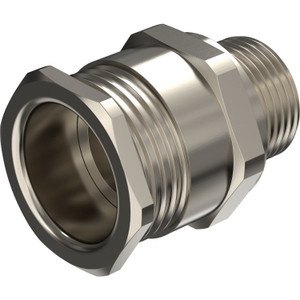
Axis 02962-001 Explosion-Protected Network Horn Speaker
The Axis 02962-001 is a purpose-built network horn speaker certified for hazardous environments where standard audio equipment cannot be deployed. Unlike commodity speakers retrofitted with protective housings, this device integrates explosion-protected design from the ground up—eliminating compliance gaps and installation complexity common in retrofitted solutions.
Overview
Built for oil and gas facilities, chemical plants, mining operations, and other regulated high-risk sites, the 02962-001 delivers intelligible audio across large areas while meeting strict safety certifications for explosive atmospheres. The stainless steel enclosure provides both structural rigidity and corrosion resistance in harsh industrial environments—critical in coastal or chemically aggressive settings where mild steel fails within months. IP66 rating means the speaker tolerates direct rain, dust ingress, and washdown spray without compromising audio output or electrical safety, though full submersion would require IP67 or higher. Power arrives via a single Ethernet cable using PoE (Power over Ethernet), eliminating the need for separate low-voltage power runs and reducing installation cost and complexity. This is particularly valuable in facilities where electrical infrastructure is constrained or where code limits the number of conduit runs.
Key Features
- Explosion-Protected Certification: Certified for hazardous zones (likely ATEX, IECEx, or equivalent depending on region)—mandatory for compliant operation in regulated industries. Non-certified speakers in these spaces create regulatory exposure and operational liability.
- IP66/IP67 Stainless Steel Enclosure: Withstands washdown, salt spray, and corrosive vapor without rust or electrical degradation. Protects internal electronics from the abuse typical in petrochemical and mining operations.
- PoE Power Delivery: Single-cable architecture reduces installation footprint. No external amplifier or separate power supply needed—the speaker integrates amplification internally, simplifying deployment in remote or confined spaces.
- Built-In Amplifier: Eliminates external equipment, reducing points of failure and maintenance burden. Integrated design also ensures audio characteristics are factory-tuned and verified to meet explosion-protection standards.
- Audio Analytics & Intelligent Triggering: Detects specific sound patterns and automatically triggers alarms or alerts—transforming the speaker from passive broadcast into active security sensor. Useful for detecting unauthorized intrusion, equipment failure signatures, or emergency signals in unattended zones.
- Remote Monitoring & Configuration: Manage audio settings, device health, and communication scheduling from any networked location. Eliminates site visits for routine adjustments and enables rapid response to facility-wide alerts.
- Seamless Axis Integration: Works natively with Axis IP cameras and network video recorders, consolidating security infrastructure. A single management console can orchestrate video, audio, and access control across the facility.
Integration & Compatibility
The 02962-001 integrates with Axis IP surveillance systems via standard network protocols, allowing unified monitoring across cameras, audio devices, and emergency systems. Consult your PoE network switch specifications to ensure sufficient power budget—the speaker draws power within PoE limits, though high-density deployments should account for cumulative load. Refer to your site's PoE power budget planning guide to avoid overloading switch ports or exceeding total backplane power capacity.
When deploying multiple speakers across a site, plan for redundancy: consider dual audio zones or backup devices in mission-critical areas. Audio distribution should be validated during commissioning to ensure intelligibility in high-ambient-noise environments such as compressor stations or manufacturing floors.
When to Choose a Different Model
If your facility does not require explosion-protection certification, standard industrial speakers are significantly less costly and may offer higher audio output. If you need two-way voice communication rather than one-way broadcast, consider an Axis emergency telephone or intercom system paired with standard speakers. If the site requires audio over longer distances without network infrastructure, analog audio distribution may be more practical, though you forfeit remote monitoring and intelligence features.
Frequently Asked Questions
Q: Is the Axis 02962-001 certified for all hazardous zones?
A: Certification depends on your region and specific hazardous-area classification (ATEX, IECEx, CSA, NEC Article 500, etc.). Verify the device's nameplate and documentation against your facility's classified area documentation. Axis publishes certified zones in the technical datasheet—consult this before purchase.
Q: Can I power the 02962-001 from a standard 802.3af PoE switch?
A: Yes. The device draws power within 802.3af limits (approximately 15.4W maximum), so any standard PoE switch will supply sufficient power. Higher-powered PoE (PoE+, PoE++) is not required but will not cause damage.
Q: What audio output level can I expect from the 02962-001?
A: The integrated amplifier delivers sufficient sound pressure level for large-area coverage. Exact output depends on enclosure mounting and ambient noise. Validate coverage during installation in your specific environment—high-ambient industrial settings may require multiple speakers or placement adjustments.
Q: Does the 02962-001 work with non-Axis surveillance systems?
A: The device supports standard ONVIF protocols, enabling integration with third-party video management software (Milestone, Genetec, etc.). However, advanced Axis-specific features (analytics, tight VMS integration) may not be available outside the Axis ecosystem. Verify ONVIF compatibility with your chosen platform before deployment.
Q: Can I use the 02962-001 indoors?
A: Yes. The device is rated for indoor and outdoor use. However, the stainless steel enclosure and IP66 rating are optimized for harsh environments; standard indoor applications do not require these protective features and may benefit from lower-cost alternatives.
Q: What is the warranty on the Axis 02962-001?
A: Axis standard warranty terms apply. Consult the technical documentation or your distributor for specific coverage and duration. Hazardous-area equipment may have extended lead times for replacement under warranty.
Ted PerryPerspective based on aggregated IP Security Depot and affiliated engineering team experience.
The Axis 02962-001 addresses a niche but mission-critical requirement: certified audio for explosive atmospheres where both compliance and reliability are non-negotiable. Too many integrators approach this by retrofitting standard speakers with protective enclosures—a shortcut that creates documentation gaps, certification conflicts, and integration headaches. The 02962-001 eliminates that problem by being purpose-engineered from the ground up for hazardous zones. The PoE architecture is a genuine efficiency gain in industrial deployments where electrical infrastructure is restricted or where site managers resist adding separate power circuits.
Technical Highlights:
- Integrated Amplifier with Built-In PoE Conversion: Eliminates external equipment and reduces installation complexity. In confined spaces (e.g., oil platform module rooms, underground mining areas), single-cable deployment cuts conduit runs and installation labor substantially.
- Audio Analytics & Pattern Detection: Transforms the device from passive broadcast into active intrusion or fault detection. In unattended high-risk zones, this autonomous triggering significantly reduces detection latency compared to human monitoring.
- Stainless Steel + IP66 Enclosure: Rated for salt spray and corrosive vapor. In petrochemical settings, standard mild-steel housings degrade within months; stainless eliminates premature failure and warranty claims in these aggressive environments.
Deployment Considerations:
- Audio coverage is site-dependent—high ambient noise (compressor stations, pumping facilities) may require multiple speakers or directional placement. Validate intelligibility during commissioning, not after installation.
- Hazardous-area certification applies to specific zones and regional standards (ATEX, IECEx, NEC). Verify the nameplate certification matches your site's classified area documentation before purchase; misalignment invalidates compliance.
- Remote management features are valuable but assume reliable Ethernet connectivity. Facilities with poor network infrastructure should plan for manual on-site configuration capability.
For oil and gas operations, chemical plants, and mining sites where explosion protection is regulatory mandate rather than preference, the 02962-001 eliminates the compliance friction and integration risk that plague retrofitted solutions. Deploy it where standard speakers are prohibited by code—not as a premium choice for non-hazardous areas.